Showing posts with label HDFC BANK. Show all posts

Tuesday, July 14, 2020

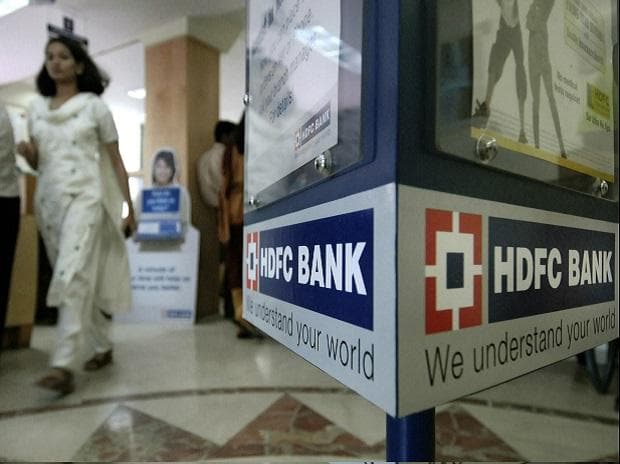
HDFC Bank probes lending practices at vehicle-financing operation


The bank decided against proceeding with an earlier proposal to extend the employment of Ashok Khanna, an 18-year veteran at the bank, after the investigation was completed.


HDFC Bank has conducted a probe into allegations of improper lending practices and conflicts of interests in its vehicle-financing operation involving the unit’s former head, according to people familiar with the matter.

The bank decided against proceeding with an earlier proposal to extend the employment of Ashok Khanna, an 18-year veteran at the bank, after the investigation was completed, said the people, who asked not to be identified as the information remains confidential. The vehicle financing unit he headed had outstanding loans of more than Rs 1.2 trillion ($16 billion) as of March 31.

HDFC Bank’s management had been discussing a proposal for Khanna to stay on as the unit’s head for six months until October. Khanna retired at the end of March in line with his contract, they added.

The result of the investigation isn’t public, but it followed issues thrown up by an internal audit of the bank’s vehicle-dealer lending, as well as allegations of conflicts of interest in the purchase of global positioning systems for vehicles financed by the bank, the people said, without disclosing what the probe uncovered.
HDFC Bank fell 2.3 per cent on Monday and its parent Housing Development Finance fell 2.1 per cent, among the three worst performers on the Sensex that gained 0.3 per cent.

A spokesman for HDFC Bank confirmed there had been an investigation into the vehicle-financing unit but declined to give details. In an emailed statement, he said Khanna had retired in March in line with the terms of his employment contract.
“The bank has a well-established process of investigating every complaint that it receives and takes actions as appropriate,” the spokesman said in the email.


Thursday, April 23, 2020

Reliance Jio connects with Facebook for $5.7-billion equity deal


Investment values Jio Platforms at Rs 4.36 trn; US giant gets 9.99% stake, board seat; collaboration is non-exclusive.


Facebook and Reliance Jio hit the headlines early Wednesday morning, in a break from the daily lockdown news. Mark Zuckerberg announced in a Facebook post that the technology giant will acquire a 9.99 per cent stake in Jio Platforms Ltd (JPL) through a fresh issue of shares worth Rs 43,574 crore.

The deal values JPL—the holding company of Reliance Jio — at an enterprise value Rs 4.62 trillion.

JPL’s equity value works out to Rs 4.36 trillion after Facebook’s investment, making it the fifth most valuable company in the country, behind its parent Reliance Industries (RIL), Tata Consultancy Services, Hindustan Unilever, and HDFC Bank.

Considering the market value of RIL and JPL, the Street is valuing RIL’s remaining but core businesses of refining and petrochemicals and others such as retail at a lesser number of Rs 4.28 trillion. This makes JPL more valuable than the rest of RIL.
JPL, a fully-owned subsidiary of Reliance Industries Ltd, houses many digital platforms like Jio Saavn and Radisys, besides the biggest disruptor in the Indian telecom scene, Jio.

As part of the deal, Facebook will get a board seat in JPL and an observer seat without voting powers. At a concall, a couple of hours after the news broke, Facebook India CEO Ajit Mohan said, “the very fact that we are announcing the deal during Covid-19 is a reflection of our commitment to invest in the country.’’

However, both sides made it clear that they will continue to compete in many areas where they have their own digital products. For instance, while Jio Pay is already operational, Facebook is awaiting permission for its digital payment platform. Also, Reliance has Jio Chat, which competes with WhatsApp directly.

“We will collaborate, not integrate. And in some areas, we will also compete as we have our own product lines. The deal is also not exclusive,” said Anshuman Thakur, head of strategy at Reliance Jio. He also pointed out that Jio or JPL could go public, but only in the medium term, in about three to four years.

Tuesday, April 7, 2020

RIL to Hindustan Unilever, stocks that drove Nifty off coronavirus lows


Barring three stocks - Eicher Motors, Shree Cement and Bajaj Finance - all the Nifty components have gained during this two-week period.


The markets have rebounded nearly 15 per cent from their coronavirus lows logged on March 23, when the Nifty had posted its biggest single-day loss to end at a four-year low of 7,610. The index jumped 9 per cent jump on Tuesday to end at 8,792, gain of 1,182 points in two weeks.

Barring three stocks — Eicher Motors, Shree Cement and Bajaj Finance — all the Nifty components have gained during this two-week period. However, the share prices of only 23 Nifty companies have bettered the benchmark.

Further, only eight stocks have accounted for nearly two-thirds of the gains. Among the biggest contributor to the Nifty spurt from the March 23 low is Reliance Industries.

Shares of the Mukesh Ambani-led firm has been the biggest gainer and also the largest contributor to the index gains. It has rallied 36 per cent and have accounted for 21 per cent of the Nifty’s 1,182-point gain.

HDFC Bank, Infosys, and Hindustan Unilever have been the next largest contributors, even though aren’t the biggest gainers. The notable laggards are automobile, NBFC and metal stocks.


Thursday, April 2, 2020

Covid-19 relief: You can defer 3 EMIs but that may be a very costly option


SBI informed customers that in some cases, deferring 3 EMIs on a home loan may force the borrower to pay 8 more EMIs.


After RBI allowed commercial banks to provide their customers a moratorium of three months for repayment of term loans, public sector banks have sprung into action. Public sector banks have informed their customers about deferment of EMIs and interest dues to help soften the blow due the coronavirus crisis. The deferment may come at a price though.

The country's largest lender State Bank of India on Wednesday warned borrowers that deferment of equated monthly instalments (EMIs) offered under the RBI's relief package on account of COVID-19 could put an additional cost on them. The lender also advised borrowers to repay their loans if they are in a position to do the same.
SBI said on its website that deferring the EMIs for a home loan of Rs 30 lakhs with a remaining maturity of 15 years, the net additional interest would be approximately Rs 2.34 lakhs, which is equal to eight EMIs. In other words, if customers defers three EMIs then they will end up paying 8 EMIs more.

Last week, the Reserve Bank of India (RBI) gave a relief package for retail borrowers and businesses, by way of announcing a three-month moratorium on payment of all term loans due between March 1, 2020, and May 31, 2020.

The dispensation is aimed to mitigate the burden of debt servicing brought about by disruptions on account of COVID 19 pandemic and to ensure the continuity of viable businesses.

"In terms of RBI COVID-19 regulatory package, SBI has initiated steps to defer the instalments and interest/EMIs on term loans falling due between March 1, 2020 to May 31, 2020 and extended the repaymentperiod by 3 months. The interest on working capital facilities for the period March 1, 2020 to May 31, 2020 is also deferred to June 30, 2020," country''s largest lender SBI said.

Sunday, March 22, 2020

Covid-19 impact: HDFC, ICICI urge customers to use digital banking services


HDFC Bank has urged people to use cheque drop boxes to help reduce crowding in branches.


Private sector banks HDFC and ICICI have asked customers to use digital means for transactions and said they have reduced their staff in office as a precautionary measure against the spread of coronavirus. HDFC Bank has changed its working hours and will function from 10 am to 2 pm till March 31, except on Saturday.
The private sector lender has also temporarily suspended passbook update and foreign currency purchase services.

"In the interest of public health and safety, we will be withdrawing the following services temporarily of passbook updates and foreign currency purchase," it said in a communication sent to its customers on Sunday.


ICICI Bank informed its customers through SMS that "our branches shall remain open with required hygiene steps and reduced staff".

"For the same reason, our contact centre will also function with reduced staff. We urge you to stay safe and bank from home using iMobile/Internet Banking for all essential banking services," it said in the communication.

HDFC Bank has urged people to use cheque drop boxes to help reduce crowding in branches.

However, customers can go digital to avail passbook updation and forex card reload, it said. NEFT, RTGS, IMPS and UPI services are among the digital transactional modes. It said customers can pay for their utility bills through UPI and PayZapp platforms.
According to Indian Banks Association (IBA) Chief Executive Sunil Mehta, during the lockdown in several states to contain the spread of Covid-19, banks will ensure at least four essential services — cash deposits and withdrawals, cheque deposition, remittances, and government transactions — at their branches from Monday.

For the rest, depending on the situation in each branch, the banks may suspend other services.

Monday, December 2, 2019

HDFC Bank sees signs of rural revival as wider economy remains sluggish


For HDFC Bank, the weaker economy had led to a slowdown in loan growth, which eased to 15 per cent in the September quarter from 23 per cent a year earlier.


Business Standard : HDFC Bank, India’s most valuable lender by market capitalisation, sees tentative signs of a revival in rural areas at a time when the wider economy is sputtering.

The recent loan outreach programs underway in rural areas have given us the sense that the consumption in rural and semi-urban areas is turning more positive,” HDFC Bank Executive Director Kaizad Bharucha said in an interview last week. As of end-September, 52 per cent of the bank’s outlets were in rural and semi-urban India, a part of the economy that accounts for at least half of the national output.

Prime Minister Narendra Modi’s government has unveiled several steps to boost the economy, which is growing at its weakest pace in more than six years, including a surprise $20 billion corporate tax cut. The Reserve Bank of India is expected to cut interest rates again this week, after Friday’s report that gross domestic product growth slowed to 4.5 per cent in the September quarter.

For HDFC Bank, the weaker economy had led to a slowdown in loan growth, which eased to 15 per cent in the September quarter from 23 per cent a year earlier. But it remained healthy compared with the overall banking system which saw credit growth slowing to a two-year low just above 8 per cent.

As a bank we are well positioned to offset a slowdown in either the consumption or investment side as we are present across the spectrum,” Bharucha said. “The demand for credit is not going away. It may just be subdued for a period of time,” he added.
He’s also cautiously optimistic about the outlook for corporate investment, based on the bank’s soundings with Indian executives.

Muted loan growth has hardly dented the upward march in HDFC Bank’s shares, which are about 19 per cent higher so far this year. Now valued at about $96 billion, the company trades around 26 times projected 12 month earnings. That’s almost three times more expensive than the Bloomberg World Banks Index and is the biggest valuation premium on record.

World’s most-loved megabank is surrounded by a lending crisis
Meanwhile, non-bank lenders from Dewan Housing Finance Corp Ltd. to Reliance Capital Ltd. have been reeling under a 17-month credit crisis after Infrastructure Leasing & Financial Services Ltd. defaulted on its debt last year. In a further blow to confidence, the Securities and Exchange Board of India placed curbs on operations of Karvy Stock Broking Ltd. after finding evidence it misused client funds.


Tuesday, April 2, 2019

Sonic branding: How the sound of your brand can be a recipe for biz success


Global players are spending millions on creating their sonic branding. Indian companies better hurry.


Sonic branding as AdWeek put it, is the process of “distilling a multimillion dollar brand into a few seconds of sound”.

This is best illustrated in answering the question, have you ever heard the sound of Visa? 

Most would most probably say no. Well, two years ago, the brand rolled out sensory elements including sound, animation and haptic (vibration) cues to signify a completed transaction in digital and retail environments. So, while you could not ‘see’ the brand at work, you could now ‘hear’ it. The multisensory Visa branding debuted in Visa’s global advertising campaign ahead of the Olympic Winter Games in PyeongChang in 2018. The goal was to appeal to the emotions and the senses, so customers could ‘see, hear and feel’ the Visa brand as they made payments across platforms and touch-points, particularly on mobile.

Visa spent more than a year developing a less-than-a-second sound to signal “speed and convenience.” The audio mark was accompanied by a unique vibration and animation that was added to its logo. The process of developing a sonic brand identity involved “neuro-research” and spanned eight markets with focus groups and the culling of 200 different sounds, eliminating one that sounded “angry,” and several that elicited “visceral reactions”. Sonic branding is even more critical for brands you cannot see or touch … digital brands that support the growing notion of ‘everywhere you want to be’ but brands that have no physical product, shape or appearance except the logo. And if the logo is all that signifies the brand, the new thinking is to embellish the connect with the all senses … sight, hearing, even taste!

A couple of months ago, Mastercard chose to emulate its rival, Visa. It released its own sonic branding - a new sound that will help consumers recognize the brand when they make purchases with their Mastercard or when they see an ad for the brand on TV. In addition to what consumers will hear when they make a purchase (in stores, online or via voice-enabled devices), Mastercard has developed a few different scenario-specific styles of the sound, like coffee shop and taxi.

There’s also ‘playful,’ ‘cinematic’ and an ‘operatic’ versions of the sonic logo, and the brand has created different melodies for different geographies. As part of the 18-plus-month process of creating a sound that would resonate with a global audience, Mastercard worked with agencies, artists and musicians around the world, including Linkin Park’s legendary Mike Shinoda.


Monday, April 1, 2019

Private Banks, Reliance Industries, Infosys take Sensex to new high


The Nifty50, too, breached the 11,700 level for the first time since September 2018 to hit an intra-day high of 11,716.


A sharp rally in three private sector banks – HDFC Bank, ICICI Bank and Axis Bank – that have gained over 10 per cent each from their August 29, 2018 level helped the benchmark index S&P BSE Sensex breeze past the 39,000 mark and hit a new high on Monday. The benchmark index surpassed its previous high of 38,990 recorded on August 29, 2018 in intra-day deals.

The Nifty50, too, breached the 11,700 level for the first time since September 2018 to hit an intra-day high of 11,716.

Besides these three private sector banks, Reliance Industries (RIL), Infosys, Bajaj Auto, Asian Paints, HCL Technologies, Larsen & Toubro (L&T) and State Bank of India (SBI) have gained in the range of 4 to 9 per cent from their August 2018 levels and helped the 30-share index record a new high on Monday.


There is more steam left and I feel the S&P BSE Sensex can hit 40,000 levels before the election results are known in May. The optimism stems from the strong foreign flows that we are getting. India now seems to be an attractive investment destination for foreigners amid slowing global growth,” says G Chokkalingam, founder and managing director, Equinomics Research.

Among sectors, most analysts remain bullish on the banking space despite the recent run-up and suggest investors stay put with large private sector banks and good quality public sector plays.

A pick up in industrial activity that will spur corporate loans, aggressive recognition of bad assets and improving recovery that will help boost asset quality, softening credit costs that is likely to propel return ratios and burgeoning share of retail term deposits which is likely to provide long-term stability to the source of funds are the factors working in favour of private sector banks, say analysts at Edelweiss Research. Axis Bank and ICICI Bank are their preferred picks in this segment.

Meanwhile, 17 out of 31 stocks that comprise the S&P BSE Sensex are still trading below their August 29, 2018 levels, shows data. Tata Motors, Tata Motors DVRs, Mahindra & Mahindra and Maruti Suzuki India have lost over 25 per each on the BSE during this period.

Autos, analysts say, are under pressure with respect to their monthly sales numbers. At the same time, the inventory levels are also on the higher side, which they feel, will take some time to get cleared. However, with improving liquidity and decreasing rates, there could be support coming over the next few months.

Monday, February 11, 2019

How a small Tamil Nadu bank beat India's largest banks in the stock market


City Union Bank Ltd., a small lender based in Kumbakonam, has risen more than 27% over the last twelve months, the best performance of any Indian lender in the Bankex index after Axis Bank Ltd.


Business Standard : A policy of cautious lending to the silk weavers and shopkeepers of Tamil Nadu has allowed a small local bank to outpace the largest Indian banks in terms of share price performance.

City Union Bank Ltd., a small lender based in Kumbakonam, has risen more than 27 percent over the last twelve months, the best performance of any Indian lender in the Bankex index after Axis Bank Ltd. It has beaten out larger rivals such as HDFC Bank Ltd. and State Bank of India thanks to its successful record in lending to small and medium sized enterprises, or SME sector, while keeping a lid on bad loans.

They are the gold standard in SME lending,” said Yuvraj Choudhary, an analyst at Anand Rathi Financial Services. “They have very good insight into how small industries work in their region.”

SME lending in India tends to be a higher margin business, because banks can charge hefty interest rates, but many avoid the segment because of the difficulty in assessing risks and the danger of piling on bad loans. Many of the country’s banks are struggling under the weight of a mountain of problem assets, denting their share prices and posing a threat to the wider Indian economy.

In addition, SMEs have been especially vulnerable to recent economic upheavals such as the temporary ban on high-valued currency notes in 2016, and the introduction of a nationwide goods and services tax the following year.

City Union had gross bad loans of 2.9 percent for the quarter ending December, below its regional peers and its larger Mumbai-based rivals. Meanwhile, its net interest margin of 4.4 percent puts it in the top quartile of India’s banking system.

Many of City Union’s customers are small businesses in Tamil Nadu’s textile industry, working on different parts of the supply chain from spinning and weaving to garment manufacture. The bank also lends to the retail and wholesale dealers selling anything from toothpaste to spare parts for trucks, whose shops line the streets of towns across the state.
Unlike larger lenders, City Union does more relationship-based lending, catering to the needs of the SME borrower, which can be quite volatile,” said Pankaj Agarwal, an analyst at Ambit Capital. “That’s why they can charge a premium in this relatively untapped segment.”

Another positive is City Union’s relatively stable history at a time when faster growing lenders with similar profit numbers have sprung unpleasant surprises. Yes Bank Ltd., whose shares have dropped 47 percent over the past 12 months, has only recently resolved a leadership crisis. IndusInd Bank Ltd., down nearly 9 percent, last year disclosed significant exposure to the troubled infrastructure lender IL&FS.

Tuesday, May 29, 2018

WhatsApp to hasten payments services to 200 million Indians 

The messaging app will partner HDFC Bank, ICICI Bank and Axis Bank to process the transfers, and State Bank of India will join once it has the necessary systems in place.


Facebook is set to offer its  WhatsApp payment  services to the whole of India as early as next week in an attempt to win market share, even though its partners aren’t all ready, said people familiar with the matter.


The messaging app will partner HDFC Bank, ICICI Bank and Axis Bank to process the transfers, and State Bank of India will join once it has the necessary systems in place, the people said.


Facebook  was aiming for a full rollout with four partners but decided to go ahead with just three as its rivals were racing ahead, the people said, asking not to be named as the information isn’t public.


The entry of Whatsapp into India’s payments space has been likened to WeChat, which reshaped payments in China when it expanded beyond messaging.


The pilot version of WhatsApp Pay — started with 1 million users in February — received rave reviews, threatening the market share of incumbents Google Tez and Alibaba-backed Paytm, which lack the benefits of a social network.


WhatsApp has a great starting point: a monopoly in chat,” said Vivek Belgavi, leader for financial technology at PwC India. “High engagement makes it a credible competition.”


More than 200 million Indians already use WhatsApp messaging, equivalent to 60 percent of the US population and a daily active usage that Forrester estimates to be about 20 times higher than Paytm’s.


Emails to representatives of WhatsApp, State Bank of India, HDFC Bank, ICICI Bank and Axis Bank weren’t immediately answered.