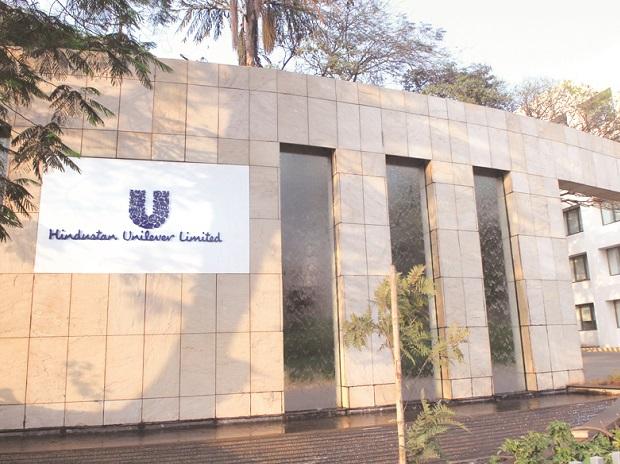
Showing posts with label HINDUSTAN UNILEVER. Show all posts

Thursday, July 2, 2020

Emami questions Hindustan Unilever's fairness over skin cream rebranding


Emami said it had trademark rights over the name and that it was consulting legal experts on the matter.


Consumer goods company Emami, which is the maker of the ‘Fair & Handsome’ brand of products, on Thursday said it was shocked to know that competitor Hindustan Unilever (HUL) had rebranded its men’s skincare range as ‘Glow & Handsome’.

Emami said it had trademark rights over the name and that it was consulting legal experts on the matter. “We are shocked to learn of HUL’s decision to rename its men’s range of Fair & Lovely as Glow & Handsome. We are the market leaders in the men’s fairness cream with legal ownership of the trademark,” Emami said in a statement.

“We have already launched a week back our brand ‘Emami Glow & Handsome’ digitally and necessary application has already been made to the relevant authorities,” it said.

HUL on Thursday said it had rebranded its popular skincare brand Fair & Lovely as Glow & Lovely after dropping the word ‘fair’ in its name.

“Over the next few months, Glow & Lovely will be on the shelves, and future innovations will deliver on this new proposition,” the company said in a statement, putting to an end speculation about the new name.

In response to Emami’s claim, HUL said it was “fully conscious” of its rights and position and will protect it fully in all appropriate fora.


Wednesday, May 27, 2020

Share sales in listed firms at record high of $4.4 billion this month


Companies and shareholders across Asia have been taking advantage of a market rebound since late March to sell shares.


Two jumbo block trades in India this month have pushed follow-on offerings in the country to a record high.

A $3.3-billion sell-down of GlaxoSmithKline’s stake in Unilever’s Indian unit, Hindustan Unilever, and a $1.1-billion placement of Bharti Airtel shares by its parent take May’s total follow-on offerings in the country to $4.4 billion, the most for a month on record, data compiled by Bloomberg shows.

In addition to that, Reliance Industries, the largest company by market capitalisation, kicked off a $7-billion rights offer this month.


Companies and shareholders across Asia have been taking advantage of a market rebound since late March to sell shares.

Almost $23 billion was raised in April across the region, the most since March 2018. India was quiet in March and April, when companies and shareholders sold just $299 million and $99 million worth of stock respectively, as the country went into lockdown due to the Covid-19 pandemic.
The Unilever deal is the largest additional share sale in India this year, while the Bharti Airtel block came at an opportune time given the stock is trading close to an all-time high.


Thursday, April 23, 2020

Reliance Jio connects with Facebook for $5.7-billion equity deal


Investment values Jio Platforms at Rs 4.36 trn; US giant gets 9.99% stake, board seat; collaboration is non-exclusive.


Facebook and Reliance Jio hit the headlines early Wednesday morning, in a break from the daily lockdown news. Mark Zuckerberg announced in a Facebook post that the technology giant will acquire a 9.99 per cent stake in Jio Platforms Ltd (JPL) through a fresh issue of shares worth Rs 43,574 crore.

The deal values JPL—the holding company of Reliance Jio — at an enterprise value Rs 4.62 trillion.

JPL’s equity value works out to Rs 4.36 trillion after Facebook’s investment, making it the fifth most valuable company in the country, behind its parent Reliance Industries (RIL), Tata Consultancy Services, Hindustan Unilever, and HDFC Bank.

Considering the market value of RIL and JPL, the Street is valuing RIL’s remaining but core businesses of refining and petrochemicals and others such as retail at a lesser number of Rs 4.28 trillion. This makes JPL more valuable than the rest of RIL.
JPL, a fully-owned subsidiary of Reliance Industries Ltd, houses many digital platforms like Jio Saavn and Radisys, besides the biggest disruptor in the Indian telecom scene, Jio.

As part of the deal, Facebook will get a board seat in JPL and an observer seat without voting powers. At a concall, a couple of hours after the news broke, Facebook India CEO Ajit Mohan said, “the very fact that we are announcing the deal during Covid-19 is a reflection of our commitment to invest in the country.’’

However, both sides made it clear that they will continue to compete in many areas where they have their own digital products. For instance, while Jio Pay is already operational, Facebook is awaiting permission for its digital payment platform. Also, Reliance has Jio Chat, which competes with WhatsApp directly.

“We will collaborate, not integrate. And in some areas, we will also compete as we have our own product lines. The deal is also not exclusive,” said Anshuman Thakur, head of strategy at Reliance Jio. He also pointed out that Jio or JPL could go public, but only in the medium term, in about three to four years.

Wednesday, April 8, 2020

Soap vs handwash: In time of crisis, firms set aside age-old differences


Dettol and Lifebuoy promote hand washing with soap, setting aside their differences over hand hygiene standards.


Given the magnitude and scale of the current Covid-19 crisis and the need to reinforce simple hygiene habits among people, soap brands Dettol and Lifebuoy are finding common ground. Using different tools to put forth the point of cleanliness above all and the need to wash one’s hands well, the two are setting aside their age-old differences.

The two brands have been fighting a bitter battle over their ads in court for years, while one emphasises the efficacy of soap, the other pitches the potency of its handwash. In fact as recently as a month ago Hindustan Unilever (HUL) hauled RB Health (formerly Reckitt Benckiser) to the Bombay High Court over an ad spot.

The ad for Dettol Handwash, made an oblique reference to Lifebuoy soap from HUL by showing a bar similar to the latter in terms of colour and proportion.

HUL’s contention in court was that not only had RB Health disparaged its brand, but was also sending a “wrong” message that suggested soap and water for hand hygiene was not as effective as handwash. RB clarified that it was emphasising on personal hygiene and restating the proven fact that liquid handwash should be preferred over bar soaps.

“Unilever has filed an ill-advised suit claiming that Lifebuoy and red colour soaps are disparaged. Reckitt unilaterally decided to hold back the advertisement till April 21, 2020 and the Bombay High Court was informed about the same,” the company stated. While fighting over a bar of soap may have seemed ill-timed, experts at the time had seen nothing unusual as both Lifebuoy and Dettol are known to be combative.


Market rally loses steam over fears of extended lockdown


The weak opening of the European markets and a sharp deprecation in the rupee against the dollar weighed on stock prices.


The Indian markets posted strong gains in early Wednesday trade, with the benchmark indices adding 4 per cent to previous day’s 9-per cent gain, but the rally lost steam over fears of an extended lockdown amid rising Covid-19 cases in the country.
Also, the weak opening of the European markets and a sharp deprecation in the rupee against the dollar weighed on stock prices.

The Sensex after climbing past 31,200, settled at 29,894 — down 173.25 points, or 0.58 per cent, over the previous day’s close. The Nifty closed at 8,749, down 44 points, or 0.5 per cent, after touching an intra-day high of 9,132.

Index heavyweights, such as Hindustan Unilever, HDFC Bank, and ICICI Bank, came off sharply from their day’s highs. Overseas investors were net-buyers for the second day in a row. On Wednesday, they bought shares worth nearly Rs 1,943 crore, while domestic investors took money off the table, dumping equities worth Rs 1,758 crore. Despite foreign inflows, the rupee ended at a record low of 76.38 against a dollar, down nearly 1 per cent over Tuesday’s close of 75.63.

A day earlier, the Indian markets had logged their biggest daily jump in 11 years on optimism that the spread of the virus was deaccelerating in Europe, which had emerged as the Covid-19 hotspot after Wuhan.

The market breadth was strong for the second day in a row, with nearly two advancing stock for every one declining. The mid- and small-cap indices ended with nearly 2 per cent gain.

“Momentum indicators indicate the possibility of further upside towards 9,300-9,400. Support zone for the index is at seen at 8,500-8,700. The current upmove is broad-based and hence, expect positivity to continue for few more trading sessions,” said Sahaj Agrawal, head of research- derivatives, Kotak Securities.


Tuesday, April 7, 2020

RIL to Hindustan Unilever, stocks that drove Nifty off coronavirus lows


Barring three stocks - Eicher Motors, Shree Cement and Bajaj Finance - all the Nifty components have gained during this two-week period.


The markets have rebounded nearly 15 per cent from their coronavirus lows logged on March 23, when the Nifty had posted its biggest single-day loss to end at a four-year low of 7,610. The index jumped 9 per cent jump on Tuesday to end at 8,792, gain of 1,182 points in two weeks.

Barring three stocks — Eicher Motors, Shree Cement and Bajaj Finance — all the Nifty components have gained during this two-week period. However, the share prices of only 23 Nifty companies have bettered the benchmark.

Further, only eight stocks have accounted for nearly two-thirds of the gains. Among the biggest contributor to the Nifty spurt from the March 23 low is Reliance Industries.

Shares of the Mukesh Ambani-led firm has been the biggest gainer and also the largest contributor to the index gains. It has rallied 36 per cent and have accounted for 21 per cent of the Nifty’s 1,182-point gain.

HDFC Bank, Infosys, and Hindustan Unilever have been the next largest contributors, even though aren’t the biggest gainers. The notable laggards are automobile, NBFC and metal stocks.


Wednesday, March 4, 2020

Coronavirus: India Inc steps up act to contain crisis as tally reaches 29 


Across the country, companies have stepped up their act to contain the crisis. IT and other new economy firms seem to have taken a lead.


Mindspace IT Park, Hyderabad’s largest office hub spread over several acres, was a centre of panic on Wednesday as a techie tested positive for coronavirus. The complex, housing many marquee brands, caught on to the news in no time, prompting employers to send their staff home.

An employee of Dutch company DSM Shared Services, the software professional had recently returned from an assignment in Italy. Hers was the second confirmed case of the virus in Telangana. “Our thoughts are with our colleague, who is doing relatively well and is being treated in quarantine,” the company said in an internal e-mail.

More than 1,000 km away, in Gurugram, next to New Delhi, another person tested positive, this time in the Paytm office, taking India’s tally to 29. He too had returned from a vacation in Italy. The company has asked its staff to work from home for a couple of days while the office gets sanitised.

Across the country, India Inc has stepped up its act to contain the crisis. IT and new-economy companies seem to have taken a lead.

At the Manyata Tech Park in Bengaluru, a US-headquartered software product company advised its employees to work from home till Friday, after an associate who had travelled from an affected country showed flu-like symptoms. Even though the person was declared asymptomatic by medical experts, the company began disinfecting the campus as a precautionary measure.

While online major Amazon confirmed its first case of coronavirus in its Seattle office, the company’s India unit felt the ripple effect. Amazon India has imposed travel restrictions, advising employees to prioritise health over efficiency. According to the advisory, all domestic travels by the employees can be undertaken only after consulting the manager while approval from vice-president is required for international travels.

Walmart–owned e-commerce firm Flipkart too has imposed a complete ban on all business travels, both domestic and international. In case the travel is unavoidable, CEO Kalyan Krishnamurthy must give an approval.

Sunday, October 6, 2019

HUL declares war on plastic with cardboard deodorant and bamboo toothbrush


Unilever is tying up with plastic collectors and recyclers in all developed countries and in large developing markets like India.


Business Standard : When Hindustan Unilever (HUL) decided to put a curve on its best-selling Pond’s talc pack some time back, its patrons may have assumed the move was aimed at breaking the monotony of the cylindrical shape used for decades. While breaking the boredom was one of the reasons, the slight curve at the belly of Pond’s talc packs allowed the consumer goods giant to save one-third of the plastic that goes into each pack.

More recently, its distributors found that HUL had removed the plastic packaging layer inside the cartons of the best-selling Dove soaps. Dove soap packs now lay naked inside the carton boxes. The move has helped the local arm of the British-Dutch multinational cut down on single-use plastic.

While these measures started some time ago, HUL’s parent company, Unilever, has now launched a concerted effort to curb its use of plastic globally. As the voices against plastic waste get louder, the company aims to cut the use of virgin plastic by half by 2025. It also wants to collect and process more plastic packs than it can consume in seven years.
Unilever is tying up with plastic collectors and recyclers in all developed countries and in large developing markets like India. Through them, it has committed itself to collect and processing around 600,000 tonnes of plastic annually.

However, at the heart of Unilever’s bold commitment lies its design efficiency. It hopes to slash its use of plastic from 700,000 tonnes annually to 100,000 tonnes by changing the design and packaging of its products.

According to Alan Jope, chief executive officer, Unilever, the design is the starting point of its project. “Reducing the amount of plastic we use and then making sure that what we do use increasingly comes from recycled sources is the goal. We are also committed to ensuring all our plastic packaging is reusable, recyclable, or compostable. This demands a fundamental rethink in our approach to our packaging and products. It requires us to introduce new and innovative packaging materials and scale up new business models, like reuse and refill formats, at an unprecedented speed and intensity,” said Jope.

Globally, the firm has reduced its plastic waste by a third since 2010. According to the company, through its ‘Less Plastic’ initiative, Unilever has explored new ways of packaging and delivering products — including concentrates, such as its new Cif eco refill, which eliminates 75 per cent of plastic.