Showing posts with label MASTERCARD. Show all posts

Friday, January 31, 2020

Plastic fantastic: Visa, Mastercard could be the next $1 trillion companies


Stock prices of both Visa and Mastercard have gained roughly 50 per cent in the past year.
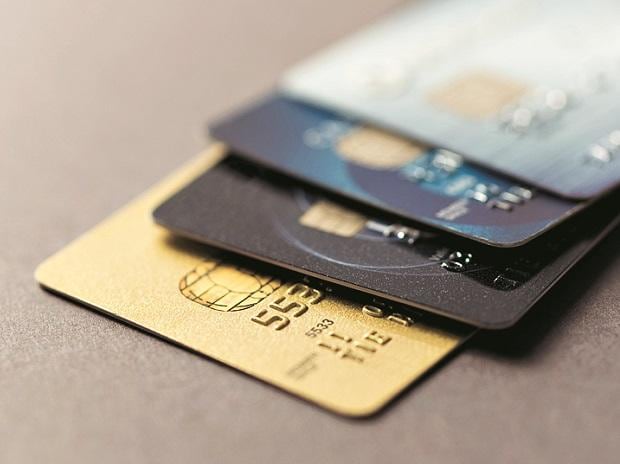

Tech and internet titans were the first to reach $1 trillion in stock market value, but the next U.S. companies that could do so are better known for their plastic.

Soaring stock prices are propelling credit and debit card companies Visa Inc and Mastercard Inc up the market value charts, where they currently rank 7th and 11th among companies in the benchmark S&P 500 index. The stock prices of both Visa and Mastercard have gained roughly 50% in the past year.

While the stocks may not keep up that torrid pace, Visa and Mastercard would each be worth over $1 trillion by 2023 if their average annual gains of the past three years were to continue, surging past the likes of Facebook Inc and Berkshire Hathaway Inc, if they also maintain their recent pace.

Fueling their rise is a shift toward cashless financial transactions spurred by a rise in online shopping.


"Everything travels on their rails," said Sandy Villere, portfolio manager of the Villere Balanced Fund, which holds Visa shares. "They literally sit in the middle of the banks, consumers and merchants and that has been a really enviable place to be."

Visa had a market value of $449 billion and Mastercard's stood at about $324 billion as of Thursday's close. The $1 trillion club currently includes Apple Inc, Microsoft and Google-parent Alphabet.

Amazon.com stood at $927 billion, though the e-commerce leader's shares jumped on the heels of its earnings report on Thursday after the bell, putting it in position to crack $1 trillion, as it did briefly in September 2018.

Revenue for both Visa and Mastercard nearly doubled over their past five fiscal years, to nearly $23 billion for Visa, and about $17 billion for Mastercard, according to Refinitiv data. Adjusted earnings per share more than doubled for both companies over that period.
Visa reported quarterly revenue late on Thursday that slightly missed analyst estimates, a day after Mastercard beat quarterly profit estimates


Wednesday, October 16, 2019

Mastercard says it will meet Dec-end target for data localisation in India


However, says the card payments major, restricting data flows in digital transactions will affect the quality of fraud detection and assessment.


Mastercard is confident of completing its data localisation requirements in India by the end of this year. However, says the card payments major, restricting data flows in digital transactions will affect the quality of fraud detection and assessment.

“We are totally committed. In fact, we are in full execution mode...And, we remain completely committed to the end of the year (deadline) that we have given to the Reserve Bank of India. So, I don't see a challenge on the question of data localisation," said Ari Sarker, its Asia-Pacific co-president.

However, he adds, this restricting of cross-border data flow and storing data only in India will impact fraud detection and management.

As an example, says Mastercard, it stores only aggregate and anonymised data, such as the amount spent on a transaction, the account number and so on. If an Indian travels abroad the card gets compromised there, and the fraudster uses these credentials to withdraw money from different ATMs in different country locations, it will be difficult for the person to know on a real-time basis that such fraud is happening.

Similarly, if a fraud trend is detected in different countries and Indian transaction data is disconnected from world data, fraud detection engines here will end up getting built only on local trends.

"Our data scientists tell us that for the sake of accuracy of the trend, you need 13 months of data — then, you can really see how behaviour patterns actually shift. That's the historical perspective you need to create...our view on that (data localisation) is it's actually not in India's interest," Sarker said.

New ID check
Mastercard will go live on Google Pay, the information technology giant's payments app, launched first in India as Google Tez in 2017. "We're going to be live with Google in the first quarter (of the next financial year). The essence is tokenised credentials or pass-through credentials working through Google Pay. The reason we're going first quarter is also because we're also delivering our ID Check capability together with it. It will be a better product capability once we launch through Google Pay," Sarker said.

Last month, Google Pay launched a feature called tokenised cards. This will let users add debit and credit cards to the Google Pay application, which has so far worked only on the Unified Payments Platform in India.


Tuesday, April 2, 2019

Sonic branding: How the sound of your brand can be a recipe for biz success


Global players are spending millions on creating their sonic branding. Indian companies better hurry.


Sonic branding as AdWeek put it, is the process of “distilling a multimillion dollar brand into a few seconds of sound”.

This is best illustrated in answering the question, have you ever heard the sound of Visa? 

Most would most probably say no. Well, two years ago, the brand rolled out sensory elements including sound, animation and haptic (vibration) cues to signify a completed transaction in digital and retail environments. So, while you could not ‘see’ the brand at work, you could now ‘hear’ it. The multisensory Visa branding debuted in Visa’s global advertising campaign ahead of the Olympic Winter Games in PyeongChang in 2018. The goal was to appeal to the emotions and the senses, so customers could ‘see, hear and feel’ the Visa brand as they made payments across platforms and touch-points, particularly on mobile.

Visa spent more than a year developing a less-than-a-second sound to signal “speed and convenience.” The audio mark was accompanied by a unique vibration and animation that was added to its logo. The process of developing a sonic brand identity involved “neuro-research” and spanned eight markets with focus groups and the culling of 200 different sounds, eliminating one that sounded “angry,” and several that elicited “visceral reactions”. Sonic branding is even more critical for brands you cannot see or touch … digital brands that support the growing notion of ‘everywhere you want to be’ but brands that have no physical product, shape or appearance except the logo. And if the logo is all that signifies the brand, the new thinking is to embellish the connect with the all senses … sight, hearing, even taste!

A couple of months ago, Mastercard chose to emulate its rival, Visa. It released its own sonic branding - a new sound that will help consumers recognize the brand when they make purchases with their Mastercard or when they see an ad for the brand on TV. In addition to what consumers will hear when they make a purchase (in stores, online or via voice-enabled devices), Mastercard has developed a few different scenario-specific styles of the sound, like coffee shop and taxi.

There’s also ‘playful,’ ‘cinematic’ and an ‘operatic’ versions of the sonic logo, and the brand has created different melodies for different geographies. As part of the 18-plus-month process of creating a sound that would resonate with a global audience, Mastercard worked with agencies, artists and musicians around the world, including Linkin Park’s legendary Mike Shinoda.