Showing posts with label CORPORATE TAX CUT. Show all posts

Monday, December 2, 2019

HDFC Bank sees signs of rural revival as wider economy remains sluggish


For HDFC Bank, the weaker economy had led to a slowdown in loan growth, which eased to 15 per cent in the September quarter from 23 per cent a year earlier.
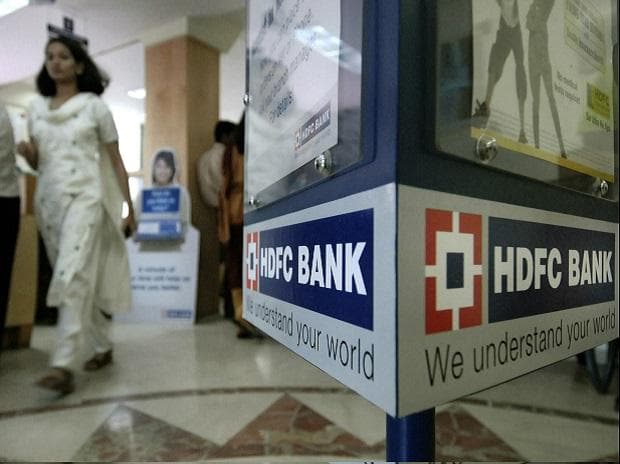

Business Standard : HDFC Bank, India’s most valuable lender by market capitalisation, sees tentative signs of a revival in rural areas at a time when the wider economy is sputtering.

“The recent loan outreach programs underway in rural areas have given us the sense that the consumption in rural and semi-urban areas is turning more positive,” HDFC Bank Executive Director Kaizad Bharucha said in an interview last week. As of end-September, 52 per cent of the bank’s outlets were in rural and semi-urban India, a part of the economy that accounts for at least half of the national output.

Prime Minister Narendra Modi’s government has unveiled several steps to boost the economy, which is growing at its weakest pace in more than six years, including a surprise $20 billion corporate tax cut. The Reserve Bank of India is expected to cut interest rates again this week, after Friday’s report that gross domestic product growth slowed to 4.5 per cent in the September quarter.

For HDFC Bank, the weaker economy had led to a slowdown in loan growth, which eased to 15 per cent in the September quarter from 23 per cent a year earlier. But it remained healthy compared with the overall banking system which saw credit growth slowing to a two-year low just above 8 per cent.

“As a bank we are well positioned to offset a slowdown in either the consumption or investment side as we are present across the spectrum,” Bharucha said. “The demand for credit is not going away. It may just be subdued for a period of time,” he added.
He’s also cautiously optimistic about the outlook for corporate investment, based on the bank’s soundings with Indian executives.

Muted loan growth has hardly dented the upward march in HDFC Bank’s shares, which are about 19 per cent higher so far this year. Now valued at about $96 billion, the company trades around 26 times projected 12 month earnings. That’s almost three times more expensive than the Bloomberg World Banks Index and is the biggest valuation premium on record.

World’s most-loved megabank is surrounded by a lending crisis
Meanwhile, non-bank lenders from Dewan Housing Finance Corp Ltd. to Reliance Capital Ltd. have been reeling under a 17-month credit crisis after Infrastructure Leasing & Financial Services Ltd. defaulted on its debt last year. In a further blow to confidence, the Securities and Exchange Board of India placed curbs on operations of Karvy Stock Broking Ltd. after finding evidence it misused client funds.


Monday, October 21, 2019

Reducing taxes to boost investments is a myth, says Abhijit Banerjee


Countries from China to India to Indonesia are slashing taxes for businesses to spur growth amid a gloomy outlook for global economic expansion.


Business Standard : How do you spur demand in an economy? By raising direct taxes and distributing the money among the poor, says this year’s winner of the Nobel prize for economics.

Reducing taxes to boost investments is a myth spread by businesses, says Abhijit Banerjee, who won the prize along with Esther Duflo of the Massachusetts Institute of Technology and Michael Kremer of Harvard University for their approach to alleviating global poverty. “You are giving incentives to the rich who are already sitting on tons of cash.”

Countries from China to India to Indonesia are slashing taxes for businesses to spur growth amid a gloomy outlook for global economic expansion. The International Monetary Fund this month made a fifth-straight cut to its 2019 global growth forecast, pegging it at 3 per cent.

“You don’t boost growth by cutting taxes, you do that by giving money to people,” Banerjee said in an interview Monday, suggesting that cash in the hands of the poor will drive consumption. “Investment will respond to demand.”

China earlier this year rolled out tax cuts worth $280 billion on personal income and corporate profits, while India surprised with a $20 billion stimulus, taking its corporate tax rate to among the lowest in Asia. Indonesia also plans to lower tax on companies to 20 per cent from 25 per cent.


MIT Professor Abhijit Banerjee spoke in New Delhi where he was promoting his book ‘Good Economics for Hard Times.’

Last year, US President Donald Trump unveiled a $1.5 trillion tax package, and has promised “very substantial” tax cuts in 2020 for “middle-income” Americans.
It’s the widening inequality in developed countries such as the US that has angered people and pushing the world into a trade war, Banerjee said. “It is unbelievable that in the name of growth you have allowed inequality to explode to this point.”


Monday, September 23, 2019

Here's what India can learn about tax cuts from the American experience 


Finance Minister Nirmala Sitharaman is betting that local firms will pass on the corporate tax cuts to customers in the form of lower prices to stimulate demand.


India’s decision to cut corporate taxes may benefit from lessons learned in the United States.

A recent study suggests that the rise in US business investment since the passage of the Tax Cuts and Jobs Act in late 2017 isn’t necessarily due to the cut in the corporate tax rate from 35 per cent to 21 per cent, which aimed to lower the cost of capital. The paper published by the International Monetary Fund puts forth a simpler reason: investment has been rising because domestic demand was boosted by lower personal taxes and higher government spending.


India hasn’t decided on cuts to personal taxes, Finance Minister Nirmala Sitharaman said at a briefing on Sunday. She is betting that local firms will pass on the corporate tax cuts to customers in the form of lower prices to stimulate demand.

While certain types of firms, such as consumer goods makers, might do so, the bulk of listed companies are already sitting on manufacturing slack and would prefer to reduce debt rather than build factories or hire more workers, Neelkanth Mishra, India strategist at Credit Suisse Group AG, told BloombergQuint.

Indian firms won’t necessarily use the tax cuts to return cash to shareholders -- unlike their U.S. peers -- but fresh investments could take time, according to A. Vaidheesh, managing director at GlaxoSmithKline Plc’s Indian unit.

“The current slowdown cycle is different from the 2012-13 slowdown as the consumption demand is also significantly constrained,” said Madhavi Arora, an economist at Edelweiss Securities Ltd. “Therefore a broader tax cut covering all economic agents would have probably yielded better economic returns.”


Sunday, September 22, 2019

Banking, FMCG to gain from tax cut; pharma, IT to remain untouched: Report 


Giving a sectoral analysis of the impact of tax cut, ICICI Direct Research said domestic auto equipment makers will tend to benefit from the tax cut.


The government's big announcement of a cut in corporate tax will benefit sectors such as banking and FMGC but IT and pharma may not see any tangible benefits as their current effective tax rate is lower, ICICI Direct Research said in a report.

"Like a bolt from the blue, the government (on Friday) announced a reduction in the corporate tax rate from close to 35 per cent to 25.17 per cent thereby fulfilling its key agenda of implementing the Direct tax Code (DTC). This is a massive trigger for revving up growth and, more importantly, resurrecting sentiments that were down in the dumps," the report said.

The immediate benefit is increased cash flows to corporate India that will be either channelised into debt reduction or incremental investments in increasing capacity.
Also, taxing new production facilities (that come up by 2023) at 15 per cent will enable attraction of global capital and spur a beleaguered investment cycle, it said.

"From a granular perspective, sectors like banking and FMCG are expected to grow at a CAGR of 48.2 per cent and 18 per cent, respectively vs. earlier CAGR of 42.2 per cent and 12.2 per cent. On the flip side, sectors like IT and pharma are not expected to see any upgrades on account of existing lower tax rates," it said.

A new provision has been inserted in the Income-Tax Act with effect from FY20 which allows any domestic company the option to pay income tax at 22 per cent subject to the condition that they will not avail any exemption/incentive.

The effective tax rate for these companies shall be 25.17 per cent inclusive of surcharge and cess. Also, such companies shall not be required to pay Minimum Alternate Tax.
In order to provide a boost to 'Make-in-India' initiative of the government, a new provision allows any new domestic company incorporated on or after October 1, 2019 to make fresh investment in manufacturing, an option to pay income tax at 15 per cent. This benefit is available to companies that do not avail any exemption/incentive and commences their production on or before March 31, 2023.

Business Standard