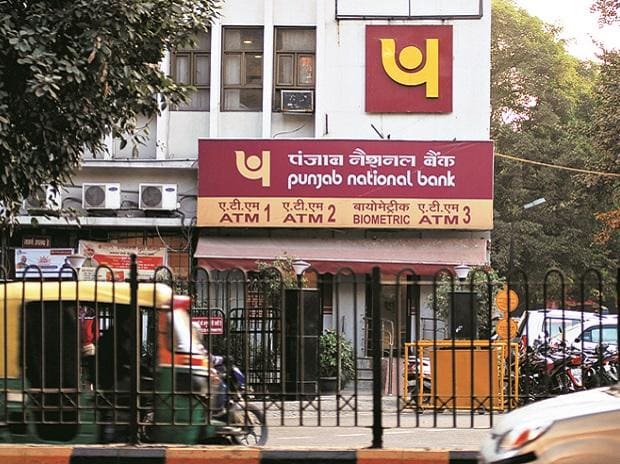
Showing posts with label PUNJAB NATIONAL BANK. Show all posts

Friday, July 10, 2020

PNB gets board go-ahead to tap market for raising Rs 10,000 crore


The Government of India currently holds 85.59 per cent stake in the bank.


State-owned Punjab National Bank (PNB) on Thursday said its board has approved a proposal to raise Rs 10,000 crore through a mix of both equity and debt.

Besides, the board has cleared opening balance sheet of the amalgamated bank as on April 1, which is post amalgamation of Oriental Bank of Commerce and United Bank of India into PNB, the bank said in a regulatory filing.

The board has given its nod for "raising of capital through issue of equity shares and Basel III-compliant tier-2 bonds by way of private placement, qualified institutional placement (QIP), further public offer (FPO), rights issue or any other mode or through a combination thereof up to an amount of Rs 10,000 crore".

The bank will seek shareholders' nod for raising of equity capital for an amount up to Rs 7,000 crore in the forthcoming annual general meeting.

The Government of India currently holds 85.59 per cent stake in the bank.
The country's second-largest lender PNB is planning to hit capital markets in the fourth quarter of this financial year to raise funds to help meet growth needs and regulatory requirements.

The bank has a capital adequacy ratio of 14.14 per cent at the end of March 2020.
The board also approved appropriation of accumulated losses of Rs 28,707.92 crore from the share premium account of the amalgamated bank.

Monday, July 6, 2020

PNB says board will consider a proposal to raise capital on July 9


Besides, the board will clear opening balance sheet of the amalgamated bank as on April 1.


State-owned Punjab National Bank (PNB) on Monday said its board will consider a proposal to raise capital through a mix of both equity and debt on July 9.

Besides, the board will clear opening balance sheet of the amalgamated bank as on April 1, which is post amalgamation of Oriental Bank of Commerce and United Bank of India into PNB, the bank said in a regulatory filing.

The board will consider proposal for raising capital through issue of Basel-III-compliant tier-1 bonds, tier-2 bonds and equity shares by way of private placement, qualified institutions placement, follow-on public offering, rights issue or any other mode or through a combination, it said.

Following the board approval, the resolution will be put for the shareholders' nod, it added.

The country's second-largest lender PNB is planning to hit capital markets in the fourth quarter of this financial year to raise funds to help meet growth needs and regulatory requirements.

The bank is capitalised with the capital adequacy ratio of 14.14 per cent at the end of March 2020.

PNB amalgamated Oriental Bank of Commerce and United Bank of India with itself effective April 1 this year. With the merger, the bank now has about 11,000 branches, more than 13,000 ATMs, one lakh employees, and a business mix of over Rs 18 trillion. Total domestic business of PNB at the end of March 2020 stood Rs 11.81 trillion.


Tuesday, June 23, 2020

UTI AMC gets Sebi nod for initial public offering to raise Rs 3,000 cr


The IPO of the country's largest AMC in terms of total AUM comprises sale of 38,987,081 equity shares by existing shareholders.


UTI Asset Management Company (AMC) has received markets regulator Sebi’s go-ahead to raise a little over Rs 3,000 crore through its initial public offering (IPO).
The IPO of the country’s largest AMC in terms of total assets under management (AUM) comprises sale of 38,987,081 equity shares by existing shareholders, according to the draft red herring prospectus (DRHP).

State Bank of India (SBI), Life Insurance Corporation (LIC), and Bank of Baroda (BoB) are offering to sell 10,459,949 shares each, while Punjab National Bank (PNB) and T Rowe Price International are planning to offload 3,803,617 shares each. The public offer is expected to raise a little over Rs 3,000 crore, market sources said.
UTI AMC, which had filed draft papers with Sebi in December 2019, obtained its observations on June 16, latest update with the markets watchdog showed.

Sebi’s observations are necessary for any company to launch public issues, including initial share-sale, follow-on public offer and rights issue.

SBI, LIC, PNB, and BoB hold 18.5 per cent stake each in UTI AMC. The US-based T Rowe Price holds 26 per cent stake in the company.

Kotak Mahindra Capital, Axis Capital, Citibank, DSP Merrill Lynch, ICICI Securities, JM Financial, and SBI Capital Markets are the bookrunning lead managers to the offer.


Thursday, May 7, 2020

Covid-19: PNB opens emergency credit line for MSMEs to enhance liquidity


There is a facility of standby line of credit for MSMEs as well as PNB COVID-19 Emergency Credit Facility (PNB-CECF), the bank said.


Punjab National Bank on Wednesday said it has opened an emergency credit line for the MSME sector to help it tide over liquidity issues amid the coronavirus crisis.

It has also liberalised the working capital assessment (LWCA) model for MSME borrowers having limits of Rs 5 crore and above, the state-owned lender said at a webinar hosted with industry body PHD Chamber to address the issues of micro, small and medium enterprises.

There is a facility of standby line of credit for MSMEs as well as PNB COVID-19 Emergency Credit Facility (PNB-CECF), the bank said.

There are also other policy initiatives like restructuring of MSME advances, interest subvention scheme, TReDS, Mudra loan products, Credit Guarantee Trust for MSMEs and PSB loans in 59 minutes, it added.


The bank's MD and CEO SS Mallikarjuna Rao said in the backdrop of the nationwide lockdown, the bank has organised the webinar to address the liquidity requirement of its customers through the online platform.

This forms a part of its 'Mega MSME Outreach' aimed at connecting with its MSME customers across the country and to address their challenges.

He said the bank has witnessed a humongous response from borrowers across the country through this outreach programme.


Sunday, April 5, 2020

Market volatility challenge to PNB HFC's equity plans, says ICRA


Further delay in fundraising will postpone the expected improvement in the leverage profile and limit the cushion available for absorbing contingencies.


The capital market bloodbath due to the Covid-19 outbreak poses a challenge to PNB Housing Finance’s plan to raise Rs 1,700 crore in equity capital in the near term.
Also, further delay in fundraising will postpone the expected improvement in the leverage profile and limit the cushion available for absorbing contingencies, according to rating agency ICRA.

The agency has downgraded rating for HFC’s non-convertible debentures and tier II bonds from “AA+” to “AA” due to weakening of its asset quality, especially in the wholesale loan portfolio”. The rating revision factors in delays in its fundraising plan along with the lower-than-expected planned equity infusion.

PNB HFC recently took the board'’s approval to raise up to Rs 1,700 crore of equity, which is lower than the previously envisaged amount, ICRA said. Further, considering the concentrated risk in this profile and the challenging operating environment, the company’s economic capital requirements have increased.

Its stock closed 4.97 per cent down at Rs 161.6 per share on Friday (April 3) on the BSE.

The company’s assets under management (AUM) stood at Rs 86,297 crore at the end of December 2019. Punjab National Bank (PNB) and The Carlyle Group had a stake of 32.65 per cent and 32.22 per cent, respectively, as of December 31, 2019.

The firm has witnessed moderation in growth in portfolio given the market conditions and the same is expected to remain so in the near term.

The risks are mitigated by the good collateral cover maintained for exposures, its risk management systems and processes, which support ability to proactively manage the portfolio as demonstrated in the past.


Thursday, April 2, 2020

Covid-19 relief: You can defer 3 EMIs but that may be a very costly option


SBI informed customers that in some cases, deferring 3 EMIs on a home loan may force the borrower to pay 8 more EMIs.


After RBI allowed commercial banks to provide their customers a moratorium of three months for repayment of term loans, public sector banks have sprung into action. Public sector banks have informed their customers about deferment of EMIs and interest dues to help soften the blow due the coronavirus crisis. The deferment may come at a price though.

The country's largest lender State Bank of India on Wednesday warned borrowers that deferment of equated monthly instalments (EMIs) offered under the RBI's relief package on account of COVID-19 could put an additional cost on them. The lender also advised borrowers to repay their loans if they are in a position to do the same.
SBI said on its website that deferring the EMIs for a home loan of Rs 30 lakhs with a remaining maturity of 15 years, the net additional interest would be approximately Rs 2.34 lakhs, which is equal to eight EMIs. In other words, if customers defers three EMIs then they will end up paying 8 EMIs more.

Last week, the Reserve Bank of India (RBI) gave a relief package for retail borrowers and businesses, by way of announcing a three-month moratorium on payment of all term loans due between March 1, 2020, and May 31, 2020.

The dispensation is aimed to mitigate the burden of debt servicing brought about by disruptions on account of COVID 19 pandemic and to ensure the continuity of viable businesses.

"In terms of RBI COVID-19 regulatory package, SBI has initiated steps to defer the instalments and interest/EMIs on term loans falling due between March 1, 2020 to May 31, 2020 and extended the repaymentperiod by 3 months. The interest on working capital facilities for the period March 1, 2020 to May 31, 2020 is also deferred to June 30, 2020," country''s largest lender SBI said.

Tuesday, September 24, 2019

Trade unions of public sector banks call off two-day nationwide strike


AIBOA, the Indian National Bank Officers' Congress and the National Organisation of Bank Officers had called for a two-day strike opposing the amalgamation of banks.


Trade unions of public sector banks (PSBs) on Monday decided to withdraw a two-day nationwide strike slated to begin from Wednesday.

The unions called off the strike after holding a meeting with Finance Secretary Rajiv Kumar in which they were assured that a committee will be set up to address issues arising out of the proposed amalgamation of 10 PSBs into four.

The finance secretary was positive in formation of a committee consisting of all concerned to address the issues arising out of the proposed merger of 10 banks, including preserving the identity of all the banks. An appeal was made to us to revisit our strike call in view of the discussions,” a statement issued by four unions, which had given the strike call, said.

The All India Banks Officers’ Confederation, the All India Banks Officers’ Association (AIBOA), the Indian National Bank Officers’ Congress and the National Organisation of Bank Officers had called for a two-day strike opposing the amalgamation of banks.
Finance Minister Nirmala Sitharaman had last month announced merger of four banks. 

Punjab National Bank (PNB) will take over Oriental Bank of Commerce (OBC) and United Bank of India to become the country’s second-largest lender after State Bank of India (SBI) in terms of business. Canara Bank will subsume Syndicate Bank; Andhra Bank and Corporation Bank will merge with Union Bank of India; and Allahabad Bank will become part of Indian Bank.

We have been further assured that officers of all scales will be covered during the ongoing wage negotiations between the bank management and unions. This is a positive development,” AIBOA general secretary Nagarajan S said.

The current wage revision is due from November 2017, after the terms of the previous bipartite wage settlement ended in October 2017. In the last wage revision in 2012, which was for the period between November 1, 2012 and October 31, 2017, when bank employees got a 15 per cent wage hike.

Business Standard

Friday, August 30, 2019

Public sector banks merger: Modi govt to announce big bang plan soon


Finance ministry has called a meeting with chief executives of ten public sector banks, on Friday.


The National Democratic Alliance (NDA) government has readied its mega plan for merging multiple set of public sector banks (PSB) and is set to make an announcement anytime soon, according to multiple sources.

The department of financial services in the finance ministry has called a meeting with chief executives of ten public sector banks, which are seen as top contenders for merger, on Friday.

The banks invited for consultations on Friday are: Union Bank of India, Canara Bank, Punjab National Bank, United Bank, Oriental Bank of Commerce, United Bank, Allahabad Bank, Corporation Bank, Syndicate Bank and Andhra Bank.

The PSB merger will be announced anytime soon as part of the government's reforms agenda,” said a top source familiar with the development.

Punjab National Bank, Union Bank of India and Canara Bank might be banks which will be subsuming other PSBs.

It looks like PNB will be merged with three more banks, including Andhra Bank and Oriental Bank of Commerce,” another source said.

In her press briefings recently, Finance Minister Nirmala Sitharaman has been dropping hints of two more set of reform measures that the government is set to announce.

For the first time, under the Narendra Modi government’s tenure, two set of PSB mergers took place — One, five associate banks and Bharatiya Mahila Bank merged with State Bank of India (April 2017), and two, Dena Bank, Vijaya Bank merged with Bank of Baroda which came into effect from April 1 this year.

The central government has to consult the RBI before formulating a plan for PSB merger, according to the Banking Companies (Acquisition and Transfer of Undertakings) Acts of 1970 and 1980.

Sources said the central government has already consulted the RBI regarding its merger plans earlier this year.

The plan for PSB merger has to be approved by a group of ministers, known as the alternative mechanism. Sitharaman and commerce and industry minister Piyush Goyal are a part of it.

Business Standard