Showing posts with label RELIANCE INDUSTRIES. Show all posts

Tuesday, July 14, 2020

Google is in advanced talks to invest $4 billion in Jio Platforms


Global tech leaders from Facebook to Intel are looking for multiple ways to grab a slice of the action in the South Asian country, where millions of first-time internet users are added every month.
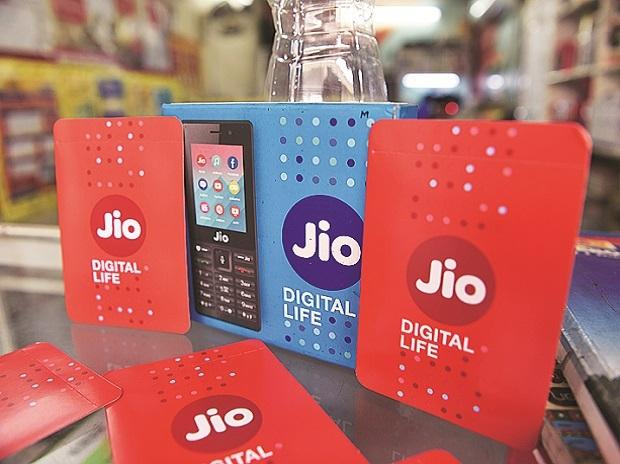

Google is in advanced talks to buy a $4 billion stake in Mukesh Ambani’s technology venture, people familiar with the matter said, seeking to join rival Facebook in the chase for growth in a promising internet market.

The Mountain View, California-based titan has been discussing the investment in Reliance Industries’ digital arm, Jio Platforms, the people said, asking not to be identified because the information is private. An announcement could come as soon as the next few weeks, according to the people.

Jio is at the centre of the Indian tycoon’s ambition to transform his energy conglomerate into a homegrown technology behemoth — something on the lines of China’s Alibaba Group Holding. The venture has turned into a magnet for Silicon Valley investors, attracting almost $16 billion from Facebook to KKR & Co. in the past three months. Should the talks with Google result in a deal, that would further burnish Jio’s credentials in its push to upend online retail, content streaming, digital payments, education and health care in a market of more than a billion people.

Global tech leaders from Facebook to Intel Corp. are looking for multiple ways to grab a slice of the action in the South Asian country, where millions of first-time internet users are added every month. Jio Platforms, which boasts almost 400 million users through its wireless network, offers the largest base of such users who are increasingly buying merchandise online and downloading music and video, using cheap phones and Jio’s own cut-price data services. An arm of Qualcomm Inc. was the latest in Jio’s growing list of investors, who also include Intel Capital, Silver Lake and Mubadala Investment. As of July 12, Reliance had sold 25.2 per cent of Jio, valuing the venture at $65 billion.


Wednesday, June 24, 2020

Working to complete contours of Saudi Aramco deal, says Mukesh Ambani


The deal was to be concluded by March 2020 but has been delayed.


Oil-to-telecom conglomerate Reliance Industries Ltd (RIL) on Tuesday said it is working to complete contours of a USD 15-billion deal with Saudi Aramco but did not give a timeline for its completion.

Richest Indian Mukesh Ambani in August last year announced talks for sale of 20 per cent stake in the oil-to-chemical (O2C) business, which comprises its twin oil refineries at Jamnagar in Gujarat and petrochemical assets, to the world's largest oil exporter. The deal was to be concluded by March 2020 but has been delayed.

"Reliance is working to complete the contours of a strategic partnership with Saudi Aramco," Ambani said in the firm's latest annual report without giving timelines.
The partnership with Aramco would give Jamnagar refineries "access to a wide portfolio of value-accretive crude grades and enhanced feedstock security for a higher oil-to-chemicals conversion," he said.

Reliance executed on the next phase of its growth journey in 2019-20, forging transformative partnerships across businesses.

"Reliance and Aramco share a common outlook and vision on the evolution of the business in the future with emphasis on higher oil-to-chemicals conversion," the firm said in the annual report.

Also, the firm said it has formed a 51:49 joint venture with BP plc of the UK for automobile and aviation fuel business in India.


Thursday, June 4, 2020

Facebook to Mubadala: Investors queue up for stake in Jio Platforms


Including investment by the Abu Dhabi fund, Reliance has now sold a combined 19% interest in Jio Platforms in six deals announced over as many weeks.


Reliance Industries on Friday added to its list of international backers, with Abu Dhabi's Mubadala Investment Co buying a stake in its digital arm, Jio Platforms, for Rs 9,093.6 crore.

Reliance has now sold a combined 19 per cent interest in Jio Platforms, which houses movie, music apps and telecoms venture Jio Infocomm, in six fundraising deals worth a total of Rs 87,656 crore. Here is more about these investments:

1. Facebook invested Rs 43,574 crore in Jio in April for a roughly 10 per cent stake, seeking to build a commerce business for its WhatsApp messaging service. Bloomberg News reported the social media network would work with Jio to take advantage of the company’s JioMart e-commerce platform and its relationship with Indian merchants.
2. Private equity firm Silver Lake will pick up 1.15 per cent stake in Jio Platforms for Rs 5,655.75 crore, Reliance announced on May 4. The deal valued Jio Platforms at Rs 4.90 trillion on equity basis and Rs 5.15 trillion on enterprise value basis.

3. Private equity firm Vista Equity Partners will invest Rs 11,367 crore in Jio Platforms for a 2.3 per cent stake, Reliance announced on May 8. The investment values Jio Platforms at an equity value of Rs 4.91 trillion and an enterprise value of Rs 5.16 trillion, Reliance said in a statement.

4. Reliance announced on May 17 US fund General Atlantic will invest Rs 6,598.38 crore in Jio Platforms for a 1.34 per cent stake. The investment valued Jio Platforms at an equity value of Rs 4.91 trillion and an enterprise value of Rs 5.16 trillion, said Reliance in a statement.


Tuesday, June 2, 2020

RIL in talks with West Asian sovereign funds for Jio Platforms: Report


Abu Dhabi and Saudi groups slated to invest about $1 billion into Jio Platforms Ltd, says report.


Three leading Middle Eastern sovereign wealth funds are in advanced talks to invest in Reliance Industries Ltd.’s digital arm, Bloomberg News reported quoting unnamed sources.

Abu Dhabi’s Mubadala Investment Co. is slated to invest about $1 billion into Jio Platforms Ltd. and an announcement could come as soon as this week, said the news agency, following similar reports last week. Reliance, backed by India’s richest man Mukesh Ambani, is also in discussions with Abu Dhabi Investment Authority and Saudi Arabia’s The Public Investment Fund.

Jio Platforms, which houses music and movie apps as well a Reliance's telecommunication venture Jio Infocomm, has secured a massive $10 billion from investors including Facebook Inc in May.

Reliance and its subsidiaries have invested over $2 billion in its four-pronged strategy to become a technology powerhouse, Business Standard reported on Monday.

The strategy includes spending over $1.6 billion on buying stakes in 24 tech firms across the US, UK, and India; winning 30 US patents out of the 53 it applied for, mostly in telecom and radio communications; and developing in-house tech in artificial intelligence, machine learning, block chain, virtual reality, big data, and 5G. Also, the ‘Gennext’ programme is providing venture capital support and mentoring to 150-odd companies across fields ranging from finance and retail to e-procurement, logistics, non-invasive testing of fruit quality, and delivering Indian products to global consumers, among others.


Thursday, May 28, 2020

Is India's richest man Mukesh Ambani betting on US-China tech war?


US-traded Chinese technology firms such as JD.com and NetEase are looking for an alternative home closer to the mainland in case tensions between Washington and Beijing escalate.


Petrochemicals czar Mukesh Ambani plans to list his fledgling digital business overseas, Bloomberg News reported Tuesday, citing people with knowledge of Jio Platforms’s initial public offering, which is planned for the next 12 to 24 months.

Going to the New York Stock Exchange or Nasdaq would make sense. US-traded Chinese technology firms such as JD.com and NetEase are looking for an alternative home closer to the mainland in case tensions between Washington and Beijing escalate, as my colleague Nisha Gopalan wrote this week. Alibaba held a secondary listing in Hong Kong in November. With Washington considering a range of sanctions against Chinese officials and firms as punishment for Beijing’s crackdown on Hong Kong, now may be the perfect time to pitch American investors on the potential of the other internet market with a billion-plus people.

A splashy overseas foray will be an unusual step for a family that brought the retail equity culture to India. Dhirubhai Ambani, Mukesh’s late father who founded the empire, booked a football stadium in Mumbai in 1985 to hold a shareholders’ meeting for the polyester textile maker that he had floated eight years earlier. But then, Mukesh Ambani is already moving old furniture around as he pivots flagship Reliance Industries away from an oversupplied energy and chemicals market. At the same time, he’s beefing up the balance sheet after a seven-year, $100 billion debt-fueled expansion. A big chunk of that was for Jio, the wireless carrier that has become India’s largest in less than four years.

A $7 billion rights issue, Reliance’s first in three decades, buttressed by more than $10 billion raised in a month from the sale of shares in unlisted Jio Platforms may help cut the company’s $20 billion of net debt to zero before Ambani’s March 2021 target.

Wednesday, May 27, 2020

Share sales in listed firms at record high of $4.4 billion this month


Companies and shareholders across Asia have been taking advantage of a market rebound since late March to sell shares.


Two jumbo block trades in India this month have pushed follow-on offerings in the country to a record high.

A $3.3-billion sell-down of GlaxoSmithKline’s stake in Unilever’s Indian unit, Hindustan Unilever, and a $1.1-billion placement of Bharti Airtel shares by its parent take May’s total follow-on offerings in the country to $4.4 billion, the most for a month on record, data compiled by Bloomberg shows.

In addition to that, Reliance Industries, the largest company by market capitalisation, kicked off a $7-billion rights offer this month.


Companies and shareholders across Asia have been taking advantage of a market rebound since late March to sell shares.

Almost $23 billion was raised in April across the region, the most since March 2018. India was quiet in March and April, when companies and shareholders sold just $299 million and $99 million worth of stock respectively, as the country went into lockdown due to the Covid-19 pandemic.
The Unilever deal is the largest additional share sale in India this year, while the Bharti Airtel block came at an opportune time given the stock is trading close to an all-time high.


Tuesday, May 19, 2020

Financial firms' clout wanes after coronavirus-triggered market fall


During the start of the year, private banks alone accounted for a fourth of the index weight.


Financial stocks have had a dominant run in the past decade and a half. In 2005, they weren’t even among the top five sectors when it came to their weighting in the Nifty index.

In 2009, private banks’ weighting in the index rose to 12.9 per cent, from just 5.4 per cent in 2005. Since then, it has only gone up. During the start of the year, private banks alone accounted for a fourth of the index weight.


If one added the weighting of NBFCs and PSBs, the weighting in the index would shot up to 42 per cent. However, the Covid-triggered market fall has hit the financial pack the hardest.

The weighting of the sector has come off from the peak of 42 per cent in December 2019 to less than 33 per cent. Given the underperformance of banking stocks, it could shrink further.

Meanwhile, stocks in the pharma, and consumer goods space have seen their weighting go up in the benchmark indices. On a stock specific basis, Reliance Industries has seen the highest increase in weighting.


Monday, May 11, 2020

Reliance Industries may rewrite recent history of rights issues: Here's how


The previous large rights issues by companies have typically had a strike rate of 25-28% from shareholders, which includes the top 10 rights issues including those of the Tata group.


The Rs 53,125 crore rights issue of Mukesh Ambani's Reliance Industries Limited (RIL) is scheduled to open on May 14 might rewrite the recent history of "rights". Shares of the company gained 3.4 per cent at Rs 1,615 on the BSE on Monday after the date was fixed for determining shareholders eligible to apply for its rights issue. The stock was trading close to its record high of Rs 1,618, and recovered 84 per cent from its 52-week low of Rs 876 on March 23.

The previous large rights issues by companies have typically had a strike rate of 25-28 per cent from shareholders, which includes the top 10 rights issues and all the large rights issues of the Tata group.

The Bharti Airtel rights issues launched in May 2019 with a size of Rs 24,939 crore got 15 per cent response from shareholders with 27,301 applications on the total number of shareholders at 186,000.

The Vodafone Idea issue in April last year received 26 per cent applications. The issue size was Rs 25,000 crore and out of the 339,000 shareholders, 87,248 shareholders applied.


The issue of Tata Steel to the tune of Rs 12,704 crore received 39 per cent applications from shareholders as of the total of 740,000 shareholders, the number of applications was 291,000.

The Tata Motors issue in 2015 to the tune of Rs 7,497 crore received 25 per cent applications as 90,631 shareholders applied out of 366,000.
The Tata Power issue in March 2014 got 38 per cent applications as 89,840 applied out of 236,000 for an issue size of Rs 1,993 crore.

The TV18 issue in 2012 for Rs 2,700 crore got a 21 per cent response from 12,976 shareholders out of 60,373.


Monday, May 4, 2020

After Facebook, Silver Lake to invest Rs 5,656 cr in Reliance Jio Platforms


The deal comes less than two weeks after Facebook made an investment of $5.7 billion to buy a minority stake in Jio Platforms.


American private equity firm Silver Lake has invested Rs 5,655.75 crore in Mukesh Ambani-owned Reliance Industries’ Jio Platforms. The deal comes less than two weeks after Facebook made an investment of $5.7 billion to buy a minority stake in Jio. The investment by Silver Lake values Jio Platforms at an equity value of Rs 4.9 trillion and an enterprise value of Rs 5.15 trillion, and represents a 12.5% premium on the equity valuation of the Facebook investment announced on April 22, 2020 – said Reliance Industries in a statement.

“I am delighted to welcome Silver Lake as a valued partner in continuing to grow and transform the Indian digital ecosystem for the benefit of all Indians. Silver Lake has an outstanding record of being a valuable partner for leading technology companies globally. Silver Lake is one of the most respected voices in technology and finance. We are excited to leverage insights from their global technology relationships for the Indian Digital Society’s transformation,” said Mukesh Ambani, Chairman and Managing Director, Reliance Industries.


Silver Lake is a prominent investor in technology space. The company has over $40 billion in combined assets under management and committed capital. Its investments include Airbnb, Alibaba, Ant Financial, Alphabet’s Verily and Waymo units, Dell Technologies, Twitter and numerous other global technology leaders.


Monday, February 24, 2020

India will become premier digital society: Mukesh Ambani at CEO Summit


He said the big change driving this transformation is the deepening of mobile networks which are working at a much faster pace than before.


Reliance Industries Chairman Mukesh Ambani on Monday said India is at the cusp of becoming a premier digital society, and will be among the top three economies of the world.

In conversation Microsoft Chief Executive Satya Nadella at the Future Decoded CEO Summit here, he said the big change driving this transformation is the deepening of mobile networks which are working at a much faster pace than before.

"It all kickstarted in 2014 when PM gave us the vision of Digital India... 380 million people have migrated to Jio's 4g technology," he said.

Pre-Jio, the data speed was 256 kbps; and post-Jio, it is 21 mbps, he pointed out.
Referring to US President Donald Trump's visit to the country, Ambani said India is much different than what it was during the visits of his predecessors Jimmy Carter, Bill Clinton or Barack Obama, and pointed out that mobile connectivity was a key change.

I have no doubt in my mind that we will be among the top three economies in the world, Ambani said, adding that the only debate which can exist is whether it happens in five or in ten years.

We in India have the opportunity to become the premier digital society, he stated.
"The next generation will see a very different India than what you (Nadella) and I have grown up in," he said.

Tuesday, January 28, 2020

Reliance launches new road project to counter pushback against plastics


India, which uses about 14 million tonnes of plastic annually, lacks an organized system for management of plastic waste, leading to widespread littering.


Company News : Reliance Industries, India's largest petchem player, is launching a project to use plastics in road construction, amid growing concerns over pollution in the country of 1.3 billion whose major cities are often plagued with smog and litter.
India, which uses about 14 million tonnes of plastic annually, lacks an organized system for management of plastic waste, leading to widespread littering.

Prime Minister Narendra Modi is urging India to end consumption of single-use plastics by 2022.

But Indians should focus on fighting pollution, not plastics, executives at Reliance Industries , whose chairman is Asia's richest man Mukesh Ambani, said during a launch event on Tuesday.

The company will seek to work with India's highway authority and individual states to potentially supply a plastics-infused mix to make some of the thousands of kilometers of roads Modi wants to build to upgrade India's creaking infrastructure.

Light plastics, the type used as carry bags or snack wrappers, are typically not viable to recycle and so end up in landfills, street corners or oceans. Reliance wants to shred these plastics and mix them with bitumen, a formula the conglomerate says is cheaper and longer-lasting.

"(This) can be a game-changing project both for our environment and our roads," Vipul Shah, the COO of the petrochemicals business, said at a company petchem plant in the western state of Maharashtra.

Shah was coy on details, saying Reliance had yet to work out the financial fine print in what he stressed would be a philanthropic endeavour.

Reliance's announcement comes as campaigners such as Greta Thunberg ramp up pressure on businesses to help tackle climate change.

"It is happening internationally and now has started percolating to India too, though it's at a very early stage," said Sunil Dahiya, an analyst at the Center for Research on Energy and Clean Air.


Monday, December 23, 2019

Asia's richest man Mukesh Ambani adds $18 billion to his fortune in 2019 


In comparison, Alibaba Group founder Jack Ma's net worth grew $11.3 billion, while Jeff Bezos lost $13.2 billion.


It’s been a good year for Asia’s richest man, Mukesh Ambani. The Indian tycoon added almost $17 billion to his wealth as of Dec. 23, the most in Asia, taking his net worth to about $61 billion, according to the Bloomberg Billionaires Index. In comparison, Alibaba Group founder Jack Ma’s net worth grew $11.3 billion, while Jeff Bezos lost $13.2 billion.

The surge in Ambani’s fortune this year was fueled by a 40% jump in the shares of his Reliance Industries Ltd., a conglomerate that’s pivoting more toward consumer offerings than its core oil refining and petrochemicals businesses. The rally in the stock is more than double the gains for India’s benchmark S&P BSE Sensex index during the period.

Investors are piling money on Reliance, betting newer businesses such as telecommunications and retail could soon unlock value. With a goal of building a local e-commerce giant to challenge the likes of Amazon.com Inc. in India, Ambani has spent almost $50 billion -- mostly debt -- on a wireless carrier that’s become India’s No. 1 within three years of debut.

“Mukesh Ambani changed the narrative for Reliance Industries” as a leader not just in oil and gas but also in telecom and retail, and possibly soon in e-commerce as well, said Chakri Lokapriya, chief investment officer at TCG Asset Management, which oversees $3 billion in assets in Mumbai.

“He successfully identified, invested and executed rapidly to create this new narrative,” Lokapriya said. “We believe this can potentially double shareholder value over the next four years.”

The newer businesses are likely to contribute 50% of Reliance’s earnings in a few years, from about 32% now, Ambani said in August. A representative for Reliance didn’t reply to an email seeking comment on Ambani’s wealth.


Sunday, December 15, 2019

Retail, telecom help RIL beat Indian Oil to be number one player by revenue


Fortune India list shows RIL as India's top firm in FY19.


Reliance Industries (RIL) has emerged as the number one company in terms of revenue in the Fortune India 500 list for 2019, pipping Indian Oil Corporation (IOC). RIL revenues crossed Rs 5.81 trillion in FY19 against IOC’s Rs 5.36 trillion.

Since it was first published in 2010, IOC has been topping the list.
RIL’s race to the top was powered by consumer-facing businesses like organised retail and telecom.

In terms of profits too, Mukesh Ambani-led RIL’s FY19 net profit was ahead at Rs 39,588 crore against IOC’s Rs 17,377 crore.

Over the past 10 years, RIL’s profit has been an average 3.01 times higher than that of IOC. The highest this went was up to 4.8 times in FY15.
Another interesting aspect of the 2019 list is the divergence in the fortunes of the public and private sector banks as 14 of the 22 public sector banks reported cumulative losses of Rs 74,253 crore, while the cumulative profit of 24 of the total private sector banks (including foreign banks and cooperative banks) touched Rs 60,747 crore — 6.16 per cent higher than FY18.

Just two private sector banks posted losses with IDFC First Bank reporting a loss of Rs 1,908 crore and Lakshmi Vilas Bank at Rs 894 crore.

The public sector banks made huge losses after several companies in the roads, power and steel sector failed to repay their loans. Many of these companies are now facing bankruptcy proceedings in courts across the country.

The top 500 list also showed that the combined revenue and profit of the companies in 2019 grew by 9.53 per cent and 11.8 per cent, respectively, even as 57 companies dropped off for reasons, including consolidation within the public sector banks and public sector undertakings space. The top 500 companies reported profit of Rs 4.55 trillion and revenues of Rs 91.7 trillion in the FY19 (see chart).

A total of 65 companies posted a cumulative loss of Rs 1.67 trillion, as compared to last year’s Rs 2 trillion racked up by 79 firms.

The list does not take into account subsidiaries of companies, hence many of the takeovers resulted in the acquired companies being excluded such as Hindustan Petroleum Corporation, which was acquired by Oil and Natural Gas Corporation, Rural Electrification Corporation acquired by Power Finance Corporation, Vijaya Bank and Dena Bank (merged into Bank of Baroda).Keep Reading : Stock Market News

Monday, November 25, 2019

Reliance, Bharti Airtel, 2 others bid for 3 Anil Ambani group companies


11 offers submitted for RCom, Reliance Telecom and Reliance Infratel.


Business Standard : Four companies, including Mukesh Ambani’s Reliance group and Bharti Airtel, on Monday collectively submitted 11 bids for three Anil Ambani group companies, which are up for sale as going concerns as part of the Insolvency and Bankruptcy Code (IBC) process.

The three companies for sale are Reliance Communications (RCom), Reliance Telecom (which holds the spectrum), and Reliance Infratel (which controls the tower and fibre assets). RCom also owns real estate and enterprise businesses.

The bids were opened by the committee of creditors, which held a meeting that continued until late night on Monday in Mumbai. It will meet again on Friday to discuss and possibly finalise the winning bids for the three companies
The value of the financial bids as well as which companies they have bid for, however, could not be ascertained.

Keep Reading : Market News

The two other bidders include Varde Partners and Delhi-based U V Asset Reconstruction Company (UVRCL). The latter had earlier won its sole bid for the Aircel group (which was also under the IBC) for Rs 150 crore. However, it is unclear as to whether UVRCL will eventually bring in a telecom or infrastructure partner to join in later. A Reliance Jio spokesperson did not respond to a query and an e-mail to UVARCL remained unanswered.

Under the current regulatory rules, Reliance Jio (which is not a listed entity) acquiring RCom (a listed entity) would require the Mukesh Ambani firm to merge with the latter. However, based on public pronouncements, this is not a possibility — Mukesh Ambani had made it clear that he will take Reliance Jio public through an IPO some time. Sources say that one other alternative would be to delist RCom, as then there would not be any regulatory issues in a merger between the two unlisted companies. Another alternative would be to float a special purpose vehicle to buy the firms.

Bharti Airtel had already given a bid on November 13, the earlier deadline for the bids. But the RP on the request of Reliance had extended the bid deadline by 10 days. The telco protesting against the extension had decided to withdraw its previous bid.

While Bharti Airtel spokesperson did not respond to a query, in its earlier offer it had made a conditional bid for the spectrum. The bid, it said, include that the overall consideration will primarily be by way of the deferred spectrum payables to the government being passed on to the company on terms and schedules applicable to such deferred payments.

Tuesday, November 19, 2019

Telecom tariff: Jio to follow Airtel, Voda Idea, raise rates in a few weeks


In anticipation of the tariff hike, Reliance Industries' market cap crossed the Rs 9.5-trillion mark on Tuesday.


Reliance Jio, which disrupted the telecom market ever since its commercial launch in 2016, has decided to follow rivals Bharti Airtel and Vodafone Idea in raising mobile phone tariffs. Having kicked off a no holds barred tariff war three years ago, the Mukesh Ambani-owned firm is now stepping back.

According to sources in the know, the tariff hike decision by the telcos is in response to the government wanting the industry to stop the long-drawn price war and set their house in order. In the absence of a tariff hike, Telecom Regulatory Authority of India (Trai) may have been forced to impose a floor price for the operators. Also, the government has been of the view that any relief measure for the telecom industry should be given only after telcos get out of the price war, that has left the incumbent operators with record losses and high debt, the sources said.

On Tuesday evening, Jio announced it would take measures including “appropriate increase in tariffs’’ in the next few weeks. The move, industry watchers believe, may bring down the pitch of the bitter battle between the incumbents and a new player. Jio’s announcement comes a day after Airtel and Vodafone Idea said they were hiking tariffs from December 1.

In its statement, Jio has asked the government to mandate a ‘2G mukt’ India in the shortest time if the objectives of Digital India mission has have to be achieved. The Jio demand for a 2G-free country is significant as it’s the only operator offering just 4G services pan-India. Bharti Airtel and Vodafone Idea still have a bulk of their customers using 2G.

In anticipation of the tariff hike (the announcement came after market hours), Reliance Industries’ market cap crossed the Rs 9.5-trillion mark on Tuesday.

It’s the first Indian company to reach the milestone, with its stock price rising 3.59 per cent, closing at Rs 1,511.55 on the NSE. Shares of rival firms Bharti Airtel and Vodafone Idea also rallied by 8.66 per cent and 38.2 per cent, respectively.

After the Supreme Court judgment, asking telcos to pay dues related to adjusted gross revenue (AGR) that could amount to more than Rs 1.33 trillion, the incumbents sought a moratorium on deferred spectrum payments and a cut in spectrum user charges among other relief measures.


Sunday, April 7, 2019

One deal at a time: How Mukesh Ambani is trying to take on Amazon in India 


Asia's richest man is sharpening his focus on e-commerce with a string of tiny acquisitions and stake purchases to face Amazon.


A $2.5 billion spending spree involving more than two dozen deals provides some insight into how Mukesh Ambani is piecing together a strategy to take on Amazon.com Inc. in India.

Asia’s richest man is sharpening his focus on e-commerce with a string of tiny acquisitions and stake purchases to face the world’s largest online retailer, after shaking up India’s telecommunications industry with cheap data and free calls.

The acquisitions represent a new strategy for Ambani’s Reliance Group, whose founder -- his father Dhirubhai Ambani -- built a petrochemicals business and the world’s largest oil-refining complex from scratch. It’s a clear pivot toward consumer offerings in a country that’s becoming a battleground for giants such as Amazon.com and Walmart Inc.’s Flipkart Online Services Pvt.

“The deals may be tiny, but it’s more likely that they are putting together a team of talented people by acquisitions, who can then be invested in to build out larger platform products,” said Kunal Agrawal, an analyst with Bloomberg Intelligence.

Ambani is racing to grab a share of an online shopping market that Morgan Stanley estimates will grow to be valued at $200 billion by 2028 from about $30 billion last year. India will have 829 million smartphone users by 2022, according to Cisco Systems Inc., from a projected half a billion this year. That means a potential surge in demand for online services and products from music to food delivery, electronic gadgets and clothes.

‘Shopping Experience’
Ambani outlined his plan to shareholders in July, saying the effort will involve the group’s unlisted businesses Reliance Retail Ltd. and Reliance Jio Infocomm Ltd. He has already spent about $36 billion on Jio, which has rolled out a nationwide 4G network and fibre broadband infrastructure, causing some established rivals to pull back.

The platform will use augmented reality, holographs and virtual reality to create an “immersive shopping experience,” said Ambani, 61. Reliance’s consumer businesses will contribute nearly as much to the conglomerate’s overall earnings as its bread-and-butter energy businesses by the end of 2028, he said.

The service will seek to get on board the millions of mom-and-pop stores that dominate the Indian retail market, providing heft to its operations. Chains and large department stores account for only 10 per cent of the market.


Wednesday, August 29, 2018

Reliance JioPhone 2 sale today at 12 noon: Know price, how to buy and more


Successor of the JioPhone, the JioPhone 2 was announced at the Reliance Industries' 41st Annual General Meeting, which was held in Mumbai on July 4.


Reliance Jio, a Mukesh Ambani-owned telecommunication service provider, is hosting sale of its JioPhone 2 today i.e. August 30. Successor of the JioPhone, the JioPhone 2 was announced at the Reliance Industries’ 41st Annual General Meeting, which was held in Mumbai on July 4.


Reliance JioPhone 2: Price and sale details
Priced at Rs 2,999, the JioPhone 2 is a 4G LTE-enabled feature phone that runs on KaiOS, which now supports popular social media and instant messaging apps. The phone will go on flash sale today at 12 noon on Jio online portal (jio.com). Flash sale is an inventory-based sale model in which the company put up a limited stock for sale. 

Such sales usually ends within first few seconds after they go live, depending on the volume of stock available in inventory. The model works on first come first serve basis.


Reliance JioPhone 2: Features and specifications
The JioPhone 2 sport a 2.4-inch screen horizontal screen, which makes it convenient for watching multimedia content. It features a full QWERTY keyboard with 4-way navigation key and a dedicated key for voice commands.
The phone boots KaiOS with support for apps such as Facebook, YouTube, Google Maps and WhatsApp. The 4G LTE-enable feature phone supports VoLTE call feature, which allows voice calls using data packets. The phone can be operated using voice commands.

The voice command feature is not limited to calling and messages, but also to operate the phone's apps – music playback, YouTube and video playback, etc. The phone also comes equipped with the NFC chip, which would support digital payments service in future. With NFC technology, users would also be able to make digital transactions through their Jan Dhan account, bank accounts and Jio money app.


Reliance JioPhone 2: Recharge plans details
Reliance Jio is currently offering three recharge plans with the JioPhone 2. The base plan starts at Rs 49 in which the company is offering 1GB of 4G data, along with unlimited free voice calls, Jio app suite subscription and 50 messages, valid for 28 days.

The midrange plan costs Rs 99 in which the company offers 0.5GB data per day, along with unlimited free voice calls, Jio app suite subscription and 300 messages, valid for 28 days. The premium plan costs Rs 153 in which the company offers 1.5GB data per day, along with unlimited free voice calls, Jio app suite subscription and unlimited messages, valid for 28 days.


Article Source BS


Monday, June 18, 2018

Maharashtra govt's move to ban use of plastic puts RIL in recycle mode

Company creating platform for building corpus and setting up full-fledged sustainability team.


Plastic Ban : The Maharashtra government’s decision in March to partially ban the use of plastic has put the country’s largest polymer producer in recycle mode. The Mukesh Ambani-led Reliance Industries (RIL) is now creating a platform for recycling, building a corpus and setting up a full-fledged sustainability team.


“The ban from Maharashtra was more of a wake-up call for the industry,” said Vipul Shah, chief operating officer of RIL's petrochemicals business. RIL had homework in place over the last couple of years. The ban accelerated the process, he added.


“There was earlier a small team of two to three people working on a smaller project like bottle recycling. We now have a full-fledged department for sustainability of seven to eight people working full time and another 10-12 moonlighting,” Shah added.


RIL is the country’s largest producer of polymer, the main raw material required for making plastic items. Shah did not share details on how much of the company’s polymer production is consumed through plastic bags and other items banned in the state.


“The exposure to banned items is minimal, less than three per cent maybe. It is more likely to affect small enterprises. As for RIL, there are other segments to cater to,” said a person with direct knowledge of the business.


Part of the sustainability team’s job is to develop an extended producer responsibility (EPR) platform for the industry. “Being the largest polymer producer, we want to design something that is adaptable to India and not a copy from Europe. We want to design the whole chain from segregation, collection, secondary segregation, recycling, generating energy and oil,” Shah added.


The corpus, he said, would be funded through RIL’s petrochemicals business, not as part of its corporate social responsibility programme.