Showing posts with label SWIGGY. Show all posts

Sunday, March 29, 2020

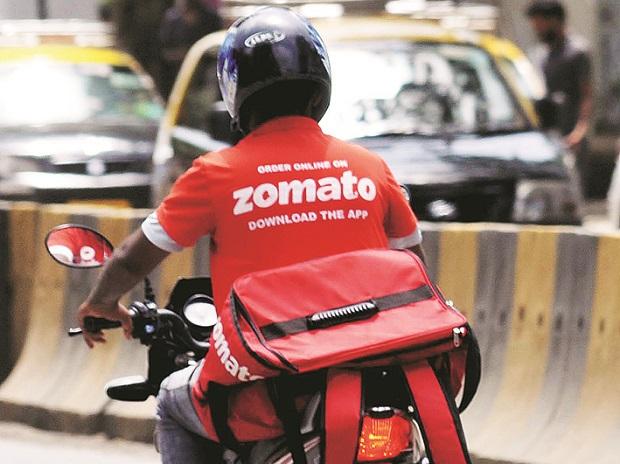
Covid-19 crisis: Goa govt allows Swiggy, Zomato to deliver food, groceries


Goa Chief Minister Pramod Sawant has said that he was irked by some people, who prefer to violate the 21-day lockdown to buy something as trivial as a shampoo.


The government of Goa on Sunday issued a notice, whereby, it authorised Swiggy, Zomato and other home delivery platforms to operate and deliver food, groceries and other essential items at doorsteps during the lockdown due to COVID-19.

"ECommerce operators such as @swiggy_in, @ZomatoIN and other platforms have been permitted to deliver food and grocery items. #GoaFightsCOVID19," the Goa Chief Minister's Office tweeted today.

Earlier, two more coronavirus positive cases were reported in Goa on Sunday taking the state's tally to five.

A total of 1024 positive cases of COVID-19 have been found in India, the Ministry of Health and Family Welfare said on Friday. 27 persons have lost their lives due to this disease in the country.

Twitter slams Goa govt for food shortage, CRPF deployment

Amid growing unease over inability of food and essential items in Goa and the state government's decision to give central paramilitary forces a "free hand" to punish curfew violators, several voices on Twitter have attempted to highlight the plight of a population which has been facing a lockdown as a food shortage for as many as eight days in a row.

COVID-19: People violating lockdown to buy shampoo, says Goa CM
Goa Chief Minister Pramod Sawant has said that he was irked by some people, who prefer to violate the 21-day lockdown to buy something as trivial as a shampoo.
Sawant, whose administration has been criticised for triggering panic in Goa, due to chronic non-availability of essential goods in grocery stores across the state and the requisition of central forces to impose the curfew, said that the Central Industrial Security Force was pressed into service not to "punish people" but to maintain law and order in the state.


Tuesday, January 21, 2020

Duopoly catches up in food delivery space as Zomato acquires Uber Eats


The Uber Eats deal helps Zomato to catapult to the number one slot, leaving market leader Swiggy slightly behind.


If the telecom industry runs the risk of becoming a duopoly, the fast growing $4-billion online food delivery space has already turned into a two-horse race. Cab aggregator Uber India’s sale of its food delivery business on Tuesday has clearly set the stage for a Zomato versus Swiggy play.

The signs of consolidation were already there as losses piled up. Last year, Uber India’s rival, Ola, which had earlier acquired Foodpanda, closed down its online food delivery business to move into cloud kitchen services due to aggressive competition.

Seven months later, there’s no room for a third entity in the fight for domination.
In an all stock deal, Uber will get a 9.9 per cent stake in Zomato. According to analysts, the value of the deal is in the region of $350-400 million.

RedSeer data shows that revenues have seen significant growth—up to 150 per cent in 2019—in the food delivery business. But, losses have hit the roof. In many cases, the losses surpass the revenues.

The huge discounts to acquire customers, clubbed with high delivery costs and aggressive promotions, have caused the bloodbath. Even so, the customer numbers are impressive, helping in the subsequent funding rounds.

Indeed, cash strapped companies have always looked for fresh funding to continue to grow. For instance, in the case of Uber Eats, India made up for more than 3 per cent of its global gross revenues in the last three quarters and it already grabbed 12 per cent of the market share. At the same time, around 25 per cent of Uber Eats’ global losses came from India in the corresponding period.

Profitability, a goalpost for investors, has been a mirage in the food delivery business. Even Zomato, backed by Alibaba, has been struggling to make money with its losses rising tenfold in March 2019 to cross the Rs 1,000-crore figure. Its revenues in the same period soared 188 per cent to Rs 1,397 crore.

Company News

Friday, September 13, 2019

Facing heat from restaurants, Zomato suspends Infinity Dining programme


Introduced in July, the Infinity Dining programme allowed Zomato's Gold subscribers to order unlimited food and drinks at a set price from the menu of partner restaurants.


Facing heat from partner restaurants over its "deep discounting schemes", food delivery platform Zomato has suspended the Infinity Dining programme from its app.

A Zomato spokesperson confirmed the development to The Economic Times, saying they have received "a range of feedback about Infinity Dining, and have paused it as we incorporate the feedback".

Introduced in July, the Infinity Dining programme allowed Zomato's Gold subscribers to order unlimited food and drinks at a set price from the menu of partner restaurants for a limited period of time.

The programme was launched in three cities with over 300 restaurants.
The National Restaurant Association of India (NRAI) said it a was "huge victory" for them.

“Infinity was the tipping point of the logout campaign. It is a huge victory for restaurant companies that it has been withdrawn,” NRAI Mumbai chapter head Anurag Katriar told the business daily.

Online food delivery aggregators, especially Zomato, and NRAI are at loggerheads for over a month.

The restaurant association had started #Logout campaign on August 14 against aggressive pricing and deep discounting by restaurant aggregators. Following which many eateries had had left these platforms.

The issue has been going back and forth between both sides since then, with Zomato’s Gold scheme being at the centre of much discussion around deep discounting. Zomato Gold began last year as an exclusive, invite-only service, targeted at high-end restaurants serving niche customers who may already be their patrons.

In August, Zomato's founder Deepinder Goyal had admitted that his company made mistakes with its premium subscription service ‘Gold’ and would make changes to the appease restaurants.

“Somewhere, we have made mistakes and things haven’t gone as planned. This is a wake-up call that we need to do 100x more for our restaurant partners than we have done before,” Goyal tweeted.

Business Standard

Monday, June 3, 2019

No sick leave, job rotation: India's gig workers are overworked, underpaid 


Another limitation of employment at app-based companies is the lack of avenues for professional growth.


Arif*, 28, shuffled uncomfortably in the driver’s seat of his Maruti Wagon R as he tackled the crowded streets of Lower Parel, Mumbai’s arterial business district, on a sultry April 2019 evening. A hit track from the recent Hindi movie Gully Boy played on the music system but it did nothing to drown out the noise outside or ease his discomfort.

Arif had recently undergone an appendectomy and though the stitches had been removed, the wound was yet to heal completely. But rest was not an option. “If I stay at home, I won’t be able to earn anything,” he said, adding, “I have to take a break after each trip because it hurts.”

Arif is among the 1.5 million drivers working for ride-hailing companies in the country, part of India’s emerging gig economy--a labour market characterised by short-term contracts or freelance work for drivers, delivery staff and so on. Employers include web- or mobile-application based cab services such as Uber and Ola, and food delivery applications such as Zomato and Uber Eats.

Ola and Uber India have a 95% share of the country’s platform taxi market, and between late 2017 and early 2018, Ola had 56.2% of that share, Economic & Political Weekly reported in June 2018.

But app-based service companies such as Ola, Uber, Uber Eats, and Zomato have some of the worst working conditions among Indian start ups, according to a study by the Fairwork Project, an initiative led by two Oxford University researchers, Quartz India reported on March 26, 2019.

The companies were ranked on five principles of fairness--pay, conditions, contracts, management and representation. Of a total score of 10, Ola and Uber scored two; Uber Eats, two; while Zomato scored four. The only criterion that Ola and Uber met was pay, the Quartz India report added, meaning they “paid at least the local minimum wage, including employment costs incurred by the worker”.

This is the third and final story in our series on the informalisation of employment in India. The first and second dealt with the impact of contractualisation, when companies no longer hire directly and on permanent positions, but prefer to go via contracts, which enables them to hire and fire more easily, and cut back on perks and benefits.

Buisness Standard

Sunday, June 17, 2018

From Swiggy to Foodpanda, online food delivery service firms face GST heat

Food delivery services are taxed at 18% which the restaurants have to pay.


Online food delivery service companies like Swiggy are facing the heat from restaurants after the goods and services tax (GST) on eating outlets was cut to five per cent, from 18 per cent in November, and input tax credit provision was withdrawn.

Some restaurants have started charging higher prices on online food delivery platforms. Others are negotiating a commission cut with online food delivery partners to make up for the 3.5 per cent additional cost due to unavailability of the input tax credit (ITC) facility.

Swiggy, Zomato and Foodpanda provide online delivery services to restaurants at a commission of around 20 per cent, which is levied an 18 per cent GST. Unlike earlier, restaurants can no longer claim ITC on the 18 per cent GST for the input services from these delivery platforms. “These online food delivery companies have represented for a rate reduction or to allow ITC to restaurants. The matter is being discussed," said a government official.

Swiggy, which holds about 60 per cent market share and delivers 450,000 orders a day, has approached the government for rate reduction to five per cent.
Food delivery services are taxed at 18 per cent, which the restaurants have to pay. But, they cannot now avail of any tax credit against input services.

A senior executive of a major online food delivery player said they had been under pressure from restaurants to cut margins by three to four per cent. He added other restaurants had, on their own, increased the prices on their platform. “We do not have an exact number but many restaurants are slowly increasing the prices on online delivery platforms, which is a setback,” he added.

Swiggy told Business Standard, "The high GST rate of 18 per cent on online food delivery service providers and ineligibility of credit of such GST charged to the restaurants could have an adverse impact on growth of the sector." A reduction in GST rates will keep food costs affordable and create more jobs in the sector, while furthering the government’s initiatives on Digital India, it added