Showing posts with label UBER INDIA. Show all posts

Tuesday, May 26, 2020

Uber trims a quarter of its India workforce, lays off 600 employees


The move is part of a global restructuring plan announced earlier by Uber CEO Dara Khosrowshahi in view of dwindling fortunes amid Covid-19 lockdowns in several countries, including India.


Uber India on Tuesday announced it was laying off 600 of its employees – a fourth of its total headcount of 2,400 in the country – across customer & driver support, business development, legal, finance, policy and marketing verticals.

The retrenched employees would be paid 10 to 12 weeks of salary, besides medical insurance coverage for the next six months and outplacement support, the company said. These staffers would also be allowed to retain their laptops and given the option of joining the Uber talent directory.

“Today is an incredibly sad day for colleagues leaving the Uber family and all of us at the company. We made the decision now so that we can look to the future with confidence. I want to apologise to departing colleagues and extend my heartfelt thanks to them for their contributions to Uber, the riders, and the driver partners we serve in India,” said Pradeep Parameswaran, Uber president for India and South Asia, confirming the development.

The move is part of the global restructuring plan announced earlier by Uber Chief Executive Dara Khosrowshahi in view of the company’s stressed fortunes amid lockdowns in several countries, including India, to prevent the spread of coronavirus.

These restrictions, according to the CEO, had led to an 80 per cent year-on-year decline in Uber’s global business in April. For the January-March quarter of 2020, the company announced a $2.9-billion loss, its biggest in three quarters. Uber had earlier advanced its target of achieving a measure of profitability by a year, and was hoping to be in the green by the fourth quarter of 2020.


Tuesday, January 21, 2020

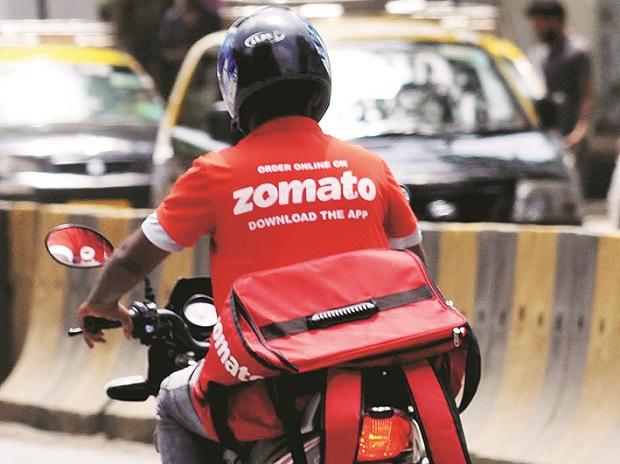
Duopoly catches up in food delivery space as Zomato acquires Uber Eats


The Uber Eats deal helps Zomato to catapult to the number one slot, leaving market leader Swiggy slightly behind.


If the telecom industry runs the risk of becoming a duopoly, the fast growing $4-billion online food delivery space has already turned into a two-horse race. Cab aggregator Uber India’s sale of its food delivery business on Tuesday has clearly set the stage for a Zomato versus Swiggy play.

The signs of consolidation were already there as losses piled up. Last year, Uber India’s rival, Ola, which had earlier acquired Foodpanda, closed down its online food delivery business to move into cloud kitchen services due to aggressive competition.

Seven months later, there’s no room for a third entity in the fight for domination.
In an all stock deal, Uber will get a 9.9 per cent stake in Zomato. According to analysts, the value of the deal is in the region of $350-400 million.

RedSeer data shows that revenues have seen significant growth—up to 150 per cent in 2019—in the food delivery business. But, losses have hit the roof. In many cases, the losses surpass the revenues.

The huge discounts to acquire customers, clubbed with high delivery costs and aggressive promotions, have caused the bloodbath. Even so, the customer numbers are impressive, helping in the subsequent funding rounds.

Indeed, cash strapped companies have always looked for fresh funding to continue to grow. For instance, in the case of Uber Eats, India made up for more than 3 per cent of its global gross revenues in the last three quarters and it already grabbed 12 per cent of the market share. At the same time, around 25 per cent of Uber Eats’ global losses came from India in the corresponding period.

Profitability, a goalpost for investors, has been a mirage in the food delivery business. Even Zomato, backed by Alibaba, has been struggling to make money with its losses rising tenfold in March 2019 to cross the Rs 1,000-crore figure. Its revenues in the same period soared 188 per cent to Rs 1,397 crore.

Company News

Monday, January 20, 2020

Uber sells its India food delivery business to Zomato in all-stock deal


The deal is applicable only in India and Uber Eats will continue to operate in Bangladesh and Sri Lanka.


Company News : Uber on Tuesday announced the sale of its food delivery business in India to Zomato in an all-stock deal.

Uber will get a 9.9 per cent stake in Zomato as part of the deal whose size has not been disclosed. The deal for Uber Eats, which operates in 41 cities, was signed at 3 am, and its customers will be shifted to the Zomato app from 7 am.

Around 245 Uber Eats employees will be affected by the deal. However, sources in Uber India say they will be in the pay rolls till March 31 and that the company is making every effort to absorb some of them and provide support to the rest in finding jobs.

The deal is applicable only in India and Uber Eats will continue to operate in Bangladesh and Sri Lanka. According to sources the deal value is around $300- 350 million.

We are proud to have pioneered restaurant discovery and to have created a leading food delivery business across more than 500 cities in India. This acquisition significantly strengthens our position in the category,” said Deepinder Goyal, CEO of Zomato.

Sources said the move is part of Uber’s strategy to be either number one or two in each of their businesses in every country they operate. In India, Uber Eats grew very quickly to take a 12 per cent share of the food delivery market. However, while India constituted for 3 per cent of the global gross booking of Uber Eats it also constituted for 25 per cent of its global EBITDA losses for the business segment. Intense competition in India’s food delivery market prevented India Uber Eats from taking either the first or second position, which are with Zomato and Swiggy.

The move to double down in India will help Uber Inc to improve the financials of Uber Eats.

Uber is concentrating on making its cab hailing business in India profitable and will expand of its network within the country from 50 cities to 200 cities this year.

India remains an exceptionally important market to Uber and we will continue to invest in growing our local Rides business, which is already the clear category leader. We have been very impressed by Zomato’s ability to grow rapidly in a capital-efficient manner and we wish them continued success, ” said Dara Khosrowshahi, CEO of Uber.

The move is expected to push Zomato to the top slot in this space, pushing down Swiggy.

Thursday, January 9, 2020

PIN-verification to RideCheck: Uber India announces new safety features


Uber will also be experimenting with audio recording as a safety feature in the Indian market this year.


Business Standard : Uber announced the launch of new safety features for the India market on Thursday.

The first one, RideCheck, will enable the company to note trip irregularities such as long or unexpected stops or midway drops that might indicate an increased safety risk, especially for women.

If an anomaly is detected, Uber will send a push notification to both driver and rider, through the safety blue shield within the app. They will then see five or six options to clarify on the situation, such as share location, call 100, reach out to the Uber safety line and so on,” said Sachin Kansal, it senior director for global safety products.

The company says the feature is now live for about half of Uber's users and will be available for the other half within two weeks. Riders have complained of not being able to get help or being stranded on roads due to a cab breakdown and so on. This feature could address some of these.

Uber will also be experimenting with audio recording as a safety feature in the Indian market this year. This choice will be given to rider or driver through their phone while on-trip. When the trip ends, the user has the option to report a safety incident and send the recording. The audio file will be recorded within the Uber app and encrypted. The user will not be able to listen to the stored recording on his or her device but may choose to send it to Uber’s customer support agents, who will use the audio to understand what did happen and take action. Only Uber will have access to the audio once the user sends it.
It is a feature we tested in the Latin America market. We want to make sure we keep local regulation in mind before we pilot it in India,” Kansal said.

Final word is awaited on the Personal Data Protection Bill. Once made into law, this will decide the privacy and personal data protections people would have in cases like these. The third feature is similar to the PIN-verification used by rival firm Ola. Once a rider boards a vehicle, they may provide a four-digit PIN number to the driver, verbally. The driver can then start the trip in the app only when the correct PIN is entered.

We are also working on making this happen wirelessly — once a user is in close enough proximity with the driver, the PIN number can get entered automatically,” said Kansal.

Tuesday, October 22, 2019

Car ownership is a trap that can be prevented: Uber CEO Dara Khosrowshahi


He says the younger generation doesn't dream of owning a car, but instead wants the freedom of having any service on demand.


Uber Chief Executive Officer Dara Khosrowshahi says the younger generation doesn’t dream of owning a car, but instead wants the freedom of having any service on demand. He also feels that established protocols and industries are the enemies of innovation.

Car ownership is a trap that can sometimes be prevented. India does not need to be trapped by these establishments. India can actually be the innovator for the developing countries of the world,” Khosrowshahi said here on Tuesday. He was responding to a question seeking comment on Finance Minister Nirmala Sitharaman’s assessment that the slowdown in the domestic auto industry was due to a shift in the millennials’ preference for ride-hailing apps.

On concerns that the company is losing a lot of money in India, Khosrowshahi said, “The profitability characteristics of our business here (in India) are improving. India is a fundamental part of Uber’s growth; it’s among the top 10 markets for us. We continue to lean on and invest in India.”

We are going to invest the profits from some of our more mature products into your products, such as Auto, Moto, and Transit,” he added.

The Uber CEO was in New Delhi to announce a partnership with Delhi Metro Rail Corporation (DMRC) under which the Uber app will get integrated with the details of metro trains to provide commuters a seamless experience while travelling from one point to another.

Delhi is the second Asia-Pacific city where Uber will provide riders with the ability of planning their transit journey with real-time information and end-to-end directions via its app.

Initially, Uber will only provide an overview of routes on which public transport is available. In the long term, however, there is a plan to integrate payments for different modes of transport within the Uber app.

Khosrowshahi agreed that India was a competitive market, with consumers wanting a great service at low prices. “India has also become the innovation gateway for Uber which it can export to other parts of the world,” he said.


Wednesday, April 24, 2019

Uber restructures business; India now integrated with European region 


The move of integrating the two regions under a single leadership is primarily meant to bring in more synergies in the ridership business.


Business Standard : In a major restructuring in India, the rides business of Uber India will now report to Pierre-Dimitri Gore-Coty who as vice president currently heads the car hailing company's Europe, middle east and Africa business from Amsterdam. At present, the India rides business reports to Asia Pacific region, headquartered in Singapore.

Coty will now have an integrated portfolio of regions to oversee. It includes Uber’s Asia Pacific ride business which has India and south Asia, Japan, South Korea, Taiwan, New Zealand and Australia, apart from his existing responsibilities. Amit Jain who earlier started the rides business in India and headed Uber India’s operations before moving up to become the head of the Asia Pacific business has decided to quit the company. With this move the Asia Pacific rides business will be integrated with Coty’s existing portfolio. Explaining the changes at a time when the company has filed for an IPO Barney Harford, COO, Uber says:

After four great years, Amit Jain will be leaving Uber at the end of May to take a well-deserved break. Amit has been instrumental in growing our rides business—first in India from launch to category leadership, and more recently across the Asia Pacific region. I’d like to thank him for his contribution and wish him every success in his future endeavours.

I’m excited that Pierre-Dimitri Gore-Coty, one of our most experienced leaders, will take responsibility for our Asia Pacific rides business in addition to his current role leading our rides teams across Europe, the Middle East and Africa. I look forward to seeing Pierre work with our talented APAC teams to unlock opportunity markets such as Japan and South Korea, and continue our strong momentum in markets such as India and Australia. Uber remains deeply committed to the Asia Pacific region and under Pierre’s leadership will continue to invest in our people, products and partnerships.”

The move of integrating the two regions under a single leadership is primarily meant to bring in more synergies in the ridership business. For instance emerging markets like India and sub Saharan Africa which include Egypt, Nigeria, Kenya and Tanzania have a lot of similarities in the business and products which are being developed in one of the countries are being launched in the others. For instance Uber Lite which was developed in India to take care of the slow internet speeds after its success in India has been launched in about 20 other countries which include markets in the sub Saharan region. Similarly high capacity vehicles which have been launched in Egypt are also expected to be experimented with in India to see their potential.