Showing posts with label FOOD. Show all posts

Sunday, March 29, 2020

Covid-19 crisis: Goa govt allows Swiggy, Zomato to deliver food, groceries


Goa Chief Minister Pramod Sawant has said that he was irked by some people, who prefer to violate the 21-day lockdown to buy something as trivial as a shampoo.


The government of Goa on Sunday issued a notice, whereby, it authorised Swiggy, Zomato and other home delivery platforms to operate and deliver food, groceries and other essential items at doorsteps during the lockdown due to COVID-19.

"ECommerce operators such as @swiggy_in, @ZomatoIN and other platforms have been permitted to deliver food and grocery items. #GoaFightsCOVID19," the Goa Chief Minister's Office tweeted today.

Earlier, two more coronavirus positive cases were reported in Goa on Sunday taking the state's tally to five.

A total of 1024 positive cases of COVID-19 have been found in India, the Ministry of Health and Family Welfare said on Friday. 27 persons have lost their lives due to this disease in the country.

Twitter slams Goa govt for food shortage, CRPF deployment

Amid growing unease over inability of food and essential items in Goa and the state government's decision to give central paramilitary forces a "free hand" to punish curfew violators, several voices on Twitter have attempted to highlight the plight of a population which has been facing a lockdown as a food shortage for as many as eight days in a row.

COVID-19: People violating lockdown to buy shampoo, says Goa CM
Goa Chief Minister Pramod Sawant has said that he was irked by some people, who prefer to violate the 21-day lockdown to buy something as trivial as a shampoo.
Sawant, whose administration has been criticised for triggering panic in Goa, due to chronic non-availability of essential goods in grocery stores across the state and the requisition of central forces to impose the curfew, said that the Central Industrial Security Force was pressed into service not to "punish people" but to maintain law and order in the state.


Thursday, April 18, 2019

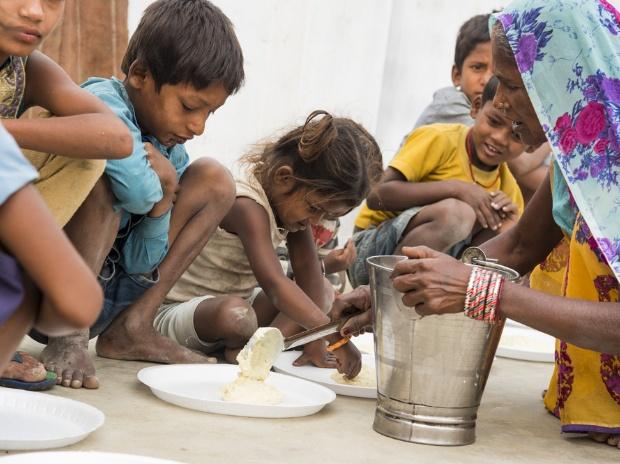
India's widespread food insecurity damaging children's ability to learn


Food insecurity can also cause children to experience hunger, undernutrition, and micronutrient deficiencies. This can lead children to have problems with concentration and memory.


There has been an impressive expansion in school enrolment in India since the early 2000s. Despite this, India is in the midst of a “learning crisis”, with improvements in learning lagging behind increases in enrolment.

Worldwide, India also has one of the highest rates of child undernutrition and household food insecurity – that is, inadequate or inconsistent access to enough safe and nutritious food to sustain a healthy life.

Both of these issues have negative implications for the long-term health, well-being and productivity of young people, as well as for the economy more broadly.

In our recent study, we used survey data from the Young Lives study of childhood poverty to examine whether there is a link between food insecurity and learning for Indian adolescents.

There are good theoretical reasons why learning and food insecurity may be linked. When households experience food insecurity, they may have to make difficult decisions in order to meet the family’s nutritional needs.

For instance, households that need money for food might reduce spending on school fees and materials. Children might miss school, have less time available to study, or even drop out altogether so that they can contribute to the household economy.

Food insecurity can also cause children to experience hunger, undernutrition, and micronutrient deficiencies. This can lead children to have problems with concentration and memory. It can even impair their cognitive development.

Children who experience food insecurity might also feel irritability and shame. This could impact negatively on their interactions with their parents, teachers and peers.

In the Young Lives data, 47% of 12-year-olds had experienced household food insecurity at some stage during the observation period. And even 18% of the wealthiest families had experienced food insecurity; food insecurity is not exclusively a matter of poverty.


Thursday, April 4, 2019

Poor diet leads to hundreds of deaths in India every year: Lancet study


The study estimates that one in five deaths globally -- equivalent to 11 million deaths -- are associated with poor diet.


Poor diet leads to hundreds of deaths in India annually, according to a Lancet study which found that globally one in five people die due to the lack of optimal amounts of food and nutrients on their plates.

The report, which tracked trends in consumption of 15 dietary factors from 1990 to 2017 in 195 countries, showed that almost every region of the world could benefit from rebalancing their diets.

The study estimates that one in five deaths globally -- equivalent to 11 million deaths -- are associated with poor diet, and diet contributes to a range of chronic diseases in people around the world.
In 2017, more deaths were caused by diets with too low amounts of foods such as whole grains, fruit, nuts and seeds than by diets with high levels of foods like trans fats, sugary drinks, and high levels of red and processed meats.
Low intake of whole grains -- below 125 grammes per day -- was the leading dietary risk factor for death and disease in India, the US, Brazil, Pakistan, Nigeria, Russia, Egypt, Germany, Iran, and Turkey.
In Bangladesh, low intake of fruits -- below 250 grammes per day -- was the leading dietary risk.
In 2017, the countries with the lowest rates of diet-related deaths were Israel, France, Spain, Japan, and Andorra. India ranked 118th with 310 deaths per 100,000 people.
The UK ranked 23rd (127 deaths per 100,000), and the US ranked 43rd (171 deaths per 100,000) after Rwanda and Nigeria (41st and 42nd).
China ranked 140th, with 350 deaths per 100,000 people, researchers said in a statement.
The findings highlight the urgent need for coordinated global efforts to improve diet, through collaboration with various sections of the food system and policies that drive balanced diets.
"This study affirms what many have thought for several years -- that poor diet is responsible for more deaths than any other risk factor in the world," said Christopher Murray, at University of Washington in the US.
"While sodium, sugar, and fat have been the focus of policy debates over the past two decades, our assessment suggests the leading dietary risk factors are high intake of sodium, or low intake of healthy foods, such as whole grains, fruit, nuts and seeds, and vegetables," said Murray.Keep Reading : Business Standard

Wednesday, January 9, 2019

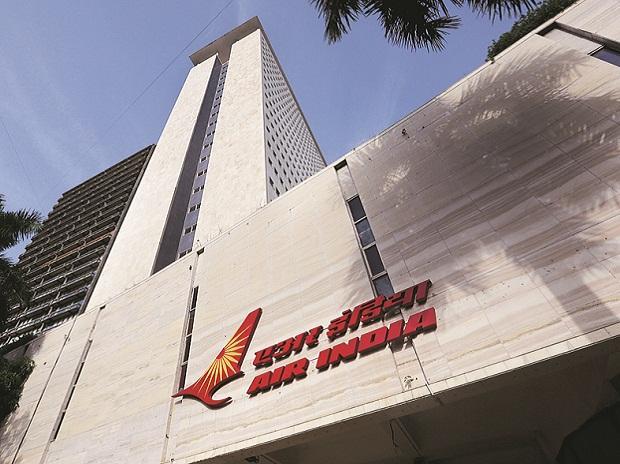
Now, Air India to serve food from stocked on international return journeys


Within the next a few months, Air India will start serving food from India on its flights returning from the Gulf region.


Air India's Chairman and Managing Director Pradeep Singh Kharola said Wednesday the airline has started carrying food from India for use during the journey back to the country, in an attempt to rationalise catering costs on international flights.

The loss-making airline has already started using food items stocked from India during its onward journey to Stockholm, Copenhagen, Birmingham and Madrid, and use them when returning. It has said food items purchased from these foreign cities are much more expensive when compared to Indian cities.

"The food is taken from here in India in chillers and then it is heated whenever it has to be used... Catering costs for us are around Rs 600 crore to Rs 800 crore a year. Catering in India is 3-4 times cheaper as compared to catering in the West," Kharola said.
Within the next a few months, Air India will start serving food from India on its flights returning from the Gulf region, he added.

As a cost-cutting measure, Air India decided in July 2017 to not serve non-vegetarian food to economy class passengers on its domestic flights.
"There are some flights like the ones going to Gulf, Singapore and even some parts of Europe, where it is possible to upload the food here (in India) only. Some work is going on in that direction," he said.


"More important thing is the taste. Whatever you can do, the European caterer's taste can't match with the Indian caterer, especially when it comes to Indian food. That is the additional benefit we get. The main thing is that the costs come down drastically," he added.

The portion of the food given to passengers would remain exactly the same, he clarified.
Asked how much Air India would be able to save with this measure, Kharola said these are early days and the programme will expand.

Air India is estimated to have a debt burden of more than Rs 48,000 crore and the government's efforts for strategic disinvestment of the flag carrier failed in May last year. It has been making losses since the merger with Indian Airlines in 2007.

High interest burden, increasing competition, high airport user charges, adverse impact of exchange rate variation and liberalised bilaterals to foreign carriers leading to excess capacity in the market are among the reasons for the losses, according to the civil aviation ministry.


Monday, October 29, 2018

Being food insecure: Rising income inequalities linked to unhealthy diets


While there are obvious health implications associated with hunger and not eating a healthy diet, there are other less obvious implications associated with the struggle to access food.


One in every five people in the UK today are living in poverty – that is, living with a household income below 60% of the median national income when housing costs are considered. And according to recent research by the Joseph Rowntree Foundation, two-thirds of children in poverty live in a working family. These rates are expected to increase sharply by 2021-22, assuming there is no change in government policy.

Poverty is linked directly to how people access food. A recent Social Market Foundation (SMF) study confirms a growing body of academic research that shows that food is a key component of household budgets. When these budgets are stretched, families trade down on their food choices. One in three low income households in the survey indicate that they purchase cheaper and less healthy food in order to make their budgets stretch. Many adults reported cutting back on their own food consumption so that others in their family, such as children, can eat.

Geography plays an important role in the affordability of food. The cost of food available to people will depend on what format of shop is located in an area, for example. Research by the consumer charity Which? shows that convenience shops charge more for the same items compared to larger format shops. On top of this, small shops have fewer product lines, tend not to carry own-brand value labels, and have a limited selection of fruits and vegetables.

Food deserts
The SMF study also found that more than a million low-income households live in areas known as “food deserts”. These are areas where access to good quality food is likely to be a challenge because there is an absence of such food available to purchase. The study defines a food desert as the presence of two or fewer VAT-registered food shops in areas based on population concentrations of between 5,000 to 15,000 people. These areas will be smaller in urban places compared to rural places. What the study shows is that nearly one in ten areas that are classed as income deprived can also be considered a food desert.

The important thing to understand about this research is that it identifies areas where there are likely to be high concentrations of people on low income who will have the added burden of having to travel further than others to access food. This will insure an additional cost for them in terms of time or money. If you have £20 a week spend on food, not unusual for the poorest fifth of the population, then you don’t want to be spending some of that on the transport to get to the shops. You want that money to go toward food.
On top of this, you must carry what you get, so you will choose food items that are easy to carry and make decisions about what you really need. A bag of potatoes is heavy. Vegetables take up a lot of volume and go off quickly. Fruit is expensive.. Read More

Business Standard