Showing posts with label ONLINE FOOD DELIVERY. Show all posts

Tuesday, January 21, 2020

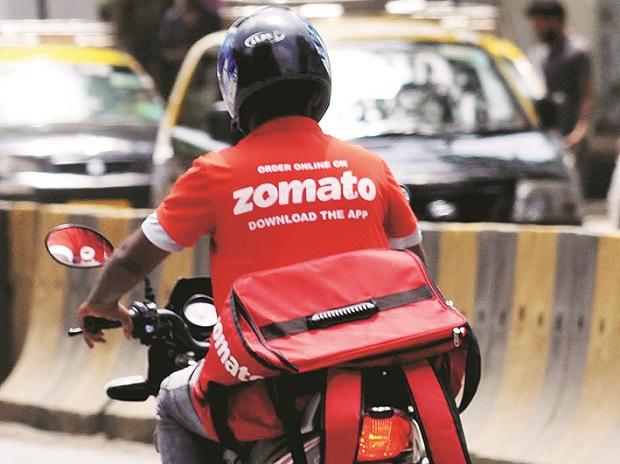
Duopoly catches up in food delivery space as Zomato acquires Uber Eats


The Uber Eats deal helps Zomato to catapult to the number one slot, leaving market leader Swiggy slightly behind.


If the telecom industry runs the risk of becoming a duopoly, the fast growing $4-billion online food delivery space has already turned into a two-horse race. Cab aggregator Uber India’s sale of its food delivery business on Tuesday has clearly set the stage for a Zomato versus Swiggy play.

The signs of consolidation were already there as losses piled up. Last year, Uber India’s rival, Ola, which had earlier acquired Foodpanda, closed down its online food delivery business to move into cloud kitchen services due to aggressive competition.

Seven months later, there’s no room for a third entity in the fight for domination.
In an all stock deal, Uber will get a 9.9 per cent stake in Zomato. According to analysts, the value of the deal is in the region of $350-400 million.

RedSeer data shows that revenues have seen significant growth—up to 150 per cent in 2019—in the food delivery business. But, losses have hit the roof. In many cases, the losses surpass the revenues.

The huge discounts to acquire customers, clubbed with high delivery costs and aggressive promotions, have caused the bloodbath. Even so, the customer numbers are impressive, helping in the subsequent funding rounds.

Indeed, cash strapped companies have always looked for fresh funding to continue to grow. For instance, in the case of Uber Eats, India made up for more than 3 per cent of its global gross revenues in the last three quarters and it already grabbed 12 per cent of the market share. At the same time, around 25 per cent of Uber Eats’ global losses came from India in the corresponding period.

Profitability, a goalpost for investors, has been a mirage in the food delivery business. Even Zomato, backed by Alibaba, has been struggling to make money with its losses rising tenfold in March 2019 to cross the Rs 1,000-crore figure. Its revenues in the same period soared 188 per cent to Rs 1,397 crore.

Company News

Monday, January 20, 2020

Uber sells its India food delivery business to Zomato in all-stock deal


The deal is applicable only in India and Uber Eats will continue to operate in Bangladesh and Sri Lanka.


Company News : Uber on Tuesday announced the sale of its food delivery business in India to Zomato in an all-stock deal.

Uber will get a 9.9 per cent stake in Zomato as part of the deal whose size has not been disclosed. The deal for Uber Eats, which operates in 41 cities, was signed at 3 am, and its customers will be shifted to the Zomato app from 7 am.

Around 245 Uber Eats employees will be affected by the deal. However, sources in Uber India say they will be in the pay rolls till March 31 and that the company is making every effort to absorb some of them and provide support to the rest in finding jobs.

The deal is applicable only in India and Uber Eats will continue to operate in Bangladesh and Sri Lanka. According to sources the deal value is around $300- 350 million.

We are proud to have pioneered restaurant discovery and to have created a leading food delivery business across more than 500 cities in India. This acquisition significantly strengthens our position in the category,” said Deepinder Goyal, CEO of Zomato.

Sources said the move is part of Uber’s strategy to be either number one or two in each of their businesses in every country they operate. In India, Uber Eats grew very quickly to take a 12 per cent share of the food delivery market. However, while India constituted for 3 per cent of the global gross booking of Uber Eats it also constituted for 25 per cent of its global EBITDA losses for the business segment. Intense competition in India’s food delivery market prevented India Uber Eats from taking either the first or second position, which are with Zomato and Swiggy.

The move to double down in India will help Uber Inc to improve the financials of Uber Eats.

Uber is concentrating on making its cab hailing business in India profitable and will expand of its network within the country from 50 cities to 200 cities this year.

India remains an exceptionally important market to Uber and we will continue to invest in growing our local Rides business, which is already the clear category leader. We have been very impressed by Zomato’s ability to grow rapidly in a capital-efficient manner and we wish them continued success, ” said Dara Khosrowshahi, CEO of Uber.

The move is expected to push Zomato to the top slot in this space, pushing down Swiggy.

Friday, September 13, 2019

Facing heat from restaurants, Zomato suspends Infinity Dining programme


Introduced in July, the Infinity Dining programme allowed Zomato's Gold subscribers to order unlimited food and drinks at a set price from the menu of partner restaurants.


Facing heat from partner restaurants over its "deep discounting schemes", food delivery platform Zomato has suspended the Infinity Dining programme from its app.

A Zomato spokesperson confirmed the development to The Economic Times, saying they have received "a range of feedback about Infinity Dining, and have paused it as we incorporate the feedback".

Introduced in July, the Infinity Dining programme allowed Zomato's Gold subscribers to order unlimited food and drinks at a set price from the menu of partner restaurants for a limited period of time.

The programme was launched in three cities with over 300 restaurants.
The National Restaurant Association of India (NRAI) said it a was "huge victory" for them.

Infinity was the tipping point of the logout campaign. It is a huge victory for restaurant companies that it has been withdrawn,” NRAI Mumbai chapter head Anurag Katriar told the business daily.

Online food delivery aggregators, especially Zomato, and NRAI are at loggerheads for over a month.

The restaurant association had started #Logout campaign on August 14 against aggressive pricing and deep discounting by restaurant aggregators. Following which many eateries had had left these platforms.

The issue has been going back and forth between both sides since then, with Zomato’s Gold scheme being at the centre of much discussion around deep discounting. Zomato Gold began last year as an exclusive, invite-only service, targeted at high-end restaurants serving niche customers who may already be their patrons.

In August, Zomato's founder Deepinder Goyal had admitted that his company made mistakes with its premium subscription service ‘Gold’ and would make changes to the appease restaurants.

Somewhere, we have made mistakes and things haven’t gone as planned. This is a wake-up call that we need to do 100x more for our restaurant partners than we have done before,” Goyal tweeted.

Business Standard

Thursday, August 1, 2019

#ZomatoUninstalled, #BoycottUberEats trend after 'food is religion' tweet 


Even as the incident had social media divided, the Jabalpur police sought an undertaking from the Zomato customer that he would not spread religious hatred.


Business Standard : A day after Zomato snubbed a customer who refused an order from a non-Hindu rider, #ZomatoUninstalled trended on Twitter on Thursday, with many accusing the online food delivery platform of bias. #BoycottUberEats also caught on after UberEats backed its rival’s “Food has no religion” comment.

Even as the incident had social media divided, the Jabalpur police in Madhya Pradesh sought an undertaking from the Zomato customer that he would not spread religious hatred. The controversy began on Tuesday when a Zomato customer tweeted: “Just cancelled an order on @ZomatoIN they allocated a non-Hindu rider for my food they said they can't change rider and can't refund on cancellation. I said you can't force me to take a delivery. I don't want don't refund just cancel.”

In response, the official Twitter handle of Zomato tweeted, “Food doesn’t have a religion. It is a religion.”

Zomato founder Deepinder Goyal tweeted: “We are proud of the idea of India — and the diversity of our esteemed customers and partners. We aren’t sorry to lose any business that comes in the way of our values.”

While several Twitter users came out in support of Goyal, others agreed with the customer and pulled out examples of complaints where Zomato did not take a similar stand. The tweet that began the entire issue was, however, deleted by Thursday morning.
Hashtags like #boycottzomato trended on Wednesday, #ZomatoUninstalled gathered steam on Thursday.

"Bye bye Zomato, you lost one precious customer, many more to come… Don't support one side if you can't resolve the issue. #Zomato Uninstalled,” tweeted one user. Many uninstalled UberEats’ app as well, and tweeted #BoycottUberEats for supporting Zomato.
This is not the first time religious issues have prompted users to uninstall an app. 

#BoycottAmazon had trended on Twitter in May after toilet seat covers and other items with images of Hindu gods were spotted. In 2015, Snapdeal faced #BoycottSnapdeal after its then brand ambassador Aamir Khan said he may consider moving out of India with his family.

Sunday, June 17, 2018

From Swiggy to Foodpanda, online food delivery service firms face GST heat

Food delivery services are taxed at 18% which the restaurants have to pay.


Online food delivery service companies like Swiggy are facing the heat from restaurants after the goods and services tax (GST) on eating outlets was cut to five per cent, from 18 per cent in November, and input tax credit provision was withdrawn.

Some restaurants have started charging higher prices on online food delivery platforms. Others are negotiating a commission cut with online food delivery partners to make up for the 3.5 per cent additional cost due to unavailability of the input tax credit (ITC) facility.

Swiggy, Zomato and Foodpanda provide online delivery services to restaurants at a commission of around 20 per cent, which is levied an 18 per cent GST. Unlike earlier, restaurants can no longer claim ITC on the 18 per cent GST for the input services from these delivery platforms. “These online food delivery companies have represented for a rate reduction or to allow ITC to restaurants. The matter is being discussed," said a government official.

Swiggy, which holds about 60 per cent market share and delivers 450,000 orders a day, has approached the government for rate reduction to five per cent.
Food delivery services are taxed at 18 per cent, which the restaurants have to pay. But, they cannot now avail of any tax credit against input services.

A senior executive of a major online food delivery player said they had been under pressure from restaurants to cut margins by three to four per cent. He added other restaurants had, on their own, increased the prices on their platform. “We do not have an exact number but many restaurants are slowly increasing the prices on online delivery platforms, which is a setback,” he added.

Swiggy told Business Standard, "The high GST rate of 18 per cent on online food delivery service providers and ineligibility of credit of such GST charged to the restaurants could have an adverse impact on growth of the sector." A reduction in GST rates will keep food costs affordable and create more jobs in the sector, while furthering the government’s initiatives on Digital India, it added