Showing posts with label ALIBABA. Show all posts

Tuesday, July 14, 2020

Google is in advanced talks to invest $4 billion in Jio Platforms


Global tech leaders from Facebook to Intel are looking for multiple ways to grab a slice of the action in the South Asian country, where millions of first-time internet users are added every month.
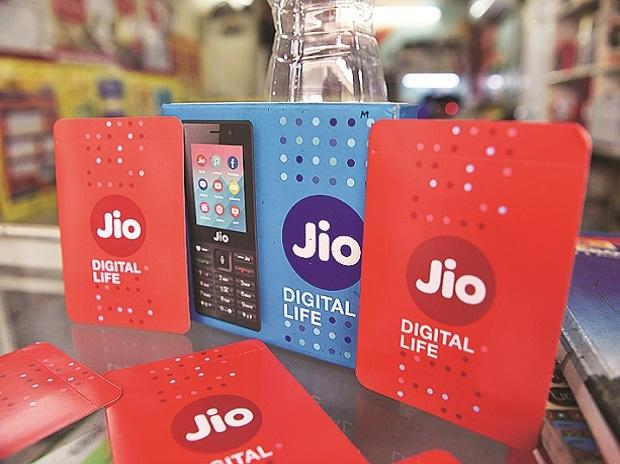

Google is in advanced talks to buy a $4 billion stake in Mukesh Ambani’s technology venture, people familiar with the matter said, seeking to join rival Facebook in the chase for growth in a promising internet market.

The Mountain View, California-based titan has been discussing the investment in Reliance Industries’ digital arm, Jio Platforms, the people said, asking not to be identified because the information is private. An announcement could come as soon as the next few weeks, according to the people.

Jio is at the centre of the Indian tycoon’s ambition to transform his energy conglomerate into a homegrown technology behemoth — something on the lines of China’s Alibaba Group Holding. The venture has turned into a magnet for Silicon Valley investors, attracting almost $16 billion from Facebook to KKR & Co. in the past three months. Should the talks with Google result in a deal, that would further burnish Jio’s credentials in its push to upend online retail, content streaming, digital payments, education and health care in a market of more than a billion people.

Global tech leaders from Facebook to Intel Corp. are looking for multiple ways to grab a slice of the action in the South Asian country, where millions of first-time internet users are added every month. Jio Platforms, which boasts almost 400 million users through its wireless network, offers the largest base of such users who are increasingly buying merchandise online and downloading music and video, using cheap phones and Jio’s own cut-price data services. An arm of Qualcomm Inc. was the latest in Jio’s growing list of investors, who also include Intel Capital, Silver Lake and Mubadala Investment. As of July 12, Reliance had sold 25.2 per cent of Jio, valuing the venture at $65 billion.


Monday, May 18, 2020

Alibaba's Jack Ma resigns; SoftBank proposes three new board members


The departure of Ma, who retired as Alibaba's executive chairman in September, comes as he pulls back from formal business roles to focus on philanthropy.


SoftBank Group Corp said on Monday that Alibaba co-founder Jack Ma will resign from its board, in the latest departure by a high-profile ally of CEO Masayoshi Son.
The departure of Ma, who retired as Alibaba's executive chairman in September, comes as he pulls back from formal business roles to focus on philanthropy.

SoftBank will propose three new appointments to the board, including group Chief Financial Officer Yoshimoto Goto, at its annual general meeting on June 25. The number of board members will expand to 13.

SoftBank will also propose the election of Lip-Bu Tan, CEO of chip design software firm Cadence Design Systems who is also chairman of venture capital firm Walden International, and Yuko Kawamoto, a professor at Waseda Business School as outside directors. Kawamoto will become its only female board member.

That meets a demand from activist investor Elliott Management, which has pressed SoftBank to improve board diversity, and also wants a new subcommittee to oversee the investment process at the $100 billion Vision Fund.

The pressure comes as Son's top-down management style is under increased scrutiny with the fund expected to report its third consecutive quarterly operating loss later on Monday, plunging the group as a whole to a record loss.

The board is largely comprised of SoftBank insiders and confidants. It also includes Yasir al-Rumayyan, who heads the Saudi Arabian sovereign wealth fund that is the Vision Fund's biggest outside backer.


Monday, December 23, 2019

Asia's richest man Mukesh Ambani adds $18 billion to his fortune in 2019 


In comparison, Alibaba Group founder Jack Ma's net worth grew $11.3 billion, while Jeff Bezos lost $13.2 billion.


It’s been a good year for Asia’s richest man, Mukesh Ambani. The Indian tycoon added almost $17 billion to his wealth as of Dec. 23, the most in Asia, taking his net worth to about $61 billion, according to the Bloomberg Billionaires Index. In comparison, Alibaba Group founder Jack Ma’s net worth grew $11.3 billion, while Jeff Bezos lost $13.2 billion.

The surge in Ambani’s fortune this year was fueled by a 40% jump in the shares of his Reliance Industries Ltd., a conglomerate that’s pivoting more toward consumer offerings than its core oil refining and petrochemicals businesses. The rally in the stock is more than double the gains for India’s benchmark S&P BSE Sensex index during the period.

Investors are piling money on Reliance, betting newer businesses such as telecommunications and retail could soon unlock value. With a goal of building a local e-commerce giant to challenge the likes of Amazon.com Inc. in India, Ambani has spent almost $50 billion -- mostly debt -- on a wireless carrier that’s become India’s No. 1 within three years of debut.

Mukesh Ambani changed the narrative for Reliance Industries” as a leader not just in oil and gas but also in telecom and retail, and possibly soon in e-commerce as well, said Chakri Lokapriya, chief investment officer at TCG Asset Management, which oversees $3 billion in assets in Mumbai.

He successfully identified, invested and executed rapidly to create this new narrative,” Lokapriya said. “We believe this can potentially double shareholder value over the next four years.”

The newer businesses are likely to contribute 50% of Reliance’s earnings in a few years, from about 32% now, Ambani said in August. A representative for Reliance didn’t reply to an email seeking comment on Ambani’s wealth.


Sunday, October 6, 2019

Paytm founder Vijay Sharma says winning in India prepared him for the world


Sharma said the digital payments war is a huge opportunity and that India could produce the payment player which will go on to dominate the world.


Business Standard : Vijay Shekhar Sharma, 41, founded closely held One97 Communications and its brand Paytm (rhymes with ATM) almost two decades ago. It offered a variety of digital services before moving into payments in 2014, just as millions of urban Indians began shopping online.

Two years later, India’s banks created the Unified Payments Interface, a tech umbrella to help banks and fintech startups create services quickly, and the government eliminated high-value currency notes, turbocharging demand for Paytm’s services. Sharma, a self-described hippie who loves to sprinkle U2 and Pink Floyd lyrics into his conversation, now has backers including Alibaba’s Jack Ma, SoftBank’s Masayoshi Son, and Berkshire Hathaway’s Warren Buffett.

Paytm is the market leader in India, where KPMG sees digital payments growing at the fastest rate of any country, with transaction value rising at an estimated annual rate of 20.2 per cent from 2019 to 2023. But competition is heating up as Google, Walmart, and Facebook jump into India, wielding cashback offers to lure customers. Meanwhile, the government has proposed scrapping fees on digital payments, Paytm’s core product.

In an interview in Delhi, Sharma described his career and how Paytm is adapting to India’s changing market, cutting annual expenses 45 per cent and preparing to raise new funds to accelerate the next phase of growth in smaller cities.

What led you to digital payments and e-commerce?
I grew up in a small town called Aligarh where I studied in a very basic Hindi medium school [where Hindi is the medium of instruction]. I didn’t have fancy schooling. I was lucky to get into engineering college in Delhi at the age of 15. I taught myself English by memorizing rock songs and simultaneously reading translated textbooks in English and Hindi. When I graduated, I was the youngest teenage engineer out of the University of Delhi. As the Pink Floyd song [Breathe] goes,

Run, rabbit run.Dig that hole, forget the sun,And when at last the work is doneDon’t sit down it’s time to dig another one.For long you live and high you flyBut only if you ride the tideAnd balanced on the biggest waveYou race towards an early grave.

My early heroes were internet entrepreneurs Jerry Yang and Mark Andreessen. I started One97 Communications in 2000 and began by selling content to users through telecom operators. By 2010 the smartphone became the distribution channel. Payment became our thing, and destiny was in our hands. In 2014 we launched our licensed wallet product. By 2015, Ant Financial had invested in us, then Alibaba and then SoftBank.

Tuesday, June 11, 2019

Alibaba's smart speaker to feature in Audi, Renault, Honda cars in China


The Tmall Genie Auto smart speaker will allow drivers to use voice commands to, for instance, place orders on Alibaba's online retail platform and buy movie tickets.


China's Alibaba Group Holding Ltd on Tuesday said its voice-controlled assistant will feature in local vehicles from Audi AG, Renault SA and Honda Motor Co Ltd, as the tech giant expands in artificial intelligence.

The Tmall Genie Auto smart speaker will allow drivers to use voice commands to, for instance, place orders on Alibaba's online retail platform and buy movie tickets, Alibaba said at the CES Asia 2019 technology trade show in Shanghai.

In the near future, the speaker will also allow drivers to monitor and control smart devices at houses equipped with a Tmall Genie-compatible device, Alibaba said in a joint statement with the three automakers, without specifying vehicle models.

"We are thrilled to partner with global, distinguished auto brands such as Audi, Renault and Honda," said Miffy Chen, general manager at Alibaba AI Labs.

"Together, we can greatly enhance our in-car services and make driving experiences more intelligent and interconnected."

The Tmall Genie is akin to Amazon.com Inc's Echo.
Alibaba launched the device in 2017 and released an auto version in April last year. Other automakers that have said they will install the device in their vehicles include BMW and Volvo Cars.

Amazon also has a vehicle version of its Echo, dubbed the Echo Auto, which it announced in September.

Business Standard

Tuesday, December 18, 2018

Welcome to the future! Alibaba opens first hi-tech hotel in China


FlyZoo Hotel in Hangzhou, capital of east China's Zhejiang Province, where Alibaba has its headquarteres, is known as the company's first 'future hotel'.


Chinese internet giant Alibaba on Tuesday opened its first hi-tech hotel in Hangzhou where guests can check-in by simply scanning their faces, the state media reported.

FlyZoo Hotel in Hangzhou, capital of east China's Zhejiang Province, where Alibaba has its headquarteres, is known as the company's first "future hotel".

Customers can check into the hotel by simply scanning their faces. The facial recognition system installed in the hotel also enables customers to use their faces as key cards to open doors and access other hotel services, Xinhua news agency reported.

Users can also control the lights, television and curtains in the room via Alibaba's voice-activated digital assistant, while robots are deployed to serve dishes, cocktails and coffee.
Hotel bookings and check-out can also be done with a few clicks on mobile through an app.

"The AI-based solution can help customers save time and relieve hotel employees from repetitive work," said Wang Qun, CEO of FlyZoo Hotel.

Wang said the new AI system will help to improve the management efficiency of the hotel, by reducing more than half of the labour force.

For fiscal year ended March 2018, the company reported revenues of USD 39.9 billion.
The hotel is the latest example of Chinese tech companies' foray into traditional industries such as the hospitality sector, the report said.

E-commerce giant JD.com announced in October its strategy to put smart home and electronic devices sold on its platform into hotels, in an effort to boost online sales.
In July, Baidu teamed up with Intercontinental Hotels Group in Beijing to allow guests to use its voice-controlled assistant to adjust room temperature and order room service at ease.

Before that, social media giant Tencent introduced QQfamily, a similar tech solution for hotel operators, in the southern city of Zhuhai last year.

"We want to install a 'smart brain' for hotels," said Wang. "In the future, we will continue to make hotels smarter and more automated, as well as create more customised experiences for consumers," Wang added.