Showing posts with label Indian banking sector. Show all posts

Friday, July 10, 2020

PNB gets board go-ahead to tap market for raising Rs 10,000 crore


The Government of India currently holds 85.59 per cent stake in the bank.


State-owned Punjab National Bank (PNB) on Thursday said its board has approved a proposal to raise Rs 10,000 crore through a mix of both equity and debt.

Besides, the board has cleared opening balance sheet of the amalgamated bank as on April 1, which is post amalgamation of Oriental Bank of Commerce and United Bank of India into PNB, the bank said in a regulatory filing.

The board has given its nod for "raising of capital through issue of equity shares and Basel III-compliant tier-2 bonds by way of private placement, qualified institutional placement (QIP), further public offer (FPO), rights issue or any other mode or through a combination thereof up to an amount of Rs 10,000 crore".

The bank will seek shareholders' nod for raising of equity capital for an amount up to Rs 7,000 crore in the forthcoming annual general meeting.

The Government of India currently holds 85.59 per cent stake in the bank.
The country's second-largest lender PNB is planning to hit capital markets in the fourth quarter of this financial year to raise funds to help meet growth needs and regulatory requirements.

The bank has a capital adequacy ratio of 14.14 per cent at the end of March 2020.
The board also approved appropriation of accumulated losses of Rs 28,707.92 crore from the share premium account of the amalgamated bank.

Wednesday, July 1, 2020

Covid-19 crisis: Banking credit shrinks 1.7% in May as lockdown bites


According to Reserve Bank of India (RBI) data, gross bank credit was down to Rs 91.08 trillion in May, from Rs 92.63 trillion in March.


Bank credit covering all segments — agriculture, industry, services, retail, and priority — shrunk by 1.7 per cent in May, compared to March. May was the second full month of the nationwide lockdown.

According to Reserve Bank of India (RBI) data, gross bank credit was down to Rs 91.08 trillion in May, from Rs 92.63 trillion in March.

On a year-on-year (YoY) basis, gross bank credit growth decelerated to 7 per cent in May 2020, from 11.5 per cent in May 2019, the RBI said in a statement.
Loans to industry — large, medium, small and micro — declined by 1.5 per cent in the two months to Rs 28.61 trillion in May. The micro and small segment showed a 7.6 per cent slump, medium size a decline of 5.4 per cent, and large segment a fall of 0.4 per cent.

The retail segment, covering categories like housing, credit cards, and vehicle loans, contracted 2.9 per cent (Rs 74,790 crore) in the two months. The outstanding retail credit stood at Rs 24.78 trillion. Credit card outstanding — a key segment of the retail category — declined by 14.1 per cent to Rs 96,978 crore in May, compared to Rs 1.08 trillion in March.

The housing loan portfolio also shrunk by 0.7 per cent to Rs 13.29 trillion in May, from Rs 13.38 trillion in March.

Bankers said the June quarter is usually lean, and this year the lockdown has only added to demand (for credit) woes. There has been some traction in credit following resumption in economic activity in some belts, albeit on a lower scale. Demand for working capital from the emergency credit line, however, has improved in June.


Thursday, June 25, 2020

EXIM Bank is planning to raise $2 bn by end of CY20: MD David Rasquinha


Managing Director David Rasquinha said the bank has enough resources to repay bonds ($500 million) maturing in August.


Export-Import Bank of India (India EXIM Bank) plans to raise $2 billion by end of CY20, for lending and managing repayments.

Managing Director David Rasquinha said the bank has enough resources to repay bonds ($500 million) maturing in August. Further, it will tap the international market H2FY21 for raising additional funds to facilitate long-term lending. India EXIM Bank, fully owned by the Union government, reported a 51 per cent rise in profit to Rs 124 crore for FY20.

Its loan portfolio rose 6.23 per cent to Rs 99,446 crore in March 2020. Capital adequacy ratio improved 106 basis points (bps) to 20.13 per cent.
As regards the refinance window offered by the RBI, he said it acts like a back-up facility or an insurance cover in case of failure to raise money from the market.
There is ample liquidity in hand, and the bank can raise money through bi-lateral and swap lines, Rasquinha added.

During FY20, the lender raised foreign currency resources aggregating $1.9 billion. The fundraising was conducted through a variety of instruments. In January this year, India Exim Bank raised $1 billion at a 10-year tenor, with a coupon rate of 3.25 per cent per annum.


Tuesday, June 16, 2020

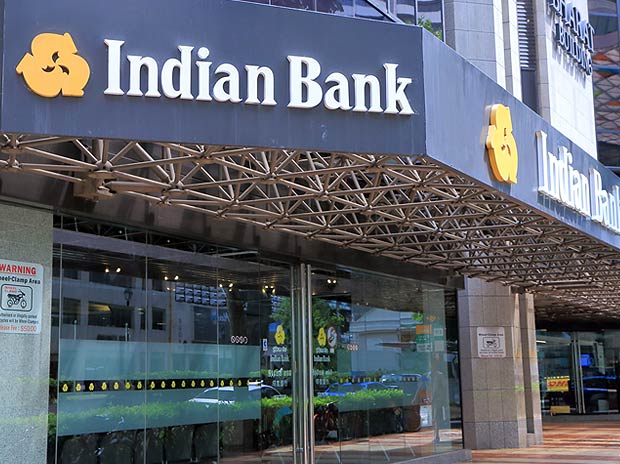
Banking system is in a Catch-22 situation: Indian Bank's Padmaja Chunduru


Indian Bank has 450,000 MSME customers who are eligible for loans guaranteed by the government.


The Indian banking system is in a Catch-22 situation — balancing between credit growth and bad loans, said Padmaja Chunduru, managing director (MD) and chief executive officer (CEO) of Indian Bank.

Chunduru was speaking at a webinar organised by the Indian Chamber of Commerce (ICC) on quantitative easing and credit risk. “Banks are in a Catch-22 situation. If banks don’t give credit, there is a risk of failure of organisations. If banks lend too much, lending might take a hit on the balance sheet. Credit quality is a constraint, and we have to look at ways to assess risks in an uncertain environment,” she said.

However, the immediate concern for bankers was to manage the present situation, she added. Indian Bank has 450,000 MSME customers who are eligible for loans guaranteed by the government.

Chunduru’s views were echoed by Chandra Shekhar Ghosh, MD and CEO of Bandhan Bank. Banks are in a challenging spot as they need to balance credit growth with non-performing assets, he said. “Banks are in a very critical situation as on one hand they are required to assess the credit worthiness of customers, while on the other hand they have to balance it with credit growth.”

Credit growth should start picking up in the second quarter, said Ghosh. But, the biggest challenge would be to give credit to small enterprises which do not have any credit ratings.

While the schemes announced by the government to help the MSME sector are good in intent, the key lies in administering the same, said Rajesh Kumar, MD and CEO, TransUnion Cibil.

“There needs to be a tight monitoring mechanism for assessing MSME's cash flows and production cycles. We have created a Cibil MSME rank to provide risk differentiation," he said.


Friday, May 22, 2020

Covid-19 crisis: Slippages may jump to Rs 5.5 trillion, says India Ratings


Credit costs could touch Rs 2.7 trillion.


Stress emerging from the severe economic shock caused by steps to contain the pandemic may drive total slippages to Rs 5.5 trillion in FY21.
The corporate side may see slippages of Rs 3.4 trillion, and non-corporate side — retail, farming and MSMEs — may account for Rs 2.1 trillion, according to India Ratings.

Banks faced elevated provision pressure (amount set aside for stressed loans) resulting from the corporate stress cycle, from FY16-FY20. For this, they had made substantial provisions and were moving towards a moderated credit cost cycle.

However, the Covid-related measures are likely to result in another cycle of stress. Additionally, the pressure on non-corporate segments, which were already visible before the outbreak, is likely to intensify, said the rating agency.

With a significant drop in economic activity, most sectors in India are expected to experience varying degrees of revenue contraction in FY21, on account of demand and supply disruption. This presents a fresh challenge to banks, which, over the last four years, have been reeling from corporate stress.

Referring to an analysis of 30,000 firms, the rating firm said the total stressed corporate pool may increase from 3.8 per cent of the total bank credit in December 2019, to 6.6 per cent in the post-Covid phase.

The incremental stress is mainly from sectors including power, infrastructure, constructions, hospitality, iron and steel, telecom, and realty.

Referring to non-corporates, it said stress and slippages would aggravate in retail, agriculture, as well as in the micro, small and medium enterprises (MSME) segments. About 40 per cent of incremental slippages could come from non-corporates.

Wednesday, April 29, 2020

Lockdown 2.0: Coronavirus-hit units get Rs 10,000 crore from banks


Banks have built internal capacities for assisting companies, including micro, small & medium enterprises (MSMEs).


Ahead of finalising the package for industries hit by Covid-19, the Union finance ministry reviewed support extended by large public sector banks (PSBs), including via the emergency credit line, to affected firms. 

State Bank of India (SBI) and Bank of Baroda (BoB) have together sanctioned close to Rs 10,000 crore as immediate credit assistance to the affected units.

PSB executives said this was a regular review with top officials of large banks, including SBI. There was also discussion on working capital re-assessment.


Banks have built internal capacities for assisting companies, including micro, small & medium enterprises (MSMEs). Feedback from interactions is expected to act as an input for policies that are in works.

However, it is not clear when the package would be finalised, officials said. A SBI executive said the bank is giving these emergency loans to those in need. It does not involve elaborate scrutiny. Only thing is that borrowers have to establish the Covid impact.

Indian Bank sees new opportunities with larger footprint after merger


Both the banks have come together amid the coronavirus (Covid-19) lockdown and started working as a single bank with a larger footprint.


After the merger of Allahabad Bank with it, Indian Bank sees growth in lending and deposits and new opportunities emerging despite the lockdown, according to Padmaja Chunduru, Managing Director & CEO of Indian Bank. Both the banks have come together amid the coronavirus (Covid-19) lockdown and started working as a single bank with a larger footprint.

Even during the lockdown period, both lending and deposits are growing. "We must be careful in assessing and giving the loans. We have been one of the earliest banks to announce emergency loans across the table. I think this opens up new opportunities. First of all we have to assess the risks because there are so many more sectors now and the whole paradigm is shifting," Chunduru said.

The merger was a big task in front of the bank, but when confronted with the Covid-19 issue, the whole bank came together and the safety of the employees became paramount. Safety measures have been implemented across the bank. On April 24, it was Allahabad Bank's Foundation Day, but the amalgamated entity could not celebrate due to the lock-down.


The bank has also launched an online learning management solution for the staff. The best the welfare measures that were offered by the two banks have been made applicable to all the employees and all of them have been well received. In terms of alignment of products of both the banks, especially those related to housing loans, Indian Bank had certain products which were more attractive to the customers and they were launched across the country.


Monday, April 27, 2020

RBI opens Rs 50,000-crore special liquidity window to support mutual funds


According to the available data, the credit risk fund category saw its assets under management (AUM) dip by another 12 per cent in April to Rs 48,392 crore.


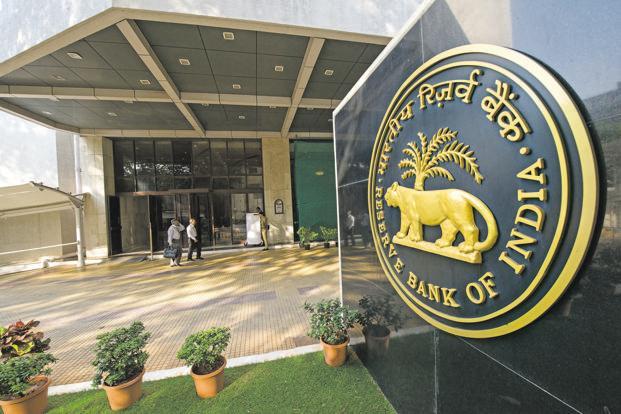
The Reserve Bank of India (RBI) on Monday opened a Rs 50,000-crore special liquidity window for mutual funds (MFs) to give a line of credit to the industry in the light of heightened redemption pressure after the closure of six schemes by Franklin Templeton Mutual Fund.

“The stress is, however, confined to the high-risk debt MF segment and, at this stage, the larger industry remained liquid,” the RBI said on Monday.

The RBI window, which is effective from April 27, allows MFs to access liquidity through two routes. Banks can borrow funds from the statutory liquidity facility for them from the RBI and lend to MFs against their collateral debt securities, or buy commercial papers or corporate debentures from the MFs. Following Rs 1.9 trillion outflows from debt schemes in March 2020, credit-oriented categories have continued to see further exits in April.


According to the available data, the credit risk fund category saw its assets under management (AUM) dip by another 12 per cent in April to Rs 48,392 crore, followed by a medium duration fund, where the AUM was down by another 9 per cent to Rs 25,502 crore.

Industry executives said the RBI credit line was a much-needed support, considering that redemption pressures were expected to exacerbate after Franklin Templeton’s surprise move to wind up six of its credit-oriented schemes with combined net assets of Rs 25,000 crore.

Thursday, April 9, 2020

Coronavirus impact: Credit growth likely to remain modest, says RBI


MPC report says better transmission of rates would remain priority.


With the Covid-19 pandemic posing huge risks for the Indian economy, the credit growth is likely to remain modest, reflecting weak demand and risk aversion, said the Reserve Bank of India (RBI) in its monetary policy (MPC) report.

“Better transmission of monetary policy impulses to the credit market would remain a priority,” the RBI said.

Credit offtake in the economy has been fairly slow with non-food credit growing at 6.1 per cent in FY20 (up to March 13), compared to 14.4 per cent growth in the same period last fiscal year.

According to RBI, the slowdown in credit growth was spread across all banks, especially those in the private sector. However, in the recent period (December 2019-March 2020), the public sector banks (PSBs) have seen a slight uptick in credit offtake.
The data shows that of the incremental credit extended by scheduled commercial banks (SCBs) during the year (March 15, 2019 to March 13, 2020), 62.6 per cent was provided by private sector banks, 36.6 per cent by PSBs, and 0.8 per cent by foreign banks.

The report says banks’ investment in commercial papers (CPs), bonds, debentures, and shares of public and private corporates, which is a part of non-SLR (statutory liquidity ratio) investment, has gone down in the second half of FY20 (up to March 13) than a year ago because of lower investments, resulting non-food credit growth being lower.
“With credit offtake remaining muted and non-SLR investments declining, banks increased their SLR portfolios. Banks held excess SLR of 8.4 per cent of net demand and time liabilities (NDTL) on February 28, as compared with 6.3 per cent of NDTL at the end of March 2019,” RBI said.

Monday, February 24, 2020

Banks of future will be very different, says RBI governor Shaktikanta Das 


Regulating the distinct segments of these banks would be a challenging task, said Shaktikanta Das.


Banks of the future would be extremely different from now, and regulating the distinct segments of these banks would be a challenging task, Reserve Bank of India (RBI) Governor Shaktikanta Das said on Monday.

Therefore, an integrated framework for resolution of financial firms operating in India could be expected in the near future as that would add to the resilience of the financial system, Das said at the annual banking event of Mint.

Financial technology companies (fintechs) are posing challenges to the existing banks, but big technology companies, or BigTechs, are also entering the financial services industry in a significant way. Some BigTechs are depending on their data-network activities, while venturing into payments, money management, insurance, and lending activities.

At present, financial services are only a small part of their business globally. But given their size and reach, their entry into financial services has potential to bring about the rapid transformation of the financial sector landscape,” Das said.

The entry of these firms have many potential benefits, and they can easily provide basic financial services to the masses at cheap cost, he said.

But the advent of fintechs and BigTechs are a challenge to banks, as well as banking regulators. While banks have to imbibe these new technology and business practices to remain competitive, banking regulators, on the other hand, Das said, “have to focus on achieving a balance between promoting innovation and applying a measured/proportional supervisory and regulatory framework.”

All these mean that the future of banking will not be a continuation of the past.
We would see a very different banking sector, in terms of structure and business model, in the coming years,” the RBI governor said.

There would be different categories of banks. The first segment could be large Indian banks with domestic and international presence, for which merger of public sector banks are already taking place. The second segment could be mid-sized niche banks, and the third segment could be smaller private sector banks, small finance banks, regional rural banks, and co-operative banks. The fourth could be of digital players, which may act as service providers directly to customers or through banks by acting as their agents or associates.