Showing posts with label LIQUIDITY. Show all posts

Friday, June 12, 2020

Worries over liquidity to boost credit card, personal loans: CIBIL


Unlike the slowdown a decade ago, demand for credit cards and personal loans will remain as consumers look to secure funds to bridge gaps in personal finance.


Demand for secured loans — home and auto loans — is expected to see a pronounced dip in the coming quarters as consumers look to stay liquid during the Covid-19 crisis. Products that provide liquidity like credit cards and personal loans will see moderate demand, according to credit information bureau CIBIL.

Unlike the slowdown a decade ago, demand for credit cards and personal loans will remain as consumers look to secure funds to bridge gaps in personal finance. Their availability and market penetration are higher than earlier.

The prevalence of fintech firms has also introduced new, flexible product structures and enhanced access via digital channels. Equally, because of the nature of the Covid-19 crisis, there has been an increase in the need for digital payments, which credit cards facilitate.

CIBIL said consumers are reducing discretionary spending, and they will cut down on travel. The demand for secured lending products like auto and home loans will likely remain weak for some time, it added. The lockdowns have had far-reaching implications. Consumers’ finances have changed dramatically, with many seeing pay cuts and lay-offs. There has been a sharp drop in consumer sentiment and consumption demand and spending have taken significant hits.

Abhay Kelkar, vice-president (research and consulting) TransUnion CIBIL, said the social, financial and economic impact of Covid-19 will be far reaching and will lead to a realignment of the retail credit market.

India’s retail credit market is still growing at a much higher rate than most others around the world. However, this is a global crisis and no economy is immune, Kelkar said.

Wednesday, May 27, 2020

JP Morgan chief economist forecasts 'strong rebound' in Indian markets


The economic wounds will be "deeper than anything we've seen since World War Two", says chief economist at JP Morgan.


Global investment bank JP Morgan is forecasting a "very strong rebound" in Indian markets for the second half of the year while it remains "worried" about what it describes as deterioration in the country's public finances, social disruption and the limits of public financing in the long slog back from the coronavirus crisis.

"India is going to be going through a very difficult first half of the year. We have GDP down in the second quarter, 35 per cent annualised pace but we have a very strong rebound in the second half of the year, but one that still doesn't get you back to where you were," said Bruce Kasman, chief economist at JP Morgan, news agency IANS reported.

Kasman leads a team of thirty economists worldwide who set the bank's economic and policy views.

Globally too, JP Morgan warned on Tuesday that whatever rebound happens in the second half of 2020 won't be strong enough to undo the damage absorbed during the first deadly blow from Covid-19.

The economic wounds will be "deeper than anything we've seen since World War Two", Kasman said. "At the same time, it's going to be very short lived."
Kasman thinks the Reserve Bank of India is "almost done but not completely done" with the easing of its key interest rate.

"We have a bottom in the policy rate forecast, 3.75 (per cent) very close to where we are now, Kasman said.

India's central bank has cut its key interest rate to 4 per cent to counter the economic blow from the coronavirus pandemic.

Income and job losses are going to have a "lasting effect" on consumer behaviour, Kasman said.

Thursday, May 7, 2020

Covid-19: PNB opens emergency credit line for MSMEs to enhance liquidity


There is a facility of standby line of credit for MSMEs as well as PNB COVID-19 Emergency Credit Facility (PNB-CECF), the bank said.


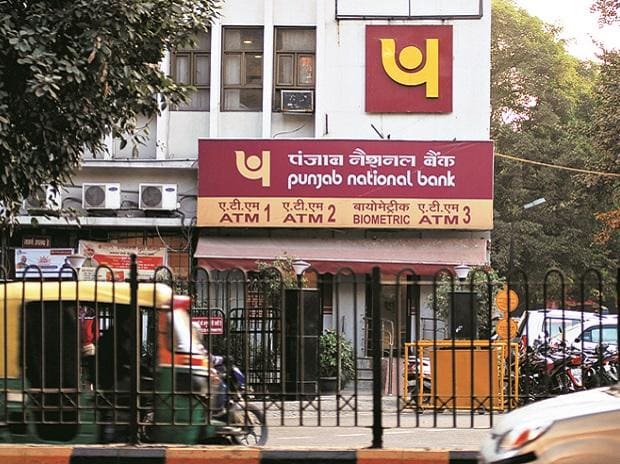
Punjab National Bank on Wednesday said it has opened an emergency credit line for the MSME sector to help it tide over liquidity issues amid the coronavirus crisis.

It has also liberalised the working capital assessment (LWCA) model for MSME borrowers having limits of Rs 5 crore and above, the state-owned lender said at a webinar hosted with industry body PHD Chamber to address the issues of micro, small and medium enterprises.

There is a facility of standby line of credit for MSMEs as well as PNB COVID-19 Emergency Credit Facility (PNB-CECF), the bank said.

There are also other policy initiatives like restructuring of MSME advances, interest subvention scheme, TReDS, Mudra loan products, Credit Guarantee Trust for MSMEs and PSB loans in 59 minutes, it added.


The bank's MD and CEO SS Mallikarjuna Rao said in the backdrop of the nationwide lockdown, the bank has organised the webinar to address the liquidity requirement of its customers through the online platform.

This forms a part of its 'Mega MSME Outreach' aimed at connecting with its MSME customers across the country and to address their challenges.

He said the bank has witnessed a humongous response from borrowers across the country through this outreach programme.


Monday, April 27, 2020

RBI opens Rs 50,000-crore special liquidity window to support mutual funds


According to the available data, the credit risk fund category saw its assets under management (AUM) dip by another 12 per cent in April to Rs 48,392 crore.


The Reserve Bank of India (RBI) on Monday opened a Rs 50,000-crore special liquidity window for mutual funds (MFs) to give a line of credit to the industry in the light of heightened redemption pressure after the closure of six schemes by Franklin Templeton Mutual Fund.

“The stress is, however, confined to the high-risk debt MF segment and, at this stage, the larger industry remained liquid,” the RBI said on Monday.

The RBI window, which is effective from April 27, allows MFs to access liquidity through two routes. Banks can borrow funds from the statutory liquidity facility for them from the RBI and lend to MFs against their collateral debt securities, or buy commercial papers or corporate debentures from the MFs. Following Rs 1.9 trillion outflows from debt schemes in March 2020, credit-oriented categories have continued to see further exits in April.


According to the available data, the credit risk fund category saw its assets under management (AUM) dip by another 12 per cent in April to Rs 48,392 crore, followed by a medium duration fund, where the AUM was down by another 9 per cent to Rs 25,502 crore.

Industry executives said the RBI credit line was a much-needed support, considering that redemption pressures were expected to exacerbate after Franklin Templeton’s surprise move to wind up six of its credit-oriented schemes with combined net assets of Rs 25,000 crore.

Wednesday, March 11, 2020

ICAI to review YES Bank's financial statements for FY18 and FY19


Firms say there are limits to audits identifying ever-greening of loans, or flagging suspect collateral securities.


The spotlight is back on the role of auditors in flagging the ongoing crisis at YES Bank. The accounting standard regulator, the Institute of Chartered Accountants of India (ICAI), plans to review the financial statements of YES Bank for the financial year 2017-18 (FY18) and FY19, and check whether there have been any lapses on the part of the auditors.

The audit fraternity points out that one of the key challenges in undertaking audit of banks relates to reconciling divergences between the Reserve Bank of India (RBI) and the banks when it comes to recognition of non-performing assets (NPAs).

Over the last two-three years we have been under a lot of pressure from the RBI in matters relating to divergences. As a result, whenever in doubt we approach the RBI for guidance on suspect transactions,” said an auditor from one of the Big Four audit firms.
The auditors are also increasingly seeking information on a group’s loan exposure, than just the company they have the audit mandate for.

An RBI assessment for FY16 pegged the NPAs of YES Bank at Rs 4,925 crore as against the Rs 748 crore gross NPAs reported by the bank. The divergence ballooned to Rs 6,335 crore at the end of FY17.

To check instances of evergreening of loans, auditors said they have started keeping a tab on the money trail of loan payback. “We have started taking a close look at where the money is coming from,” said the audit head of another Big Four firm.


However, the auditor fraternity concedes that as statutory auditors there are limits to which they could check the money trail. They also rue lack of guidance in this respect from the accounting standard regulator.

What auditors also find challenging is to ascertain intrinsic value of securities that are put forth against loans. “This is more so in an economic environment where repayment power of business is weak,” said another audit professional. Statutory auditors of YES Bank have already had a rough ride over the past few years. BSR & Co, an affiliate of KPMG India, is the current auditor of YES Bank. However, the previous auditor, SR Batliboi & Co, an EY affiliate, was hauled up by the RBI on account of lapses in statutory audit. Following this, the firm was banned for one year from carrying out statutory audit assignments of commercial banks.

Tuesday, May 7, 2019

Dollar-rupee swap, open market operations: RBI plans steps to inject cash 


These moves are expected to increase cash in the financial system and help push interest rates down, potentially helping borrowers where an interest rate cut has not.


Business Standard : The Reserve Bank of India (RBI) will probably conduct at least one more swap of rupees for dollars after the general election, said three officials with direct knowledge of the plan, part of an effort to support economic growth.

The central bank also plans to conduct open market operations of up to Rs 500 billion over the next two months, one of the officials said, expanding a quantitative easing programme to spur the slowing economy.

These latest moves are expected to increase cash in the financial system and help push interest rates down, potentially helping borrowers where an interest rate cut has not.
"We want to make sufficient liquidity available, but we cannot open the floodgates of liquidity. It has to be done in a calibrated and measured way," said one official who declined to be named because of the sensitivity of the matter.

The Reserve Bank of India declined to comment.
Prime Minister Narendra Modi is facing a tight re-election race in the staggered poll that began on April 11 and will end on May 19. Votes will be counted on May 23.
Economic growth slowed to 6.6 percent in the October-December quarter, the worst in five quarters, and economists see a further slowdown in January-March largely due to high interest rates and surging oil prices.

Despite cutting its key policy rate by 50 basis points this year to 6 percent, the RBI has struggled to get banks to reduce lending rates due to tight cash conditions and high deposit rates.

The RBI wants the real interest rate - the delta between the inflation rate and rate people pay to borrow - to ease for borrowers, a separate government official said.
In May, the RBI announced a fresh round of open market operations to purchase a total of Rs 250 billion worth of bonds in May, with the first auction for 125 billion rupees held on May 2.

"There could be two to four more open market operations by the RBI in the next two months (June-July) of similar quantum," the second official said.

"We are also in discussions for more forex swaps after the elections," he added.
A third official said the RBI would probably review the amount of rupees in circulation in June and determine the liquidity required by the banking system before finalising details of the rupees for dollars swap auction.

Monday, April 22, 2019

Government or state banks - who is to blame for India's slowdown?


After elections, the next government should not dodge the need for more radical reforms.


Business Standard : India, the world's fastest growing large economy, is slowing: There has been a visible deceleration in activity in the past six months. It started with slowing sales of autos and some durable goods and has spread from there. Airline traffic growth is down; companies are now saying sales of consumer staples such as soaps and detergents have begun to weaken, too. Even as the hunt for reasons for the slowdown begins, the main culprit appears to be a familiar one: the still largely government-owned financial system.

The issue is that there isn’t enough money in the economy. For much of the past two years, distributors and retailers of consumer products have been warning of a growing lack of liquidity. At first, policymakers largely dismissed their concerns. The government's late 2016 decision to withdraw most currency from circulation temporarily, and the introduction the following year of a nationwide goods-and-services tax, made it hard to decipher signals on economic momentum. Plus, liquidity, as the central bank measures it, generally looked stable: Banks were still parking funds with the Reserve Bank of India overnight.

Now that the GST is more than a year old and the effects of demonetization have faded, the growth numbers are less distorted by base effects and the slowdown is becoming more obvious. So is the lack of liquidity: For the past two years, growth in money supply, as measured by M3, has lagged GDP growth; the M3-to-GDP ratio has declined sharply from 85 per cent to below 80 per cent. Though aggressive purchases of government bonds by the RBI have caused base money or M0 (much of which is currency in circulation) to grow at 16 per cent in recent months, it is still about 1 percentage point of GDP lower than its level before demonetization.

Obviously, the engine that converts the 28 trillion rupees of base money (M0) to the 154 trillion rupees available as broad money (M3) is malfunctioning. The bottleneck is in the financial system. Money gets created when loans are given and, even though bank credit growth has accelerated in the past few months, aggregate credit growth is still far too weak.

A reluctance to privatize the financial system is to blame. State banks continue to dominate the sector, controlling some two-thirds of banking assets. They also accounted for nearly 90 per cent of the non-performing assets from the last lending boom. While all sides of the political spectrum acknowledge the need for reform, governments have shied away from selling off state lenders outright, preferring to reform the sector by stealth. The hope has been to slow the growth of state-owned banks and allow privately owned rivals to gain market share.