Showing posts with label ECONOMY OF INDIA. Show all posts

Tuesday, March 10, 2020

SBI lowers lending rate by up to 15 bps; 10th cut in current fiscal


Overnight and one-month MCLRs have been reduced by 15 basis points to 7.45 per cent each. Three-month MCLR has been revised to 7.50 per cent from 7.65 per cent.


The country's largest lender State Bank of India (SBI) on Wednesday said it has reduced its marginal cost of fund-based lending rate (MCLR) by up to 15 basis points across various tenors, effective March 10.

The bank has reduced its one-year MCLR by 10 basis points to 7.75 per cent from 7.85 per cent earlier, the SBI said.

This is 10th consecutive cut in MCLR by the bank in the current fiscal.

Overnight and one-month MCLRs have been reduced by 15 basis points to 7.45 per cent each. Three-month MCLR has been revised to 7.50 per cent from 7.65 per cent.

The new two-year and three-year MCLRs stand reduced by 10 basis points to 7.95 per cent and 8.05 per cent, respectively.

On Monday, another state-run lender Union Bank of India had announced cut in its MCLR by 10 basis points across all tenors, effective March 11.

This is the ninth consecutive rate cut announced by the Mumbai-based bank, since July 2019.

The bank has cut its one-year MCLR to 8 per cent from 8.10 per cent. The overnight MCLR has been revised to 7.55 per cent, while the new one month rate stands at 7.60 per cent, the bank had said.

Thursday, March 5, 2020

All may not be lost for YES Bank but insiders say its recovery to be slow


It will rely upon the obtaining bank or money related foundation's ability to hold the benefits till the market improves and sell them later to recuperate sizeable lump of the credits.


YES Bank Crisis : All may not be lost for emergency hit YES Bank with banking industry insiders calling attention to that the bank has rock solid insurance against advances.

It will, thusly, rely upon the procuring bank or monetary establishment's ability to hold the benefits till the market improves and sell them later to recuperate sizeable lump of the credits.

For example, if security is a private structure, it may not bring great cost in a discouraged market.

Yet, given that a portion of the enormous budgetary foundations, for example, IL&FS and DHFL have fell as of late, the market may not react well to YES Bank.


"This is the explanation we expect recovery of YES Bank to be extremely moderate," a Mumbai-based bank official said.
Indeed Bank had before put forth all potential attempts to raise development capital however hopelessly fizzled. Since the main private bank is very nearly breakdown, the administration has bumped the SBI to frame a consortium and salvage the bank.


The RBI, as controller, has come vigorously and finding a way to guarantee the bank makes a turnaround.
The circumstance at the YES Bank has arrived at disturbing level constraining the RBI to supplant its board. A breaking point has additionally been forced on withdrawal of stores in overabundance of Rs 50,000.


There is a developing recognition in the market that a sizeable piece of YES Bank's credits have transformed into non-performing resources (NPAs) which are not recoverable. This will prompt disintegration of its advantages yet given that the bank, before, took substantial guarantee for loaning, the market anticipates that the gaining element should recoup some portion of the credits by selling the benefits.

"Advances are unquestionably transforming into NPAs however does the basic security have showcase esteem and to what degree, would they be able to be recouped? What one sees is that bank has just made arrangements for awful credits however the bank has the option to sell the advantages sold with it," another financial industry official said.
The administration is found out to have requested that the SBI lead a consortium to purchase stake in YES Bank. This signals the legislature won't permit the bank to come up short.


Wednesday, February 19, 2020

SpiceJet to launch 20 new flights for daily services on domestic routes


The new flights, starting from March 29, include services to Patna from Amritsar, Varanasi and Guwaha.


No-frills carrier SpiceJet on Wednesday said it will launch 20 new flights on its domestic routes, including some services under the government's regional connectivity scheme, Udan, from late next month as part of the airline's summer schedule.

The new flights, starting from March 29, include services to Patna from Amritsar, Varanasi and Guwahati. Besides, it will also launch flights on Hyderabad-Mangaluru, Bengaluru-Jabalpur and Mumbai-Aurangabad routes, all under the Regional Connectivity Scheme (RCS), for the first time on its network, the airline said in a release.

The new services will fly daily and will be operated by a mix of Boeing 737-800 and Bombardier Q400 aircraft, it stated.

These services will enhance connectivity between key metros and smaller cities, it said.
With the commencement of these new flights, the airline will have a total of 52 flights connecting 12 cities under the RCS scheme, SpiceJet said.

"We are excited to announce the launch of 20 new domestic flights. As we add newer cities and flights to our network, our focus remains firmly on connecting the unconnected parts of the country besides enhancing connectivity between metros and non-metros," 
SpiceJet Chief Commercial Officer Shilpa Bhatia was quoted as saying in the release.

SpiceJet said it will also enhance its operations with additional frequencies on the Mumbai-Bagdogra and Mumbai-Chennai routes with the addition of a second and fifth flight, respectively..

The Hyderabad-Mangaluru and Guwahati-Delhi sectors would also have an additional flight in the summer schedule.


Tuesday, October 29, 2019

India's economic slowdown will reverse in coming quarters: Mukesh Ambani


What I see happening in the past 2-3 years is transformation, said Ambani


Business Standard : Two top leaders of India Inc — Reliance Industries Chairman Mukesh Ambani and auto major Mahindra & Mahindra Chairman Anand Mahindra (M&M) — have said the Indian economy is showing signs of a pick-up and recent sales indicators show the worst is now behind the nation.

Both business leaders were speaking at the Future Investment Initiative summit in Riyadh. “India’s slight economic slowdown will reverse in the coming quarters. What I see happening in the past 2-3 years is transformation,” said Ambani.

As a businessman and as an investor, I am all in, in terms of investing in this country,” Ambani said.

If you look at what happened, yes, there has been a slight slowdown but in my view it’s temporary,” said he. “All the reform measures that have been taken in the last few months will show the outcome. I am quite sure that in the coming quarters this will reverse,” he said.

Ambani, who is in talks with Saudi Arabian oil giant Aramco to sell one-fifth of his oil-to-chemicals business in India for $15 billion, said the two countries have almost factors to drive growth — technology, young demography, and leadership.

Above all, there is a leadership accelerator. Both the countries are blessed with leadership that is unique in the whole world, at least in today’s time,” he said, referring to Prime Minister Narendra Modi and Saudi King Salman bin Abdulaziz Al-Saud and his son Prince Mohammed bin Salman bin Abdulaziz.

Saudi Arabia, he said, has seen tremendous transformation in the past 2-3 years. “For me, this is 1980 vintage China or India of the 1990s where India took on the world map.”
Ambani had in August announced that Saudi Aramco has agreed to take a 20 per cent stake in Reliance Industries’ refining and petrochemicals business, as the world’s largest crude oil exporter deepens its ties with India, the fastest-growing energy consumer.

On the other hand, Mahindra said Diwali sales have been very good for the Mahindra Group and it has reported double-digit growth in sales over last year. Diwali, he told a TV channel, is like Christmas in India and it has shown a significant jump in consumption for the company. M&M has cut excess inventories and most car companies have sanitised their pipelines and are looking ahead to the festive season with hope, he said.

Sunday, June 2, 2019

Vistara to launch international flights in the second half of 2019


A joint venture between Tatas and Singapore Airlines, Vistara might also look at starting medium and long-haul flights, depending on approvals, amid the grounding of Jet Airways.


Business Standard : Full service carrier Vistara, which has been serving the Indian skies for more than four years, plans to launch international services in the second half of this year.

A joint venture between Tatas and Singapore Airlines, Vistara might also look at starting medium and long-haul flights, depending on approvals, amid the grounding of Jet Airways.

"We see India as a growing market. We are here for the long term," Vistara CEO Leslie Thng said on the sidelines of the annual general meeting of airlines' grouping IATA on Sunday.

Without providing specific details, he said the airline plans to start international operations in the second half of 2019.

It had planned to launch overseas flights in the first half of this year.
Currently, Vistara has more than 22 planes and operates around 850 flights every week.
Last month, the carrier announced it would take on lease four Boeing 737-800 NG aircraft and two A320 neo planes.

In 2018, Vistara placed its order for purchased and leased aircraft totalling 50 from the Airbus A320neo family, including A321neos.

These would be for domestic as well as short and medium-haul international operations, with deliveries scheduled between 2019 and 2023.

Further, the carrier has bought six Boeing 787-9 Dreamliner aircraft that are scheduled to be delivered between 2020 and 2021. These would operate long-haul international operations.

Thng said, Vistara can start short-haul flights but would need more time for long-haul ones.

"If we do get the necessary rights, we do have a plan in place on how do we plan to operationalise it but I will not be able to share too much detail...," he said.
According to him, the airline would look at options to deploy the right type of aircraft provided it gets the necessary flying rights.


Tuesday, May 21, 2019

RIL topples IOC to become the biggest Indian company in revenue terms


RIL was also the most profitable company in the country with a net profit of more than double that of IOC in FY2019.


Business Standard : Richest Indian Mukesh Ambani's oil-to-telecom conglomerate Reliance Industries has toppled state-owned Indian Oil Corp (IOC) to become the country's biggest company by revenue.

Reliance in the 2018-19 fiscal year that ended March 31, reported a turnover of Rs 6.23 trillion. In comparison, IOC posted a turnover of Rs 6.17 trillion for the fiscal, according to regulatory filings by the two companies.

It was also the most profitable company in the country with a net profit of more than double that of IOC in FY2019.

Reliance Industries, which was about half the size of IOC till about a decade back but its bet on burgeoning consumer base and foray into new businesses such as telecom, retail, and digital services vastly expanded its business, clocked a net profit of Rs 39,588 crore in FY19. IOC, on the other hand, ended the year with a net profit of Rs 17.274 crore.

IOC till last year was the most profitable PSU but may have lost this position to Oil and Natural Gas Corp (ONGC) in 2018-19. ONGC is yet to declare its FY19 earnings but it had clocked a net profit of Rs 22,671 crore in the first nine months of the fiscal year.
Net profit of IOC, which depends on oil refining, petrochemicals and gas business for its revenue, had in 2018-19 declined by 23.6 per cent over Rs 22,189.45 crore net profit it had earned in 2017-18.

Reliance, on the other hand, posted a 13 per cent rise in profits over Rs 34,988 crore recorded in 2017-18.
ONGC had a net profit of Rs 19,945.26 crore in 2017-18 fiscal, lagging behind IOC.
With this milestone, Reliance has achieved the numero uno position in terms of all three parameters revenue, profit, and market capitalisation.

With strong refining margin and robust retail business, Reliance clocked a 44 per cent in revenue in FY19 over the previous year and posted a compounded annual growth rate of over 14 per cent between FY10 and FY19. In contrast, IOC turnover rose 20 per cent in FY19 and 6.3 per cent during FY10 and FY19.

At Tuesday's trading price of Rs 1,345, Reliance boasts of a market capitalisation of Rs 8.52 lakh crore.

Interestingly, Reliance which boasts of the highest cash reserves of Rs 1.33 lakh crore on the book, also has the highest gross debt of Rs 2.87 lakh crore at the end of March 2019.
In contrast, IOC had short and long-term loans totaling Rs 92,700 crore.

Wednesday, January 9, 2019

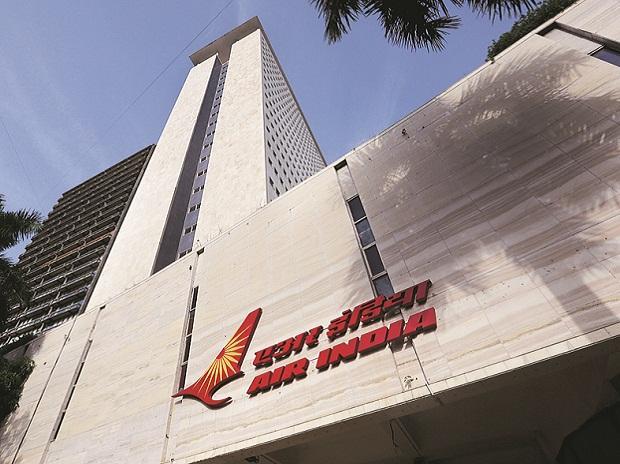
Now, Air India to serve food from stocked on international return journeys


Within the next a few months, Air India will start serving food from India on its flights returning from the Gulf region.


Air India's Chairman and Managing Director Pradeep Singh Kharola said Wednesday the airline has started carrying food from India for use during the journey back to the country, in an attempt to rationalise catering costs on international flights.

The loss-making airline has already started using food items stocked from India during its onward journey to Stockholm, Copenhagen, Birmingham and Madrid, and use them when returning. It has said food items purchased from these foreign cities are much more expensive when compared to Indian cities.

"The food is taken from here in India in chillers and then it is heated whenever it has to be used... Catering costs for us are around Rs 600 crore to Rs 800 crore a year. Catering in India is 3-4 times cheaper as compared to catering in the West," Kharola said.
Within the next a few months, Air India will start serving food from India on its flights returning from the Gulf region, he added.

As a cost-cutting measure, Air India decided in July 2017 to not serve non-vegetarian food to economy class passengers on its domestic flights.
"There are some flights like the ones going to Gulf, Singapore and even some parts of Europe, where it is possible to upload the food here (in India) only. Some work is going on in that direction," he said.


"More important thing is the taste. Whatever you can do, the European caterer's taste can't match with the Indian caterer, especially when it comes to Indian food. That is the additional benefit we get. The main thing is that the costs come down drastically," he added.

The portion of the food given to passengers would remain exactly the same, he clarified.
Asked how much Air India would be able to save with this measure, Kharola said these are early days and the programme will expand.

Air India is estimated to have a debt burden of more than Rs 48,000 crore and the government's efforts for strategic disinvestment of the flag carrier failed in May last year. It has been making losses since the merger with Indian Airlines in 2007.

High interest burden, increasing competition, high airport user charges, adverse impact of exchange rate variation and liberalised bilaterals to foreign carriers leading to excess capacity in the market are among the reasons for the losses, according to the civil aviation ministry.


Monday, November 26, 2018

Come January, Toyota cars across the board will cost you up to 4% more


There has been an impact in the cost of manufacturing of vehicle primarily due to rupee depreciation.


Toyota Kirloskar Motor Tuesday said it will increase prices of its vehicles across models by up to 4 per cent from January 1, 2019, to offset increasing manufacturing costs due to rupee depreciation.

The company considered the price hike after periodically reviewing the continuous pressure of increasing manufacturing costs, which is also a general industry phenomenon, Toyota Kirloskar Motor said in a statement.

There has been an impact in the cost of manufacturing of vehicle primarily due to rupee depreciation," the company said.

Toyota has been absorbing the additional costs all this while, protecting the customers from price increase, it added.

"However, due to the continued pressure of high costs, we have to pass on a part of it to customers. Toyota is considering a price increase of up to 4 per cent across models with effect from January 1, 2019," it said.

The company currently sells a range of vehicles starting from hatchback Liva to luxury SUV Land Cruiser, which are priced between Rs 525,000 and Rs 14.1 million.