Showing posts with label Coronavirus vaccine. Show all posts

Tuesday, July 21, 2020

Oxford-Astra Covid-19 vaccine shows dual immune action, says researcher


Study shows the vaccine is safe, but it is still too soon to know if it can stop people from being infected.


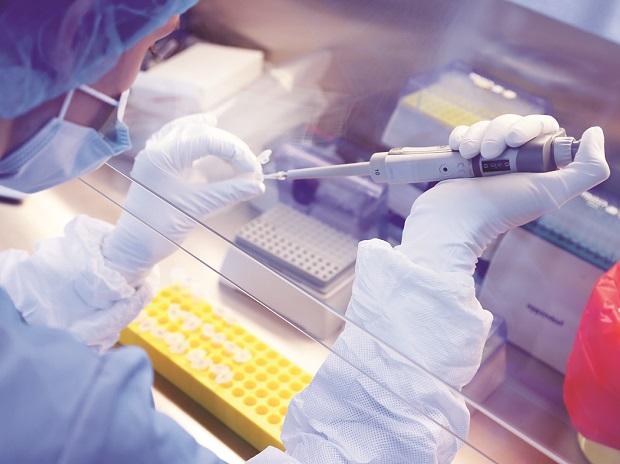
A coronavirus vaccine the University of Oxford is developing with AstraZeneca showed promising results in early human testing, a sign of progress in the high-stakes pursuit of a shot to defeat the pathogen.

The vaccine increased levels of both protective neutralising antibodies and immune T-cells that target the virus, according to the study organisers. The results were published Monday in The Lancet medical journal.

AstraZeneca shares rose as much as 10 per cent in London but gave up some of those gains to trade 2.8 per cent higher as researchers cautioned that the results were preliminary. A positive outcome had been widely expected after reports last week lifted the stock, with the vaccine already in more advanced trials. “We are seeing very good immune responses, not just on neutralising antibodies but of T-cells as well,” said Adrian Hill, head of Oxford’s Jenner Institute, in an interview. “We’re stimulating both arms of the immune system.”

Other vaccine projects, including shots being developed by China’s CanSino Biologics, and a partnership of Pfizer and BioNTech SE also delivered positive trial updates Monday. The results boost optimism about ways to counter a pandemic that’s killed more than 600,000 people and triggered economic turmoil since erupting earlier this year. Moderna, another front-runner, released results last week from an early-stage test that showed its vaccine raised levels of antibodies that fight the virus.

Although stimulating production of neutralising antibodies doesn’t prove a vaccine will be effective, it’s considered an important early step in testing. Results from testing in animals had already shown the Oxford-AstraZeneca shot provoked an immune response.

The Phase 1 trial, which took place between April 23 and May 21, involved 1,077 healthy adults aged 18 to 55 with no history of Covid-19. A control group were given a meningitis vaccine as a placebo and 10 participants received two doses of the shot one month apart. The vaccine caused minor side effects, which could be reduced by taking paracetamol. There were no serious adverse events from the jab.


Coronavirus vaccine update: Oxford, Pfizer vaccines safe, give immunity


There are 23 coronavirus vaccine candidates in human trials, including Moderna, AstraZeneca Plc, BioNTech, Novavax, Sinovac, CanSino Biologics and Inovio. Catch latest updates on Covid-19 vaccine.


In a major breakthrough, the early-stage human trial data has revealed that the coronavirus vaccine candidate developed by AstraZeneca and Oxford University is safe. German biotech firm BioNTech and US drugmaker Pfizer also reported that their experimental Covid-19 vaccine was safe and induced an immune response in patients.

 The latest developments raise hope as these could contribute to ending the pandemic, which has infected over 14.7 million people worldwide and claimed over 600,000 lives so far. More than 150 possible vaccines are being developed and tested around the world, including in India, Britain, China, the US, Russia and Israel to try to stop the pandemic. At present, 23 vaccine candidates are in human clinical trials. These include those of Moderna, AstraZeneca Plc, BioNTech, Novavax, Sinovac, CanSino Biologics and Inovio Pharmaceuticals.

Coronavirus treatment: Updates on coronavirus vaccine/drug development:

1. Oxford coronavirus vaccine update: Vaccine safe, gives immunity

The early-stage human trial data has revealed that the Covid-19 vaccine candidate developed by AstraZeneca and Oxford University is safe and induces immune response, with mild side effects in some participants, which scientists say can be treated with the commonly available pain medication paracetamol.

The preliminary results of the Phase-I and -II trials, published in The Lancet journal, involved 1,107 healthy adults, and found that the vaccine induced an immune response, both via antibodies and the T-cells of the immune system, up to day 56 of the ongoing trial.

Oxford had in April announced an agreement with the UK-based global biopharmaceutical company AstraZeneca for further development, large-scale manufacture and potential distribution of this Covid-19 vaccine candidate.
While the Phase-I trial of the vaccine candidate began in April itself, the Phase-II and -III UK trials of the Oxford vaccine, named AZD1222, in about 10,000 adult volunteers, was announced in May.


Monday, July 20, 2020

India is likely to see a wave of peaks in Covid-19 cases, say experts


Looking at India numbers makes little sense, as handful of states dominate growth in cases.


India is likely to see a wave of peaks in Covid-19 cases across the country instead of one single high, with the coronavirus spreading at a different pace in most states, experts said.

While most epidemiologists have predicted a peak of infection in late July-August, many feel the concept of a national peak is nebulous. The three states — Maharashtra, Delhi, and Tamil Nadu — with highest case-counts are slowing down, but infections in eastern and southern states are surging.

“I do not see a national peak soon, but I see a wave of peaks cascading through the nation in the next two months. It simply depends on how we behave and how policies are implemented,” Bhramar Mukherjee, professor of epidemiology, Michigan University, said.

According to latest health ministry data, 86 per cent of the Covid-19 cases come from just 10 states, making for an uneven spread. Therefore, looking at Indiawide numbers makes little sense, experts say, given that the growth in case numbers is dominated by a handful of states.

“Different states should have different progressions and they will not be in step with each other. This means that we should look at a really granular scale, of districts and sub-districts, and zones in cities, to understand the progression of the disease,” Gautam Menon, professor of computational biology and theoretical physics, Ashoka University.

Thursday, July 16, 2020

Remdesivir to Itolizumab: How effective are the drugs for Covid treatment?


Remdesivir costs around Rs 5,000 per vial with a total treatment cost in the range of Rs 35,000-50,000.


The Central Drugs Standard Control Organisation (CDSCO) has approved five drugs in the last month for Covid-19 treatment – two antiviral: Remdesivir and Favipiravir – and three for easing the symptoms: Dexamethasone, Tocilizumab and Itolizumab. These drugs’ use is bound to birth complications considering there are doubts about the evidence the government has furnished – or not – to approve their use.

Remdesivir costs around Rs 5,000 per vial with a total treatment cost in the range of Rs 35,000-50,000. Favipiravir costs Rs 103 per 200 mg tablet; the total treatment cost ranges from Rs 12,000 to Rs 15,000. A vial of Itolizumab costs around Rs 8,000 and the total treatment cost could be between Rs 32,000 and Rs 50,000. Tocilizumab costs Rs 40,000 to Rs 50,000 per vial.

Remdesivir
Remdesivir was approved for clinical use for both children and adults by the CDSCO as an injection on June 1, amid controversies surrounding its efficacy. This drug is manufactured by Gilead Sciences Inc. The first randomised double-blind study showed no statistically significant treatment efficacy in severe Covid-19 patients. Gilead’s own study reported that no fewer people died when on the drug. However, while the study also reported patients on Remdesivir recovered four days earlier on average, independent experts aren’t convinced.

A press release by the US National Institute of Arthritis and Infectious Disease (NIAID), the study’s sponsor, nonetheless said hospitalised patients with Covid-19 recovered faster when they were on Remdesivir compared to placebo. There was also a controversy surrounding the changing of end points of the study, to get a favourable outcome. Gilead’s quest to secure approval for the drug were also shadowed by reports of lobbying to influence the FDA and other authorities.

How 'good' does a Covid-19 vaccine need to be to stop the pandemic?


To stop the pandemic, the number of new infections per day needs to drop to zero, or at least to a very low number, as quickly as possible.


The U.S. is pinning its hopes on a Covid-19 coronavirus vaccine, but will a vaccine alone be enough to stop the pandemic and allow life to return to normal?
The answer depends on a how “good” the vaccine ends up being.

In a study published July 15 in the American Journal of Preventive Medicine, my colleagues and I used a computer simulation of every person in the country to show how effective a vaccine would have to be and how many people would have to get vaccinated to end the pandemic. We found that a coronavirus vaccine’s effectiveness may have to be higher than 70% or even 80% before Americans can safely stop relying social distancing. By comparison, the measles vaccine has an efficacy of 95%-98%, and the flu vaccine is 20%-60%.

That doesn’t mean a vaccine that offers less protection would be useless, but it would mean social distancing in some form may still be necessary.

What is vaccine 'effectiveness’ anyway?
Some political leaders have suggested that society will return to normal soon, especially if a vaccine becomes available by the end of the year or early in 2021. Some vaccines are currently in early-stage trials, but that timeline would still be very optimistic.

However, it is important to remember that a vaccine is like many other products: What matters is not just that the product is available but also how effective it is. Take clothing for example. If you are going to a formal dinner, underwear alone may partially cover you but probably not well enough for the occasion. This doesn’t mean underwear is useless.


Monday, July 13, 2020

Coronavirus vaccine update: Russia completes world's first human trial


Coronavirus vaccine latest update: In a major breakthrough, Russia has become the first nation to complete human clinical trials of a Covid-19 vaccine on humans. Catch latest updates on Covid vaccine.


In a major breakthrough, Russia has become the first nation to complete clinical trials of a Covid-19 vaccine on humans, and the results prove the medication's effectiveness, according to media reports. The total number of coronavirus cases across the world has crossed the 13-million mark and the death toll has gone past 570,000.

Given the scale this pandemic is assuming at fast pace, pharmaceutical companies and scientists are working overtime under pressure to come up with a vaccine as soon as possible. There currently are over 100 vaccines at various stages of development worldwide, including in India, Britain, China, the US, Russia and Israel. There are at least 21 vaccines currently under key trials, according to the World Health Organization (WHO).

China's Sinovac Biotech, China National Pharmaceutical Group (Sinopharm) and AstraZeneca's experimental Covid-19 vaccine are in late-stage Phase III trials. Moderna, AstraZeneca, BioNTech, Novavax, Sinovac, CanSino Biologics and Inovio Pharmaceuticals are some players among those leading the race at present.

1. Coronavirus vaccine: Russia first nation to finish human trials
The clinical trials for the world’s first coronavirus vaccine on volunteers at Sechenov First Moscow State Medical University has been successfully completed, Vadim Tarasov, the director of the Institute for Translational Medicine and Biotechnology, told Sputnik, adding that the first group of volunteers would be discharged on Wednesday and the second on July 20.

The university began clinical trials of the vaccine produced by Russia’s Gamalei Institute of Epidemiology and Microbiology on June 18.

“Sechenov University has successfully completed tests on volunteers of the world’s first vaccine against coronavirus,” Tarasov said.

Thursday, June 25, 2020

Will take action against sale of Patanjali Covid-19 drug in Rajasthan: Govt


Neither has anyone applied to the state government nor has the state government given any permission in this regard, State Health Minister Raghu Sharma said.


Amid the ongoing controversy over Yoga guru Baba Ramdev's company Patanjali Ayurveda introducing "cure" for coronavirus infection, Rajasthan government on Wednesday clarified that this drug cannot be not used as a medicine in the state without the permission of the Ministry of AYUSH.

Neither has anyone applied to the state government nor has the state government given any permission in this regard, State Health Minister Raghu Sharma said.
He said according to the gazette notification issued by the Government of India in April this year, under the Drugs and Cosmetic Act 1940 and 1945, no ayurvedic medicine can sold as medicine for corona infection during COVID-19 pandemic without the approval of Union Ministry of AYUSH.

Strict action will be taken against the seller as per the rules in case of sale of any drug as a medicine to treat the coronavirus infection, the minister added.
Patanjali Ayurveda, while presenting ''Coronil'' medicine on Tuesday had claimed that it has found a cure for coronavirus infection.

Sharma said compliance of the guidelines of the Union Ministry of Health, Union Ministry of AYUSH and ICMR is being ensured in the treatment of coronavirus infection in the state.

The health minister said no human clinical test of a drug can be done without the permission of the state government and action will be taken against those who mislead the common people by doing ''clinical trials'' without permission.

Referring to the various guidelines of the central government and other regulatory bodies, Sharma said without their compliance, action will be taken against the publicity and sale of any such means to treat the infection.

Wednesday, June 24, 2020

Human trial begins of Imperial College London's candidate Covid-19 vaccine


Imperial College London's vaccine candidate is being developed and trialled with the help of more than £41 million in funding from the UK government and a further £5 million in philanthropic donations.

The human trial of Imperial College London's candidate coronavirus vaccine began on Tuesday with the first healthy volunteer receiving a small dose of it.
It is a second such trial in the UK. The first candidate vaccine that went for the human trial was from Oxford University.

The clinical team, which delivered a small dose of the vaccine to the participant at a West London facility, is closely monitoring the participant and report that they are in good health with no safety concerns, said the college in a press release.

The trials are the first test of a new self-amplifying RNA (saRNA) technology, which has the potential to revolutionise vaccine development and enable scientists to respond more quickly to emerging diseases, the college said.

The volunteer has asked to remain anonymous.
Imperial College London's vaccine candidate is being developed and trialled with the help of more than £41 million in funding from the UK government and a further £5 million in philanthropic donations.

Dr Katrina Pollock, from Imperial's Department of Infectious Disease and Chief Investigator of the study, said: "We have reached a significant milestone in this ground-breaking study with the first dose of a self-amplifying RNA vaccine delivered safely."
"We are now poised to test the vaccine in the dose evaluation phase before moving forward to evaluating it in larger numbers."

The volunteer will receive a second booster dose within four weeks. Several others are expected to receive the first dose over the coming days. The clinical team will continue to monitor all participants closely for safety, as well as look to see if they produce antibodies against the SARS-CoV-2 virus.

Tuesday, June 23, 2020

Patanjali to launch ayurvedic drug for Covid-19, claims cure within 14 days


Balkrishna had earlier this month claimed that an Ayurvedic medicine developed by the company has been able to cure Covid-19 patients within 5-14 days.


Patanjali will launch the ayurvedic medicine for treating Covid-19 at Patanjali Yogpeeth in Haridwar on Tuesday.

"Proud launch of first and foremost evidence-based ayurvedic medicine for #corona contagion, #SWASARI_VATI, #CORONIL, is scheduled for tomorrow at 12 noon from #Patanjali Yogpeeth Haridwar," Acharya Balkrishna, Chief Executive Officer (CEO) of Patanjali, tweeted on Monday.

Balkrishna had earlier this month claimed that an Ayurvedic medicine developed by the company has been able to cure Covid-19 patients within 5-14 days.

"We appointed a team of scientists after Covid-19 outbreak. Firstly, the simulation was done and compounds were identified which can fight the virus and stop its spread in the body. Then, we conducted a clinical case study on hundreds of positive patients and we have got 100 per cent favourable results," Balkrishna said.

"After taking our medicine, COVID patients recovered in 5-14 days and then tested negative. So, we can say the cure for COVID is possible through Ayurveda. We are performing controlled clinical trials only. In the next 4-5 days, evidence and data will be released by us," he added.

The Patanjali CEO further said that people should practice Yoga, and keep oneself healthy through proper diet to boost the immune system.


Friday, June 19, 2020

Rio restarts soccer league next to a field hospital for coronavirus


However, the Brazilian football great Ronaldo has criticised the return of football in his homeland as the country grapples with the biggest coronavirus outbreak in Latin America.


In a sign of the times, the first professional soccer match in South America in nearly three months was staged in a stadium only meters away from a field hospital for hundreds of Covid-19 patients.

Copa Libertadores champion Flamengo beat Bangu 3-0 in a local league game that was witnessed by fewer than 200 people in Brazil's historic 78,000-seat Maracan Stadium on Thursday night.

More than 47,700 people have died because of the Covid-19 in Brazil, and nearly 1 million have been infected. Rio de Janeiro state accounts for about 8,000 deaths, but authorities agreed to let soccer return this week after the number of available intensive-care unit beds showed slight improvement. Health experts predict Brazil's Covid-19 crisis will peak in August.

Goals by Giorgian de Arrascaeta in the 18th minute, Bruno Henrique, in the 66th, and Pedro Rocha in the 88th were celebrated with fist bumps.

Near the Maracan's gate 2, a field hospital with 400 beds for coronavirus patients reminded the small group of people at the stadium why many health experts think it is too soon for soccer competition to resume.

A minute of silence was observed before kick off in a sign of respect to victims of Covid-19.

Rio soccer authorities did not allow mixed zone interviews with players after the match, also following health recommendations. But Flamengo coach Jorge Jesus spoke via video after the match.

Our society will have to adapt until we have a vaccine. What is important is to know how to live, respect the virus, but have no fear of it, the Flemengo coach said.

Thursday, June 11, 2020

Lilly Covid-19 treatment could be authorised by September: Chief Scientist


Lilly has already launched human trials with two of the experimental therapies.


Eli Lilly and Co could have a drug specifically designed to treat COVID-19 authorized for use as early as September if all goes well with either of two antibody therapies it is testing, its chief scientist told Reuters on Wednesday.

Lilly is also doing preclinical studies of a third antibody treatment for the illness caused by the new coronavirus that could enter human clinical trials in the coming weeks, Chief Scientific Officer Daniel Skovronsky said in an interview.

Lilly has already launched human trials with two of the experimental therapies.
The drugs belong to a class of biotech medicines called monoclonal antibodies widely used to treat cancer, rheumatoid arthritis and many other conditions. A monoclonal antibody drug developed against COVID-19 is likely to be more effective than repurposed medicines currently being tested against the virus.

Skovronsky said the therapies - which may also be used to prevent the disease - could beat a vaccine to widespread use as a COVID-19 treatment, if they prove effective.
"For the treatment indication, particularly, this could go pretty fast," he said in an interview. "If in August or September we're seeing the people who got treated are not progressing to hospitalization, that would be powerful data and could lead to emergency use authorization."


Monday, May 25, 2020

I am doing fine after taking a two-week course of hydroxychloroquine: Trump


Trump has spent weeks pushing the drug as a potential treatment or prophylaxis for Covid-19 against the cautionary advice of many of his administration's top medical professionals.


President Donald Trump says he's doing fine after taking a two-week course of an unproven malaria drug for Covid-19.

Trump was addressing his disclosure last week that he was taking hydroxychloroquine and a zinc supplement.

He said the regimen was meant to help prevent infection after two White House staffers tested positive for the coronavirus.

Trump has spent weeks pushing the drug as a potential treatment or prophylaxis for Covid-19 against the cautionary advice of many of his administration's top medical professionals.


Speaking in an interview aired on the Sunday news program Full Measure with Sharyl Attkisson, Trump said that "I just finished the course of drug treatments and to the best of my knowledge, here I am. If it's something that helps, that's all I want."

Monday, May 18, 2020

Can states dilute Lockdown 4.0 guidelines? No, says Home Ministry


Inside the red and orange zones, containment and buffer zones will be identified by the district administration and local urban bodies.


The Home Ministry said on Monday that state or Union Territory can not dilute the guidelines issued for the fourth phase of nationwide lockdown that will continue till May 31.

In a communication to the chief secretaries of the states and Union territories, Union Home Secretary Ajay Bhalla said the guidelines for the fourth phase of the lockdown were issued after taking the views of the states, following a video-conference held by Prime Minister Narendra Modi with chief ministers on May 11.

"As emphasised in my earlier letters, I would like to reiterate again that States and Union Territories cannot dilute restrictions imposed vide the aforesaid guidelines issued by MHA. States and UTs, based on their assessment of the situation, may prohibit certain other activities in various zones, or impose such restrictions as deemed necessary."

"I would urge you to ensure compliance of the new guidelines and direct all concerned authorities for their strict implementation," Bhalla said in his letter to the chief secretaries on Sunday night," the letter read.

Bhalla said under the new guidelines effective from Monday, the states and Union territories will categorise "red", "orange" and "green" zones taking into consideration the revised guidelines issued by the Ministry of Health and Family Welfare on Sunday.
Inside the red and orange zones, containment and buffer zones will be identified by the district administration and local urban bodies with technical inputs at the local level and by taking into consideration the health ministry guidelines.


Thursday, May 14, 2020

Airbus exploring restructuring plans, job cuts due to Covid-19: Report


For now, Airbus is relying on government-backed furlough schemes in France, Germany and Britain to reduce staff costs after earlier asking employees to take 10 days' leave.

Airbus is exploring restructuring plans involving the possibility of "deep" job cuts as it braces for a prolonged coronavirus crisis after furloughing thousands of workers, industry sources said, though no decision is imminent.

Europe's largest aerospace group has not ruled out layoffs while signalling that no decisions will be made before the summer. But a global airline crisis has gathered speed in recent weeks, with carriers and suppliers pleading for help.

Chief Executive Guillaume Faury is expected to update managers on Thursday after warning staff last month that the firm's survival was at stake due to a slump in demand.
Under French law, Toulouse-based Airbus cannot disclose restructuring plans internally before consulting trade unions through a formal exercise not expected before the end of May. But people close to the company said senior staff would be attempting to read between the lines of Faury's weekly internal briefing to gauge his job plans.
"Over the last few weeks, Airbus has implemented a number of financial, operational and social measures in order to adapt to the severe health and economic impact of the Covid-19 crisis," an Airbus spokesman said.

"The company will continue to take all necessary measures to ensure the future of Airbus in cooperation with its social partners."

A meeting with unions is scheduled for Thursday to discuss progress on furlough schemes, French union sources said. More temporary furloughs could be announced in the coming week.

One insider said any restructuring plan would involve forced redundancies and cutbacks were expected to be deep, though others cautioned it was too early to talk of specific numbers.

Tuesday, May 12, 2020

Air passenger traffic to stay below 25% in September: Boeing CEO


Asked whether there might be a major US carrier that has to go out of business, Calhoun said: "Yes, most likely. You know, something will happen when September comes around".


Boeing Chief Executive Dave Calhoun does not expect passenger traffic to reach even a quarter of its levels in September, creating the need for airlines to make "adjustments" as they weather the impact of the coronavirus pandemic.

In an interview with NBC to be aired on Tuesday, Calhoun said: "Traffic levels will not be back to 100%. They won't even be back to 25%. Maybe by the end of the year, we approach 50%. So there will definitely be adjustments that have to be made on the part of the airlines."


Asked whether there might be a major US carrier that has to go out of business, Calhoun said: "Yes, most likely. You know, something will happen when September comes around."

In response to Calhoun's comment, Boeing spokesman Gordon Johndroe said: "He was speaking to the general uncertainty in the sector, not about anyone particular airline."

Monday, May 11, 2020

WHO denies report claiming China pressurised it to withhold Covid-19 info


German weekly Der Spiegel reported that Xi asked Tedros during the call to hold back information about human-to-human transmission of the virus and delay declaring a pandemic.


The World Health Organisation has dismissed a media report saying that it withheld information about Covid-19 following pressure from China, and termed it as 'false allegation'.

The UN agency said in a statement late Saturday that a German magazine's report about a telephone conversation between WHO chief Tedros Adhanom Ghebreyesus and Chinese President Xi Jinping on January 21 was unfounded and untrue.

Weekly Der Spiegel reported that Xi asked Tedros during the call to hold back information about human-to-human transmission of the virus and delay declaring a pandemic. The magazine quoted Germany's foreign intelligence agency, BND, which declined to comment on Sunday.

Der Spiegel also claimed that the BND concluded up to six weeks of time to fight the outbreak had been lost due to China's information policy.

ALSO READ: Coronavirus LIVE

WHO said Tedros and Xi have never spoken by phone and added that such inaccurate reports distract and detract from efforts to end the Covid-19 pandemic. It added that China confirmed human-to-human transmission of the new coronavirus on January 20.
WHO officials issued a statement two days later saying there was evidence of human-to-human transmission in Wuhan, but more investigation was necessary.


Monday, May 4, 2020

36% Indian firms considering salary freeze over Covid-19 lockdown: Report


The report said that 23 per cent organisations have suspended the promotion increases and 18 per cent organizations deferring or delaying salary increases.


With businesses and economic activity almost halted for over a month now amid the coronavirus crisis and the nationwide lockdown, around 36 per cent companies in India are considering a freeze in salary hikes to manage their costs, according to a report by Korn Ferry.

In India, the most commonly implemented measures for rewards and benefits are promotion and salary hike.

The report said that 23 per cent of organisations have suspended promotion increases and 18 per cent have deferred or delayed salary increases.

The Korn Ferry report said: "36 per cent of organisations have implemented or are considering implementing a salary freeze to manage costs."

The report by the global organisational consulting firm noted that given the government's extensive requests on avoiding laying-off employees, majority of the companies, around 84 per cent have not implemented or are not currently considering permanent staff layoff or redundancies.


Commenting on the survey, Roopank Chaudhary, Client Partner, Korn Ferry India said: "Given the current circumstances and uncertainties on the recovery for market conditions, business leaders are trying everything to survive this storm and manage their costs."

"Among the dozens of ways organisations are taking are layoffs, hiring freezes, reduced hours, less reliance on contractors, reducing overtime, delaying bonuses or merit increases, suspending certain benefits like retirement savings/capital accumulation programs, and many others", he said.