Showing posts with label DIGITAL PAYMENTS. Show all posts

Monday, February 24, 2020

Cash is still king in India, but digital payments rising sharply: RBI


"India is next only to China in terms of the cash. However, the percentage of cash withdrawals to GDP has been constant in India at around 17 per cent," the report said.


Cash is still king in India, but there has been a perceptible shift in favour of digitisation in recent years, according to an internal study of the Reserve Bank of India (RBI). Having a high currency in circulation (CIC) relative to gross domestic product (GDP) is a good indicator of cash being highly preferred for payments. Based on this assumption, “India continues to have a strong bias for cash payments," the study noted.

Demonetisation and an active growth in GDP brought down the cash in circulation as a percentage of GDP to 8.70 per cent in 2016-17. This increased to 10.70 per cent in 2017-18 and to 11.2 per cent in 2018-19 which, however, is less than the pre-demonetisation level of 12.1 per cent in 2015-16.

The rate of increase is lower, indicating a perceptible shift away from cash,” the report said.

The notes in circulation (CIC minus coins in circulation) increased at an average rate of 14 per cent between October 2014 and October 2016.

Assuming the same growth rate, notes in circulation (NIC) would have been Rs 26 trillion in October 2019. NIC, however, was Rs 22.3 trillion, indicating that digitaisation and reduction in cash usage helped reduce NIC by over Rs 3.5 trillion, according to the report. However, the cash withdrawals from ATMs increased over the past five years.

India is next only to China in terms of the cash. However, the percentage of cash withdrawals to GDP has been constant in India at around 17 per cent,” the report said, adding, with a compound annual growth rate (CAGR) of 9 per cent in terms of
volume and 10 per cent in terms of value, the growth in cash withdrawals has been slow when compared to digital payment transactions, which grew at a CAGR of 61 per cent and 19 per cent in terms of volume and value, respectively. This indicated a shift towards digitisation.

Thursday, February 6, 2020

WhatsApp Pay set for phased roll out in India; granted NPCI licence 


As per licencing terms, the company can offer WhatsApp Pay to ten million users in India in this phase and do a full rollout after meeting all other compliance points.


In a major development, WhatsApp will be able to roll out its digital payment platform, WhatsApp Pay, across India after securing a key regulatory approval on Thursday.

The National Payments Corporation of India (NPCI) has granted WhatsApp a licence to operate its digital payment service in a phased manner,” a Reserve Bank of India (RBI) executive told Business Standard on Friday. The official didn’t want to be quoted.

The NPCI’s approval came days after the RBI’s go-ahead. WhatsApp has assured the regulators that it will comply with the data localisation norms – a key factor behind the delay of the WhatsApp’s payment service launch.

In the first phase, WhatsApp will be able to offer payment services to 10 million users in India. “Pending other compliance points, the messaging platform will be able to do a full rollout,” the source said.

Once the company is able to do a full rollout, it will possibly be one of the biggest payments players in the country, given that the messaging service giant counts India as its biggest market with over 400 million users.

Payments through WhatsApp were introduced to a million users as a part of trial run in February 2018. WhatsApp started its trial run by partnering with ICICI Bank. However, the company was awaiting regulatory nod to go live. The service is based on the Unified Payments Interface (UPI) standard, which has been developed by the NPCI.

The move would put the Menlo Park, California-based social media giant in direct competition with players like Alphabet’s Google Pay, Walmart-owned PhonePe, Amazon Pay and Alibaba-backed Paytm. These companies are already locked in a fierce battle to dominate the digital payments space in India.


Sunday, October 6, 2019

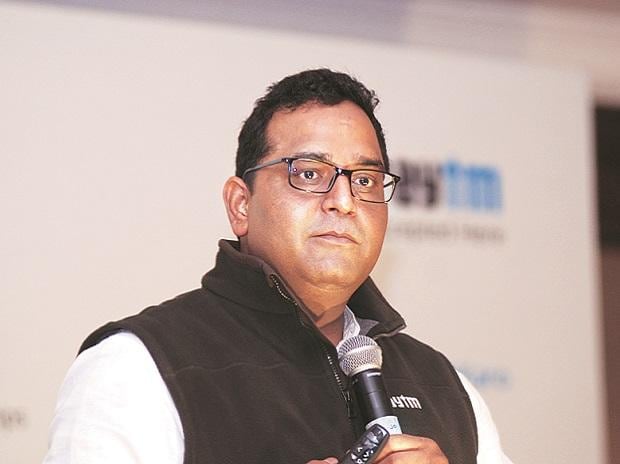
Paytm founder Vijay Sharma says winning in India prepared him for the world


Sharma said the digital payments war is a huge opportunity and that India could produce the payment player which will go on to dominate the world.


Business Standard : Vijay Shekhar Sharma, 41, founded closely held One97 Communications and its brand Paytm (rhymes with ATM) almost two decades ago. It offered a variety of digital services before moving into payments in 2014, just as millions of urban Indians began shopping online.

Two years later, India’s banks created the Unified Payments Interface, a tech umbrella to help banks and fintech startups create services quickly, and the government eliminated high-value currency notes, turbocharging demand for Paytm’s services. Sharma, a self-described hippie who loves to sprinkle U2 and Pink Floyd lyrics into his conversation, now has backers including Alibaba’s Jack Ma, SoftBank’s Masayoshi Son, and Berkshire Hathaway’s Warren Buffett.

Paytm is the market leader in India, where KPMG sees digital payments growing at the fastest rate of any country, with transaction value rising at an estimated annual rate of 20.2 per cent from 2019 to 2023. But competition is heating up as Google, Walmart, and Facebook jump into India, wielding cashback offers to lure customers. Meanwhile, the government has proposed scrapping fees on digital payments, Paytm’s core product.

In an interview in Delhi, Sharma described his career and how Paytm is adapting to India’s changing market, cutting annual expenses 45 per cent and preparing to raise new funds to accelerate the next phase of growth in smaller cities.

What led you to digital payments and e-commerce?
I grew up in a small town called Aligarh where I studied in a very basic Hindi medium school [where Hindi is the medium of instruction]. I didn’t have fancy schooling. I was lucky to get into engineering college in Delhi at the age of 15. I taught myself English by memorizing rock songs and simultaneously reading translated textbooks in English and Hindi. When I graduated, I was the youngest teenage engineer out of the University of Delhi. As the Pink Floyd song [Breathe] goes,

Run, rabbit run.Dig that hole, forget the sun,And when at last the work is doneDon’t sit down it’s time to dig another one.For long you live and high you flyBut only if you ride the tideAnd balanced on the biggest waveYou race towards an early grave.

My early heroes were internet entrepreneurs Jerry Yang and Mark Andreessen. I started One97 Communications in 2000 and began by selling content to users through telecom operators. By 2010 the smartphone became the distribution channel. Payment became our thing, and destiny was in our hands. In 2014 we launched our licensed wallet product. By 2015, Ant Financial had invested in us, then Alibaba and then SoftBank.

Thursday, September 19, 2019

PhonePe's super-app platform 'Switch', a one stop solution for customers 


Aims to provide one-clock entry to entry point to several online merchant platforms on 'PhonePe Switch'.


Business Standard : PhonePe, a Fllipkart Group company which started its journey in late 2015 as a startup focusing on digital payments, is all set for its next phase of journey by hosting other online commerce apps on its platform and driving traffic and facilitating transactions. The Bengaluru-based firm, starting today, unveiled a new in-app section called 'PhonePe Switch' which acts as a 'super app' integrating several other merchant apps and provide its 150 million odd users a single platform for their various online shopping needs.

"PhonePe Switch emphasises our efforts to build a partner app ecosystem which offers our users a very convenient way to access and engage with multiple apps," said Sameer Nigam, co-founder and CEO, PhonePe. “While start-ups are able to acquire high-quality users at low costs, larger partners get help in specific areas like driving non-cash payments, growing their business in select geographies etc.,” he added.

Currently managing around 50 such apps in categories such as food, travel, local commuting, grocery and others, the payments firm expects the number to touch 500 by the year end. Some of the third-party apps that are currently hosted on its platform include Ola, Eat.Fit, Grofers, IRCTC and MakeMyTrip. A PhonePe user can access, say, the Ola app, from within PhonePe without having to log into the Ola account or come out of PhonePe.

PhonePe Switch and the other financial services products we are in the process of launching will be revenue drivers for the company in the long-run and help us achieve profitability, an area we will dedicatedly focus on starting next year,” added Nigam.
PhonePe ‘Switch’ is a major part of the company’s strategy to become an Internet services aggregator, which people will use for online shopping to ordering food or cabs in place of separate applications for these use-cases. Currently, PhonePe charges a small fee for a merchant transaction using its payments platform.

Rituraj Rautela, head of Apps Platform, said ‘Switch’ allows app developers to run targeted offers and marketing, besides testing new features faster on PhonePe’s user base. “Switch is a new distribution platform for our partners, who may see lower cost of acquisition for new users through us,” said Rautela.

Allowing users, who are already logged-in onto the PhonePe, to use third-party services within its app and over the same user experience, is also an attempt to lock-in users to its ecosystem.


Tuesday, September 10, 2019

Paytm parent One 97 Communications' loss doubles to Rs 4,217 crore


One97 Communications banks on its services, other businesses to improve.


Paytm parent One 97 Communications’ consolidated loss more than doubled in the financial year ended March owing to capital expenditure on brand and business activity, but said it was going to focus more on its services and other businesses to improve turnover. Loss for 2018-19 (FY19) more than doubled to Rs 4,217.20 crore, compared with Rs 1,604.34 crore in the year-ago period.

One 97 in its annual report said its total revenue on a consolidated basis rose to Rs 3,579.67 crore in FY19 from Rs 3,309.61 crore a year ago.

The company is focusing on strengthening its position in various business segments such as Payments Bank, insurance and insurance broking, travel ticketing, hotel, and mobile wallet services and that would result in better turnover in coming financial years,” Paytm's parent said.

The company has moved from being a mobile wallet business to becoming a one-stop shop for all kinds of bill payments, payment gateway aggregator services, ticket services, utility bills payments, and insurance and hotel booking services.

One 97 also has units of Subsidiary of One97 Communications Singapore in countries like Ivory Coast, South Africa, Nepal, Bangladesh, Malaysia, Rwanda, Uganda, Nigeria, and the US.

A Paytm spokesperson said, “For the last two years, we have been investing $1 billion each year to expand digital payments eco-system in our country. We will further invest about $3 billion in the next two years to scale the same. We believe India is at the inflection point of digital payments and Paytm’s sole focus is towards solving the merchant payments & offering them financial services. We will invest Rs 20,000 crore in the next two years towards achieving this.”

Business Standard has earlier reported that Paytm Mall is integrating its offline merchant base with international sellers on a single platform in a bid to take on competition.
During the year, founder Vijay Shekhar Sharma’s cumulative shareholding in the company remained at 15.73 per cent. Its largest investor continued to be Alipay Singapore E-Commerce, with 30.49 per cent cumulative shareholding, followed by SVF India Holding (Cayman) with about 19.69 per cent shares, SAIF III Mauritius Company (13.02 per cent), and Alibaba.com Singapore E-Commerce (7.70 per cent).


Wednesday, October 31, 2018

Amazon Pay, ICICI launch new credit card as US firm eyes fintech expansion 


Amazon Pay also plans to offer a host of other fintech services, including mutual funds, in due course.


Amazon Pay, the online payments processing service owned by the America-based retailing major, has tied-up with ICICI Bank to launch an Amazon Pay ICICI Bank credit card in partnership with Visa. It has planned to majorly expand in the financial technology space and in making digital money more prevalent in tier-III cities and other towns. Amazon Pay says their tie-up would help in greater penetration for ICICI into places where credit card usage is less.

This is the first card in the country to enable Amazon Prime members to earn five per cent reward points on shopping on Amazon.in. The points will be accumulated in the form of Amazon Pay balance, which can be used for either shopping on Amazon or spending on items such as bill payment, food ordering, travel ticketing and hotel booking, among other services.

"As the card is available on Visa's network, customers also earn rewards at millions of merchant locations throughout India where Visa cards are accepted. Currently, this programme is available to selected Amazon and ICICI Bank customers and will be expanded to other customers over the coming months," said Vikas Bansal, director, emerging payments, Amazon Pay.

Sources say the plan is to launch similar credit cards with other banks. Amazon Pay also plans to offer a host of other fintech services, including mutual funds, in due course.


"We are witnessing two distinct consumer trends. One, millions of Indians are making purchases for most of their requirements online. Two, customers are looking for richer reward propositions that provide them flexibility in redemption. We believe this compelling customer offering will contribute largely to the growth of the bank's credit card portfolio," said Sudipta Roy, general manager at ICICI.

Amazon Pay is also planning a major expansion in the offline space. It is thinking of a host of tie-ups with major retailers, as well as making Amazon Pay more prevalent among traditional family-run shops in small cities and towns.

During the first wave of festive sales this year, the company said, 74 per cent of payments happened digitally. This figure was 64 per cent last year. The company is getting into tie-ups with a host of retailers, restaurants, hotels and travel portals, as part of a policy to expand in the digital money space. It believes it would get a number of repeat users, since its online marketplace is now the most visited and downloaded app in the country, according to some independent studies.... Read More


Friday, June 15, 2018

PM Modi highlights benefits of empowering citizens through Digital India 

Modi also stated the initiative has brought in a movement towards more digital payments.


Prime Minister Narendra Modi said on Friday his Digital India flagship programme empowered citizens by eliminating middlemen' and promoted 4Es - Education, Employment, Entrepreneurship and Empowerment.


"We launched Digital India with a very simple focus -- to ensure more people can benefit from the joys of technology, especially in rural areas," he said while interacting with beneficiaries of the flagship scheme across the country via the NaMo App.


This was his fourth outreach with beneficiaries of government schemes through video conferencing. The event was streamed on social media site Facebook.


He also stated the initiative has brought in a movement towards more digital payments, thereby eliminating the concept of middlemen.


"Due to technology, railway tickets can be booked online, bills can be paid online... all this brings great convenience. We ensured that the advantages of technology are not restricted to a select few but they are there for all sections of society.
We have strengthened the network of Computer Science Corporations (CSCs)," he said.


Modi also said the scheme has been a major tool in bringing digital transformation in rural areas, especially northeast.


"Under our North East BPO Promotion Scheme (NEBPS), we are not just providing employment to youth in cities but also in the northeast.


The India BPO promotion scheme and a separate BPO promotion scheme for the northeast is creating new opportunities relating to the sector," he added.