Showing posts with label CORPORATE TAX. Show all posts

Monday, September 23, 2019

Here's what India can learn about tax cuts from the American experience 


Finance Minister Nirmala Sitharaman is betting that local firms will pass on the corporate tax cuts to customers in the form of lower prices to stimulate demand.
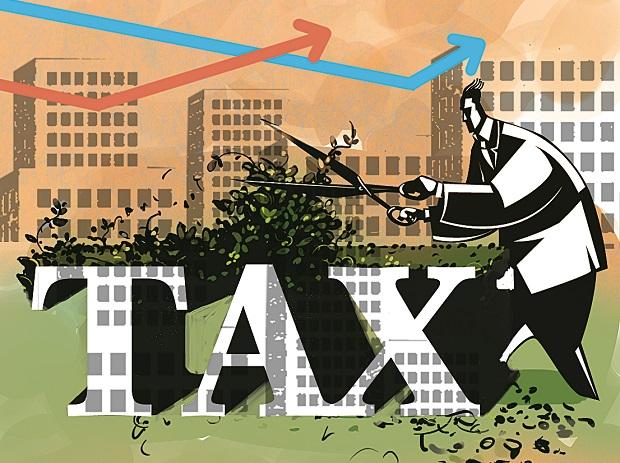

India’s decision to cut corporate taxes may benefit from lessons learned in the United States.

A recent study suggests that the rise in US business investment since the passage of the Tax Cuts and Jobs Act in late 2017 isn’t necessarily due to the cut in the corporate tax rate from 35 per cent to 21 per cent, which aimed to lower the cost of capital. The paper published by the International Monetary Fund puts forth a simpler reason: investment has been rising because domestic demand was boosted by lower personal taxes and higher government spending.


India hasn’t decided on cuts to personal taxes, Finance Minister Nirmala Sitharaman said at a briefing on Sunday. She is betting that local firms will pass on the corporate tax cuts to customers in the form of lower prices to stimulate demand.

While certain types of firms, such as consumer goods makers, might do so, the bulk of listed companies are already sitting on manufacturing slack and would prefer to reduce debt rather than build factories or hire more workers, Neelkanth Mishra, India strategist at Credit Suisse Group AG, told BloombergQuint.

Indian firms won’t necessarily use the tax cuts to return cash to shareholders -- unlike their U.S. peers -- but fresh investments could take time, according to A. Vaidheesh, managing director at GlaxoSmithKline Plc’s Indian unit.

“The current slowdown cycle is different from the 2012-13 slowdown as the consumption demand is also significantly constrained,” said Madhavi Arora, an economist at Edelweiss Securities Ltd. “Therefore a broader tax cut covering all economic agents would have probably yielded better economic returns.”


Sunday, September 22, 2019

All's well in India, says PM at 'Howdy Modi' rally; Trump hints about visit


Modi spoke of his govt's decision to scrap the provisions of Article 370, and received sustained applause, and asked the audience to give a standing ovation to all members of the of Parliament.


“All’s well in India,” Prime Minister Narendra Modi told an estimated 50,000 members of the Indian diaspora in Houston on Sunday at an event titled Howdy Modi and days after his government slashed corporate tax to address concerns of an economic slowdown.

The PM concluded his rousing speech by inviting US President Donald Trump, along with his family, to visit India soon, and the two leaders with their hands clasped, took a round of the stadium waving at the crowd in a gesture to convey the strength of their friendship to which both had alluded to in their respective speeches.

Earlier, addressing the Indian diaspora at the NRG Stadium in Houston, the US President hinted at visiting India as early as October, while Modi seemed to endorse his support for Trump’s re-election next year, and suggesting to the Indian-American community to do the same, by declaring “abki baar Trump sarkaar”.

During his speech, the US President received loud cheers when he said India and the US were united in their fight against “radical Islamic terrorism”, which is likely to be interpreted as a message to Pakistan. Modi spoke of his government’s decision to scrap the provisions of Article 370, and received sustained applause, and asked the audience to give a standing ovation to all members of the two Houses of Parliament.

While not mentioning Pakistan by name, the PM said the decision has inconvenienced some people who cannot take care of their own country, who nurse and support terrorism. He said the time has come for a “decisive battle against terrorism and people who support terrorism”. He said the US President is standing against terrorism with all his strength, and asked people to give him a standing ovation.

The PM said the days of “incremental change” in India were over, and it has transformed rapidly in the last five years. He spoke of the various social welfare measures taken by his government and the objective to make India a $5-trillion economy.

Business Standard

Sunday, February 3, 2019

Interim Budget 2019: Using technology to increase tax base and reduce rates


With electronic filings and tax administrations in India, there has been a fundamental shift from quantity to quality.


In the Interim Budget 2019 speech, Finance Minister Piyush Goyal has reiterated the government's aim to continue technology-led tax reforms.

Technology to increase tax base and reduce rates
The use of technology is the only sustainable measure to increase tax compliance, tax base and eventually, tax collections. It is only when the government has reasonable surety of tax collections, can it take the steps to reduce tax rates and lower the burden on existing tax payer base.

According to government data sources, FY18 saw a 26 per cent rise in the number of income tax returns filed compared to last year, effectively adding 9.95 million new income tax payers. Estimates, according to statements of senior revenue officials, for new taxpayers to be added in 2019-20 is around 10 million. Consequently, there has also been a steady increase in tax collection year-on-year. This has allowed the government to reduce tax rates, for instance slashing the rates for companies having turnover below Rs 250 crore to 25 per cent and recent reductions in GST rates. Major contributors to these initiatives are technology-led reforms.


Digital tax administration and taxpayer experience
It is not too far in history when individual taxpayers had to undergo several rounds of follow-up with the tax office to initiate refunds. With the set-up of Bangalore CPC, refunds for individual taxpayers are swift and relatively quite easy.

The Finance Minister’s statement that the government has now approved a technology-intensive project to transform the Income Tax Department into a more assessee-friendly one is music to ears. It is proposed that returns will be processed within 24 hours and issued simultaneously. If the government is able to achieve this for corporate tax payers, on the lines of individual tax payers, it would be a giant leap forward in digital tax administration.

The first wave of e-assessments, particularly for small and medium-sized assessees, appears to have yielded results. It is proposed that within the next two years, almost all verification and assessment of returns selected for scrutiny will be done electronically through anonymised back office, manned by tax experts and officials, without any personal interface between taxpayers and tax officers. This will go a long way in increasing governance and quality of tax compliance.

Needless to say, it is a big change from the current system, and a well thought out approach in implementation would be key. Unlike GST, the government will have sufficient room to plan and work towards a successful implementation of this strategically important project.