Showing posts with label TATA MOTORS. Show all posts

Wednesday, September 18, 2019

BMW should buy Jaguar Land Rover from Tata Motors, says Bernstein


Tata Motors may get 9 bn pound valuation.


Business Standard : Tata Motors should look at selling its UK-based subsidiary, Jaguar Land Rover to German luxury car maker, BMW, which could fetch a valuation of 9 billion pounds to the Tata company, global brokerage firm, Bernstein has said.

In a report to its clients, Bernstein said BMW is over-capitalised and is awash with cash. “It (BMW) has run into the limits of growth for its product range and brand. Returns on capital from further expansion look questionable. By contrast, JLR could be acquired at a discount to book value. With BMW's help it could be returned to profitability,” it said.

The Range Rover has huge gross margins but is being swamped by fixed costs and problems on other product lines. BMW could quickly lower JLR’s investment costs and raise margins by leveraging its own platforms, powertrains, purchasing scale and quality control. The value creation would be substantial and could boost BMW earnings by 20 per cent, the report said.

For Tata group, the problems at JLR look daunting, the brokerage said. "It’s been an amazing 10 years, with many successes, but we believe the company needs to find a strategic solution for JLR. Proceeds of £9 billion would mean upside for Tata Motors share price, especially if Tata could articulate how the capital would then be redeployed,” the report said.
Tata Motors had acquired JLR in June 2006 for $2.3 billion and after a long good run, the company is losing money in the recent quarters. In July, JLR had announced that it has joined hands with BMW to develop next-generation electric drive systems and since then speculation is rife that BMW would buy JLR. Tata Motors has denied any talks with BMW for stake sale.

BMW owned Land Rover and the wider Rover group from 1994 to 2000. “It was a traumatic period for the Bavarian company and there are executives in Munich who are still emotionally scarred by the experience. However, we believe the time is right for BMW to revisit ownership of Land Rover, along with its sister brand, Jaguar,” the report said.

The brokerage said BMW is cash rich and has huge resources but seems to have hit the limits of growth with its own brand. Value creative organic growth may be difficult to achieve from here. JLR, on the other hand, is severely challenged, both operationally and financially. But it could massively lower both its fixed and variable costs under the wing of a bigger partner. "BMW has already agreed to supply electric drive units and engines to JLR. But far greater co-operation makes huge sense. In fact, the industrial and financial logic of a full acquisition is compelling," the report said.


Wednesday, May 29, 2019

Jaguar, where'd that extra $1 billion come from amid big yearly losses?


With a jump in cash flow that big, it's worth asking how Jaguar pulled it off - particularly given its checkered performance in China.


Cash is fungible. So if a company suddenly has $1 billion more of it, does it matter where it comes from? For Jaguar Land Rover, it should.

Keep Reading : Business Standard

In its latest results, the iconic UK car company, owned by Tata Motors Ltd., posted around 1.4 billion pounds of free cash flow ($1.77 billion). That's a sharp turnaround from a running cash-burn rate of more than 500 million pounds per quarter over the last two years, and around negative 2.7 billion pounds over the last nine months alone. The company attributed the sharp rise to its efforts to manage working capital, including inventory reductions.

Meanwhile, Jaguar’s other numbers looked dismal – profits were down and debt was up from a year earlier. Free cash flow was “the only positive in these results,” Goldman Sachs Group Inc. analysts wrote in a note.

With a jump in cash flow that big, it’s worth asking how Jaguar pulled it off – particularly given its checkered performance in China.

Over the years, the company pushed a large volume of cars into the mainland market, offering some models at steep discounts. That ended up clogging inventory channels and burdening dealers. Around 70% of them lost money in the third quarter. Roughly 40% of the company’s dealers were based in tier 3 to tier 5 cities, and have been operating for less than three years: It takes a good deal more than an inexperienced staff to sell luxury cars in China’s poorest cities.

Jaguar has also spent aggressively on research and development and capital expenditure, with investment outlays comprising almost a fifth of total revenue. The company’s burden ticked up in tandem – to 4.5 billion pounds over the past year – and its leverage ratio rose to 2.3 times earnings before interest, tax, depreciation and amortization from 1.3 times at the end of last year.

To shore up the quarters of cash burn, Jaguar reduced spending and made around 100 million pounds in profit in the fourth quarter. Part of it was seasonal, too. But another maneuver also helped the company manage its working capital.

The company expanded a so-called factoring facility(3) – a working-capital loan – to $700 million from $295 million. For this to work, a company sells its receivables at a discount to raise money. When the dealer pays the company back, it can then repay its lenders. There’s a steep cost associated with this, of course.

Wednesday, May 8, 2019

Tata Motors in talks with China's Chery Automobiles for India JV: Report


Chery already has a JV with Tata Motors-owned Jaguar and Land Rover to make cars in China.


Chinese automaker Chery Automobiles is reportedly keen on a joint venture with Tata Motors for an India entry.

State-owned Chery already has a JV with Tata Motors-owned Jaguar and Land Rover to make cars in China. The partnership was formed in 2012 and helped Jaguar Land Rover open their first assembly facility in Changshu, China in October 2014.


"The nature of the partnership—a joint venture, retail sales tie-up or technology sharing—and the time for Chery’s entry into India is yet to be finalized, Livemint reported on Thursday.

As auto sales are expected to stagnate in China in the next few years, major auto majors there are looking to expand in India as the latter is the only market projected to grow significantly in the long run.

The MG Motor India, which is a wholly-owned subsidiary of China's SAIC Motor Corp, will kick off its journey in the country with the launch of Hector SUV in June Great Wall Motors has formed a team to set up independent operations in India.

State-run Changan Automobile Co. is also exploring tie-ups in India.

Business Standard

Thursday, February 7, 2019

JLR to revamp Chinese retail network after 35% sales slump hits Tata Motors


Things haven't gone well in the world's biggest automobile market, based on an investor presentation posted to the JLR website.


Jaguar Land Rover owner Tata Motors Ltd. shocked investors on Thursday by writing down the value of its investment in the British carmaker by $3.9 billion -- mainly because of problems in its Chinese business.

Things haven’t gone well in the world’s biggest automobile market, based on an investor presentation posted to the JLR website.


Sales dropped by 35 percent in the country for the nine months ended in December, sending Tata Motors shares down as much as 30 percent.

One problem, according to the presentation, is JLR’s dealer network. Only 18 percent of its outlets are in so-called tier 1 cities like Shanghai and Beijing, and more than one-third have been open for three years or less.

The company said it’s overhauling the operation, cutting back on deliveries to reduce stock.

It’s also streamlined its commercial policies to help compensate for retailers’ losses, and launching extensive on-site training programs to improve the customer experience as well as operations.

JLR didn’t offer details of the writedown, other than to say it was about evenly split between intangible items such as technology and branding, and property, plant and equipment. JLR isn’t closing any facilities, according to a spokeswoman.


Friday, January 11, 2019

Why Jaguar Land Rover's job cuts will do little for its turnaround plans


Operational expenses have risen faster than staff costs. Wouldn't that be a place to start?


The UK luxury unit of India’s Tata Motors Ltd. will eliminate 4,500 positions globally as part of a 2.5 billion pound ($3.2 billion) cost-cutting program outlined in November, according to a company announcement Thursday.

The savings will be relatively minor. Workforce reductions are now standard in an industry struggling to deal with rising costs from technology, pricier materials, and U.S. President Donald Trump’s tariffs.

In its release, the company said this was the next phase of a transformation program that started in its fiscal second quarter through September. JLR said its “Charge and Accelerate” initiatives had identified more than 1 billion pounds of improvements and realized 500 million pounds of that in 2018.

In the meantime, though, there’s no sign of an end to the company’s financial and operational woes. December retail sales were dismal again – Jaguar Land Rover sold around 52,000 cars globally, down 6 percent from a year earlier. China sales dropped 42 percent even as luxury peers posted gains. Free cash flow was negative in the second quarter and executives have said it will stay that way for the year. S&P Global Ratings said in December it expected free operating cash flow to be significantly negative for the next two years, totaling almost 4 billion pounds by March 2020.

In October, the company blamed China for a second-quarter pretax loss of 90 million pounds. It disclosed investment outlays of 1 billion pounds for the three months and took out another $1 billion loan.

This is the automaker’s first announcement since then and, as we’ve argued, it’s doing far too little to achieve a turnaround or even tell investors about its progress.

In December, Jaguar Land Rover said its venture capital arm invested an undisclosed amount in six startups including an online portal for music fans to book tickets and festival travel packages. It also launched its own incubator and has committed $40 million to its team in the Formula E electric-car racing series.

Investing in future technology for electric cars and batteries is one thing; whether this is the type of transformation that an automaker in financial turmoil should be seeking is quite another.

Meanwhile, the job cuts will have only a minor impact on its savings goal. With more than 40,000 employees and associated costs of 2.7 billion pounds in the 2018 fiscal year, a back-of-the-envelope calculation suggests a 10 percent workforce reduction will save only about 280 million pounds. There was no mention of executives on multimillion-pound pay packages departing, and union workers won’t take cuts at the country’s largest automaker lightly. Ironically, Jaguar Land Rover said on an earnings call in July that its “mission in life” was to leverage its people to deliver the best products.

Business Standard

Wednesday, December 12, 2018

Come Jan 1, you'll have to pay up to Rs 40,000 more for Tata Motors' cars

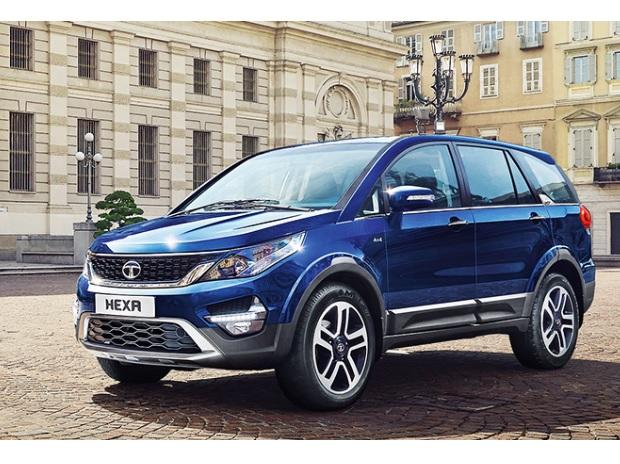
The company's passenger vehicles portfolio ranges from entry-level small car Nano to the premium SUV Hexa.

1523301200-3913

Tata Motors Thursday said it will hike prices of its passenger vehicles across models by up to Rs 40,000 from January 1, 2019, to offset the impact of rising input costs and increase in fuel prices.

The company's passenger vehicles portfolio ranges from entry-level small car Nano to the premium SUV Hexa, which are currently priced between Rs 236,000 and Rs 1.797 million (ex-showroom Delhi).

The company will launch its new premium SUV Harrier in January.
"The changing market conditions, rising input costs and various external economic factors have compelled us to consider this price increase," Tata Motors President of Passenger Vehicles Business Unit Mayank Pareek said in a statement.

The company would be increasing prices of its entire passenger vehicles range by up to Rs 40,000 (depending on the model and city), starting January 1, 2019, the statement added.
Tata Motors joins other companies such as Maruti Suzuki, Toyota Kirloskar, BMW and Isuzu, which have also said they would increase prices of their vehicles from January, citing impact of increase in commodity prices and foreign exchange rates.

Pareek said despite the price hike, Tata Motors is "optimistic on maintaining our growth trajectory in the coming year on the back of our robust portfolio".
"Early 2019 will also mark the entrance of our most awaited SUV the Harrier," he said.

Business Standard

Friday, November 16, 2018

Jaguar's bond risk fourfolds on e-vehicle popularity, weak demand in China 


Tata Motors posted a larger-than-expected loss in the second quarter and announced a cost savings plan for Jaguar.


Jaguar Land Rover Automotive Plc’s bond risk quadrupled this year as the automaker plays catch-up on electric vehicles and is hit by weakened demand in China. Moody’s Investors Service is warning of more tough days ahead.

Moody’s on Nov. 13 cut its rating on Jaguar, owned by India’s Tata Motors Ltd., to Ba3, three levels below investment grade. Jaguar’s weak operating performance “will likely continue over at least the next 12-18 months” and it will weigh on the parent’s performance too, it said.

Tata Motors posted a larger-than-expected loss in the second quarter and announced a cost savings plan for Jaguar.

Diesel vehicles account for just under 90 percent of Jaguar’s sales in Europe at a time when consumers are increasingly choosing more environmentally friendly options. By 2040, more than half of all new car sales and a third of the planet’s automobile fleet -- equal to 559 million vehicles -- will be electric, according to a global outlook published by Bloomberg NEF.

JLR has an above average exposure to diesel engines which face a very uncertain demand outlook,” said Nicholas Harrison, credit sector strategist at RBC Capital Markets. “JLR has fallen from being widely viewed as a rising star a year and a half ago to now sitting comfortably in BB category.”

Credit-default swaps protecting Jaguar’s debt against non-payment using five year contracts surged to 582 basis points on Thursday, a six-year high. The cost to buy protection on Jaguar bonds was as low as 113 basis points in August of last year.

Jaguar is pushing into EVs,” said Joel Levington, director of credit research at Bloomberg Intelligence. “That is coming at a heavy capex and R&D cost, which are key drivers behind its weakening credit. More like they need to take a step backwards before they can move forwards.”

Business Standard

Monday, October 8, 2018

Tata Motors launches new premium variant of SUV Hexa; priced at Rs 1.5 mn


The Hexa XM+ is equipped with features such as reverse parking sensors camera, cruise control, rain sensing wipers, electrically adjustable and foldable exterior mirrors.


Tata Motors Monday launched a new premium variant of its lifestyle sports utility vehicle (SUV) Hexa with 16 new features, priced at Rs 1.527 million (ex-showroom New Delhi).
The Hexa XM+ also been made available with an electric sunroof to enhance, which comes with a two years warranty, it said.

Hexa, which is based on Aria platform and shares its engine with the Tata Safari Strome, was launched in the country in January 2017.

"With turnaround 2.0 in play, we have continued to deepen our focus towards catering to the evolving customer demands by introducing new products and variants at regular intervals," a company statement said.

Tata Motors' Turnaround 2.0 strategy is aimed at delivering "consistent, competitive and cash accretive growth".

"With the launch of the Hexa XM+, we are further strengthening this product range," Tata Motors passenger vehicle business units vice-president for sales, marketing and customer support SN Barman, was quoted as saying in the release.

The Hexa XM+ is equipped with features such as reverse parking sensors camera, cruise control, rain sensing wipers, electrically adjustable and foldable exterior mirrors and automatic headlamps, among others, the release added.

Tata Motors has reported a 20 per cent increase in domestic sales at 64,250 units in September as compared to 53,964 units in the same month last year.
The company's domestic passenger vehicle sales surged 7 per cent at 18,429 units in the previous month as against 17,286 units sold in September 2017.

Business Standard

Sunday, September 9, 2018

Limited edition Tata Nexon Kraz launched at Rs 714,000: Know the details


Available in two variants, the Tata Nexon Kraz and Kraz+ are available across the company's dealerships since September 6.


Tata Motors has launched its limited-edition Nexon Kraz to mark the 1st anniversary of the Nexon brand in India. While the petrol verrsion has been priced at Rs 714,000, the diesel unit is available at a price point of Rs 807,000.

Available in two variants, the Kraz and Kraz+, the model is available across the company's dealerships since September 6.

The Tata Nexon Kraz comes with all-black exterior and neon-green highlights. The highlights include neon-green mirrors, front grill inserts, alloy wheel accent, neo-green seat stitch with a Kraz pattern for seat cushions, black dashboard with neon-green air vent surrounds, among others.

The powertrain of the Nexon Kraz remains unchanged and is powered by the same 110PS turbocharged 1.5L Revotorq diesel engine or the 1.2L Revotron petrol engine mated to a 6-speed manual transmission.

Similarly, the limited-edition Nexon also comes equipped with a 4-speaker infotainment system by Harman, Bluetooth connectivity, automatic climate controls with rear air vents, electrically adjustable and foldable mirrors, and reverse parking sensors.

The Tata Nexon SUV recently received a four-star rating at the GNCAP crash tests, achieving the highest adult safety score (13.56/17.00) among all the cars available in the Indian market.

The SUV gets double front airbags, double front pretensioners, ABS and ISOFIX anchorages as standard has helped the SUV get the four-star rating for adult occupant protection and a three-star rating for child occupant protection.

Article Source BS

Tuesday, May 22, 2018

Audi India set to launch luxury electric car with superior mileage in 2020

Company plans to offer cars that can do 400 km on a single charge, as opposed to existing EVs that can run 150 km at most.


German luxury car maker  Audi  is getting ready to launch a luxury electric vehicle (EV) in the country in 2020. It is working on training of employees and dealers. The company said dealerships will need to have a charging station as well. It plans to sell EVs at select dealerships in few cities depending on the progress in charging infrastructure to begin with.

The government has clearly sent a message that EV is the future and not hybrids while introducing the GST last year. For the past nine months, we have been working heavily on the infrastructure. We have set up a task force called Electrified India within the company to work on the EV launch in India,” Rahil Ansari, Head, Audi India told Business Standard.

Ansari said EV is the future for Audi globally. “Globally, we are launching four EVs by 2020. By 2025, a lot more models will be added. Our expectation is that Audi will sell 800,000 EVs globally a year in 2025, which should then be roughly one-third of global volume. We are in a position to launch an EV in 2020 latest here in India but we will do so once the infrastructure is in place and there is clarity on all fronts. Launching is the easiest part,” he added.

Audi is working on training its employees and dealerships on electric vehicles. Dealerships need wiring, charging stations. “We have been training people at Audi India. We will work on these over next one and half year. We will not sell it everywhere in the country and not at all the dealerships,” he said. Many others mass and luxury players are expected to launch EVs in India in 2020. Country’s biggest car maker Maruti Suzuki is working with Japanese peer Toyota to launch an electric vehicle in India in 2020. Homegrown auto majors Tata Motors and M&M are the only companies that are producing electric cars in India at this point.

The government said in February it will not bring a dedicated electric vehicle policy but it is working on a new auto policy that will also set an agenda for environment friendly vehicles. Ansari said a central policy would have been ideal though the government has decided not to have one. “The industry could have worked according to framework. Suppose we launch an EV in 2020 and in 2021 a policy opposes the product. We always run that risk so it always helps to have a policy”.


Ansari said that Audi EVs will not be similar to the ones that are being sold in the country at this point. “The locally developed ones have a reach of 90-120 km after one charge and may go up to 150km. At Audi, we are talking about 400 km-plus distance with one charge. If you drive smoothly you might be able to do a round trip between Mumbai and Pune on one charge”, he said.