Showing posts with label INDIA INC. Show all posts

Monday, March 2, 2020

Around Rs 10.52-trn corporate debt may default over 3 years: India Ratings


Further, around 25 per cent of the vulnerable debt is likely to turn delinquent, resulting in additional Rs 2.54 trillion of delinquent debt.
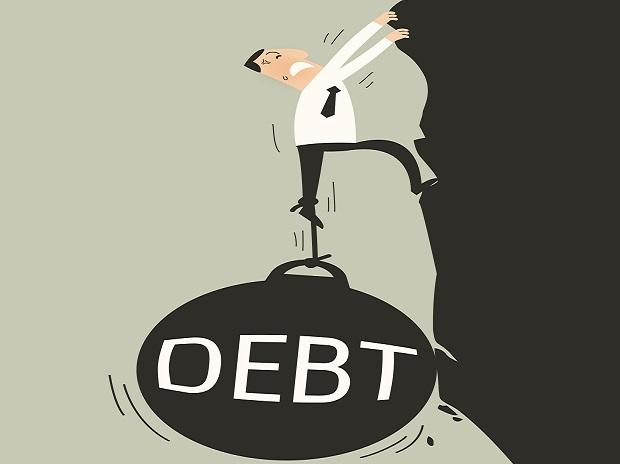

At least Rs 10.52 trillion worth of corporate loans — around 16 per cent of the system-level corporate debt — is likely to default over the next three years due to prolonged slowdown in the economy. Further, around 25 per cent of the vulnerable debt is likely to turn delinquent, resulting in additional Rs 2.54 trillion of delinquent debt, according to a recent report by India Ratings & Research. This is likely to result in incremental delinquencies to the extent of 4 per cent of the system-level corporate debt, the report adds.

A loan becomes delinquent when a borrower makes payments late (even by one day) or misses a regular instalment payment(s).

India Ratings has taken into account top 500 debt-heavy private-sector issuers for the study after assessing their asset quality. The report buckets issuers in five categories of vulnerability — low, moderate, high, extreme and stressed.

The report details the base, bull and bear case estimates for system-wide credit costs based on the historical default rates and loss, given default for each vulnerability bucket. Credit costs on the corporate book are likely to amount to 2.15 per cent of the system debt in the base case.

"Of the companies which are already stressed (that is, recognised as defaulters by banks and credit rating agencies), lenders to at least half of these companies are likely to be required to take deep haircuts, given the inherently weak asset quality of these issuers," said Arindam Som, analyst at the ratings company.

However, in case the growth in real gross domestic product (GDP) sees a sharp recovery (around 7 per cent over FY21-FY22), delinquencies could be lower by 87 basis points (bps) to 3.13 per cent of the system debt. But, if the slowdown accelerates, to say 4.5 per cent over FY21-FY22, delinquencies could be higher by an additional 159 bps to 5.59 per cent of the system debt, the report added.

India's gross domestic product (GDP) growth slipped to nearly a 7-year-low of 4.7 per cent in the December quarter, owing to contraction in investment and manufacturing output. Looking ahead, GDP growth is set to stagnate at 4.7 per cent in the March quarter (Q4), too, according to the annual estimate by the National Statistical Office (NSO), which has forecast 5 per cent growth for full financial year.

Tuesday, February 18, 2020

Slowdown effect? Salary increase in 2020 may be lowest in a decade at 9.1%


However, 39% of companies still plan to offer increases of 10% or more: Aon survey.


The economic slowdown is beginning to reflect in the salary hikes of India Inc. The average salary increase in 2020 is projected to be 9.1 per cent, the lowest in a decade, according to the 24th edition of Aon Plc’s annual salary increase survey. In 2018 and 2019, companies increased average salary by 9.5 per cent and 9.3 per cent, respectively. After the financial crisis of 2008, the average hike had slumped to 6.6 per cent.
The projected increase for 2020 is lower than the average salary hike that graduates of top Business schools have managed at around 12 per cent.

The good news, however, is that despite gross domestic product (GDP) growth estimates getting revised downward, the average salary increase for 2020 will be only 20 basis points lower than that of the previous year.

Moreover, double-digit salary increments have not vanished entirely. While the average for the country has come down, 39 per cent of the companies are still willing to give double-digit salary increases in 2020.

This year’s number is in keeping with the long-term trend. “The trend over the years has been downward. Up to 2011, the average salary increment was in high double digits. Between 2012 and 2016, it was at 10 per cent plus, and in recent years, it has come down to the 9 per cent plus mark,” said Tzeitel Fernandes, partner and head of rewards solutions, India, Aon. She added they witnessed a mood of caution among firms this year.
The survey by Aon, a global professional services firm, covered more than 1,000 companies, across more than 20 industries. The firms were split equally between manufacturing and service sectors.

The mood within India Inc, though a little jaded than last year, is not completely downbeat. One question posed in the survey was whether respondents saw their businesses improving, stabilising, or declining.

In 2020, 92 per cent of the firms still said they saw their businesses improving or stabilising (the figure was 97 per cent for 2019). “Despite the economy softening and certain amount of caution coming in, an overwhelming majority of firms still say they are likely to do as well, if not better, in 2020 compared to 2019,” said Fernandes.
Another trend that is evident is that the range in salary increases across sectors has narrowed. In 2020, e-commerce, early-stage, and professional-services organisations plan to offer an average 10 per cent increase, while the logistics/transportation sector intends to offer the lowest increase of 7.6 per cent.

Monday, January 6, 2020

Action against corrupt shouldn't be seen as crackdown on India Inc: PM Modi


The target to nearly double the size of the economy to $5 trn is just a phase and the targets are bigger and higher, says Modi.


Prime Minister Narendra Modi on Monday met top industrialists including Mukesh Ambani and Ratan Tata for an ‘’extensive’’ interaction and later followed it up with an address meant to revive the business sentiments, sending out a positive message ahead of the Union Budget.

During his meeting with India Inc bigwigs during the day, the PM focused on issues facing the industry and measures needed to boost the economy. Speaking at the centenary celebrations of Kirloskar Brothers in the evening, he encouraged businesses to invest without fear, stressing that action against a few corrupt entities should not be seen as government crackdown on the corporate sector. The government will walk shoulder to shoulder with the industry, he added, in a bid to revive the animal spirit.

Besides Tata and Ambani, the meeting with the PM was attended by Sunil Mittal, N Chandrasekaran, Anand Mahindra, Sajjan Jindal, Gautam Adani, Venu Srinivasan, A M Naik and Anil Agarwal, among others. An official in the Prime Minister’s Office said, “The PM had an extensive interaction with leading business stalwarts to discuss ways to improve growth and job creation’’.

The Modi government will present its next budget on February 1 and Indian companies are expecting a cut in income tax rates to revive consumer demand. Rationalisation of Goods and Services Tax (GST) is also high on India Inc expectations from the Budget. Although the government has already taken a series of steps to boost the sentiments, including a corporate tax rate cut, companies remain hesitant about fresh investments due to low consumer demand.

At the Kirloskar event, Modi asked the industry to shun pessimism and work towards the $5-trillion economy goal set by the government. “The target of $5-trillion economy is just a phase, our targets are bigger, higher,” he said. “At the beginning of the new year, I will again tell the Indian industry not to let disappointment affect you. Go ahead with new energy… whichever corner of the country you go to for your expansion, the Indian government will walk shoulder to shoulder with you,” the PM said.

Business Standard

Thursday, December 19, 2019

India Inc wants Centre to take more steps on ease of doing business


Industry representatives asked officials to "create more freedom for industry to perform".


Union Finance Minister Nirmala Sitharaman and her officers on Thursday met representatives of India Inc and trade unions for pre-Budget consultations. While industrialists asked the Centre to take more steps to augment ease of doing business, trade bodies stressed minimum wages, an income-tax ceiling, and pensions.

Industry representatives, who included Bharti Enterprises Chairman Sunil Bharti Mittal, Confederation of Indian Industry President Vikram Kirloskar, and Assocham President Balkrishna Goenka, asked officials to “create more freedom for industry to perform”.
The corporate leaders highlighted several issues, including income tax roadblocks coming in the way of mergers and acquisitions, or hobbling businesses.

“I have come here today to discuss only one thing — make doing business easy in the country. That was what my thrust was,” Mittal told media persons after the meeting.
“The idea is to create more freedom for industry to perform. The finance minister, with her associates and secretaries, received them (industry representatives ) very well. What we look forward to in this Budget is that it unleashes the energy of Indian entrepreneurs to do more,” Mittal said.

Expressing similar views, Assocham President Balkrishna Goenka said for “ease of doing business, states had to play an important role” and last-mile issues were there and needed to be resolved. Kirloskar said: “We talked about ease of doing business, which is the issue concerning many industries.”

RP-Sanjiv Goenka Group head Sanjiv Goenka said the discussions “centred more around what can be done to stimulate growth, to facilitate the ease of doing business”.

“The finance minister and her team were extremely open to all suggestions,” Goenka said, adding that “this is the first time I have seen this kind of response from the government”.
On the current slowdown and its impact on capacity utilisation across many industries, Goenka said industry recognised that it could take up to four quarters before capacity utilisation reached its peak.

Business Standard