Showing posts with label DHFL. Show all posts

Tuesday, April 7, 2020

Cash-strapped DHFL not to make any payment to lenders, bondholders


The Corporate Insolvency Resolution Process (CIRP) was initiated against the debt-ridden company as per the provisions of the Insolvency and Bankruptcy Code, 2016 with effect from December 3, 2019.

Dewan Housing Finance Corporation (DHFL) on Tuesday said it will not make any interest or principal payment to lenders as well as bond holders as the company is under resolution process.

The Corporate Insolvency Resolution Process (CIRP) was initiated against the debt-ridden company as per the provisions of the Insolvency and Bankruptcy Code, 2016 with effect from December 3, 2019.

DHFL said all the rated debt papers of the company are carrying default grade ratings and disclosures on the same have been made to the exchanges.


The creditors of the company were duly informed about commencement of the CIRP and were requested to submit their claims to the company in the prescribed manner as per the provisions of the Code.

The amounts to be received towards the dues by the creditors will be based on a resolution plan to be approved in due course by the NCLT, Mumbai, DHFL said in a regulatory filing.

The non-banking finance company (NBFC) further said that it is under moratorium and dues to lenders and bond holders will remain in abeyance until the CRIP is completed.

Sunday, March 8, 2020

YES Bank crisis: Rana Kapoor in ED custody, faces Rs 4K-cr kickback probe


12 shell firms, 2 UK assets, 44 paintings under ED scanner; London-bound daughter stopped at Mumbai Airport; CBI books Kapoor and Wadhawan on charges of cheating.


YES Bank Crisis : The Enforcement Directorate (ED) has found that YES Bank co-founder Rana Kapoor and his family set up over a dozen shell firms that were allegedly used for receiving kickbacks to the tune of Rs 4,300 crore and invested in properties illegally.

The agency arrested Kapoor, 62, early Sunday morning in connection with a money-laundering probe — three days after the Reserve Bank put YES Bank under a 30-day moratorium and superseded its board. Kapoor was produced in a Mumbai sessions court, which remanded him in ED custody till March 11. The agency told the court that Kapoor’s custody was required to investigate the role of some companies run by his family members, and are directly and indirectly controlled by him.

Kapoor obtained undue pecuniary advantage from DHFL (Dewan Housing Finance Corporation) in the matter of investments in the debenture of DHFL by YES Bank, through the companies held by his wife and daughters. It is also apprehended that Kapoor had misused his official position in several other transactions and obtained illegal kickbacks directly or indirectly through entities controlled by him and his family members,” the ED said in the remand to court, which was seen by the Business Standard.
Prima facie, there appears to be generation and laundering of proceeds of crime to the tune of Rs 4,300 crore by the ‘accused’ persons under Prevention of Money Laundering Act (PMLA), 2002,” the ED said, adding further investigation into the money trail of the proceeds was under progress.

Sources said these firms used the kickback amounts to buy properties valued at Rs 2,000 crore. The current market value of the assets could be more than Rs 5,000 crore, said ED officials.

The agency is in possession of some crucial documents that show Kapoor bought two properties in the UK, and their valuation of which is underway. The probe agency also seized 44 paintings from Kapoor’s residence.

Roshini, Kapoor’s daughter, was stopped by immigration authorities from taking a Mumbai-London flight as a look-out-circular had been issued against Kapoor family members by the ED. The ED started its probe last Friday based on a first information report (FIR) filed by the Central Bureau of Investigation (CBI). The CBI in the FIR alleged Kapoor entered into a criminal conspiracy with DHFL promoters Kapil Wadhawan and others for extending financial assistance to DHFL by YES Bank in lieu of substantial undue benefits to himself and his family members through the companies held by them.

Monday, January 27, 2020

ED arrests DHFL's Kapil Wadhawan in Iqbal Mirchi money laundering case


At present, DHFL is undergoing proceedings under the insolvency law.


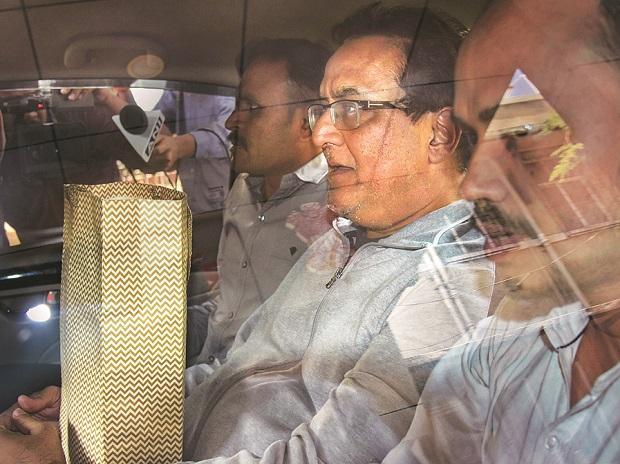
The Enforcement Directorate (ED) formally arrested Kapil Wadhawan (pictured), former chairman and managing director of debt-laden Dewan Housing Finance (DHFL), for his alleged role in financing a loan to gangster Iqbal Memon (alias Iqbal Mirchi), supposedly also used for funding terrorism.

Wadhawan was produced in court under the Prevention of Money Laundering Act and remanded to the ED's custody for two days.

Sources in the ED alleged he approved all payments to Mirchi. “He was looking after the finances at that point of time (in 2010) and had played a vital role in structuring the whole deal with Memon,” said an official.

ED is investigating a money laundering case against Memon, linking his several property deals in Mumbai — these are being treated as proceeds of crime. Three of these properties were reportedly sold to Sunblink Developers, a company connected with Kapil’s brother, Dheeraj Wadhawan.

An ED chargesheet filed last month in court had a series of details in this regard, naming the Wadhawans. The duo was said to have used DHFL to pay Memon, in the form of loans.

At present, DHFL is undergoing proceedings under the insolvency law.

The ED says after various meetings, Dheeraj Wadhawan entered into an agreement in March 2010 with Memon, where he agreed to acquire the development rights of the properties mentioned earlier. This was to be done through Sunblink, where Dheeraj's brother-in-law, Sunny Bhatija, was a director.

A deal was allegedly finalised for surrender of tenancy rights in favour of Sunblink for Rs 225 crore. The source of the amount paid in India towards the deal, Rs 111 crore, was arranged by DHFL and RKW Developers. An earlier loan was taken from DHFL in 2010, repaid by the loan taken from RKW at an annual interest rate of five to six per cent, went the chargesheet.


Thursday, November 21, 2019

How a potential $5 bn DHFL write-off can worsen the shadow bank crisis


The potential write-off would place an additional burden on Indian banks already struggling with $130 billion of bad loans, one of the highest levels in the world.


India’s surprise seizure of a troubled shadow bank won’t end the woes of its lenders, faced with the risk of heavy writeoffs if Dewan Housing Finance Corp. is declared a fraudulent account.

That’s because the Reserve Bank of India requires banks to provision fully for their entire exposure over four quarters if they decide a loan account involves fraud. The decision on Dewan will be based on a final report by the international accountancy firm KPMG on the firm’s lending practices, which is due to be submitted soon, according to bankers with knowledge of the matter, who asked not to be identified further.

An interim KPMG study of Dewan’s books earlier this year cited anomalies including 165 billion rupees of loans to entities connected to the company’s founders, equivalent to just under half of the banks’ total exposure of 380 billion rupees ($5.3 billion) to the shadow lender.

If Dewan is tagged as a fraud account that will create significant additional provisioning requirement and will further dent the profits of banks,” said Mitul Budhbhatti, the head of financial institutions at CARE Ratings Ltd.

A total writeoff would counter some of the optimism about efforts to contain the shadow banking crisis sparked by the Reserve Bank of India’s Wednesday move to remove Dewan’s management and initiate bankruptcy procedures. It would place an additional burden on Indian banks already struggling with $130 billion of bad loans, one of the highest levels in the world.

Only about 55 billion rupees of provisions would be required if the KPMG report absolves Dewan of irregular lending, Budhbhatti said.

Dewan has been struggling to repay its loans as the spreading shadow banking crisis has shut off new credit to the sector. The company’s shares are down more than 90% so far this year.

Business Standard

Thursday, October 31, 2019

Irdai asks insurers to give details on exposure to DHFL, IL&FS, ADAG


All the four entities, for which data was sought by Irdai on October 9, have been downgraded by credit rating agencies recently.


The Insurance Regulatory and Development Authority of India (Irdai) has sought data from companies on their exposure to Infrastructure Leasing & Financial Services (IL&FS), Dewan Housing Finance Corporation (DHFL), Indiabulls, and Anil Dhirbubhai Ambani group companies, sources aware of the development said.

The regulator perhaps wants to see the strength of the insurance companies," said the chief executive officer of a life insurance company. All the four entities, for which data was sought by Irdai on October 9, have been downgraded by credit rating agencies recently.

Usually, it is left to the insurers on how they deal with downgraded entities. But this may have been done to find if there is any over exposure the insurers have against their asset base," said a former member of Irdai.

When an entity is downgraded, insures' investment in such entities is clubbed under the unapproved investment kitty and the insurers are allowed to have 10 per cent of their investment in the unapproved investment.

If the 10 per cent is breached, there might be some problem, but so far the 10 per cent threshold has not been breached by any insurer," experts said.

There might be concern on the solvency of insurers having exposure to the four entities, the former member of Irdai quoted above said. If such a situation arises wherein the rating downgrade of an entity threatens the solvency margin of an insurer, the insurer has to infuse fresh capital to maintain a solvency margin of 1.5.

The Irdai had in the past asked insurers with exposure to IL&FS to provide for their exposure. A lot of insurers including the state-owned behemoth Life Insurance Corporation have exposure to IL&FS.


Wednesday, October 23, 2019

DHFL crisis: Banks stare at huge provision burden if fraud is established


KPMG did a forensic audit on DHFL. Its draft report has startling findings and says DHFL could have diverted funds to promoter-led entities.


Banks which have loaned to beleaguered mortgage lender DHFL might have to provide for the exposure within weeks, if the account is treated as a fraudulent one after accountancy entity KPMG’s finding.

KPMG did a forensic audit on DHFL. Its draft report has startling findings and says DHFL could have diverted funds to promoter-led entities.

Banks have combined exposure of Rs 38,342 crore to DHFL, in the form of term loans, non-convertible debentures and commercial paper, according to the draft debt resolution plan.

A senior executive with a South-based public sector bank said: "While activity relating to restructuring of DHFL is still in a work-in-progress state, banks have to take a call on whether to get the Wadhawans (promoter family) to cooperate, and begin recoveries, or declare the account as fraud if diversion is established. Declaration of the account as fraud would create a burden of provisioning as early as the third quarter (October-December) of the current financial year.” A senior banker with a Mumbai-based public sector bank said the draft resolution plan itself envisaged a provision for haircuts (loan writeoffs), of about Rs 16,000 crore. Thus the burden is anticipated. But, if the account is declared as fraud, the provisioning might go up and be spread over four quarters. It will largely depend on how the Reserve Bank of India looks at the resolution plan and fund diversion issue.

The DHFL board of directors met on Wednesday and took cognisance of key observations from the draft report. KPMG's services were commisisoned by Union Bank of India, lead banker of the consortium, on behalf all its members.

The board has directed the company to review the key observations,” the company said in an exchange filing.

DHFL's debt dues were Rs 83,873 crore as of July 6. Its loan assets were Rs 89,476 crore — the retail book being Rs 35,233 crore, the rest being wholesale loans.

Business Standard

Monday, October 21, 2019

Enforcement Directorate probes real estate deal of DHFL associate company


Essential Hospitality sold the office to a firm controlled by ex-Maharashtra CM's son-in-law.


The Enforcement Directorate (ED) is examining a real estate transaction worth Rs 121 crore between Essential Hospitality (EHPL), a Dewan Housing Finance (DHFL) associate group firm, and Charak Pharma, an entity controlled by Raj Shroff, son-in-law of Sushilkumar Shinde, former Maharashtra chief minister and ex-Union home minister.

The agency learnt of this commercial deal in a search operation on the premises of Dheeraj Realty and DHFL last week. The search was in connection with a loan of Rs 2,186 crore to Sunblink Real Estate; the latter is under the probe agency’s lens for property dealing with the late Iqbal Memon, an underworld figure.

EHPL is a wholly-owned subsidiary of RKW Developers, wherein DHFL's Dheeraj Wadhawan is promoter and whole-time director.

In May, said ED sources, Essential Hospitality sold a seven-storey commercial building to the promoters of Charak Phrama for Rs 121 crore and further registered the same property as Rs 7 crore. The property is on the western express highway, Sahar, Mumbai. The building has since been leased to Big Tree Entertainment (BookMyShow).

The enforcement agency is examining all the documents seized during the search operation at eight locations. We are scrutinising the deal structure and whether all checks and balances are in place,” said an ED source.

Sources say it seized jewellery worth Rs 22 crore and a hard disc, besides some documents. An e-mail sent by this publication to DHFL was not answered. Raj Shroff did not respond to messages.

ED sources said the loan sanctioned to Sunblink was diverted to Memon for terrorist financing and creating like assets. On Saturday, Kapil Wadhawan, chairman of DHFL, was questioned by the ED, along with others, on the matter. Dheeraj Wadhawan is learnt to be in hospital and the ED is waiting for his recovery to record a statement. Its sources say he might give more information on the rationale for the loan to Sunblink and related matters. The agency is examining the loan agreement and the collateral provided by Sunblink.

Business Standard

Thursday, October 3, 2019

Danger ahead: $63-bn stalled real estate projects a threat for Indian banks


As lenders stop new credit, builders are forced to offload properties.


Business Standard : Ashish Shah is caught in the middle of India’s latest financial crisis. As chief operating officer of Radius Developers, he’s struggling to fund construction of apartment complexes because of a liquidity crunch in the nation’s bloated shadow-banking sector.

Real estate is a sitting duck,” said Shah. “The timing is very crucial as the slowdown has hit the real estate market quite hard. The industry can’t service interest, new interest, additional interest, because there is no cash flow.”

Radius and hundreds of other developers relied on loans from what India calls non-banking financial companies (NBFCs) to fuel a five-year property boom. That came to a halt a year ago with the default of one of the shadow banking sector’s leading lenders, Infrastructure Leasing & Financial Services Ltd. The resulting credit squeeze has left builders such as Radius and Omkar Realtors & Developers Pvt. looking for support, or, like scandal-hit Housing Development & Infrastructure Ltd., filing for bankruptcy.

There are $63 billion of stalled residential projects across the country, according to Anarock Property Consultants, and their developers have become locked in a downward spiral with shadow banks. As lenders stop new credit, builders are forced to offload properties. Prices fall, causing more real estate loans to turn sour, pushing more shadow banks toward default.

In turn, that has cast a shadow on traditional banks and dried up funding to other businesses, putting more stress on an already slowing economy.

For Radius, the crunch started when one of its main lenders, Dewan Housing Finance Corp., shut off new loans as it attempts to restructure some $12.7 billion debt to avoid bankruptcy. Shah said he gained a temporary reprieve by selling a project to Blackstone Group Inc., but like all builders, his company needs cash to operate while projects are being built.

Edelweiss Financial Services Ltd. and Indiabulls Housing Finance Ltd., which have some of the largest exposures to the sector, are also tightening funding.

The risks of exposure to real estate were underlined by the scandal surrounding HDIL. The Reserve Bank of India abruptly imposed withdrawal curbs on a small cooperative bank that it said had under-reported loans to the developer. The decision triggered panic withdrawals from the bank, prompting the RBI to issue a statement to reassure the public that the banking system is “safe and stable.”


Tuesday, October 1, 2019

Can a land bank be the solution to India's huge shadow bank crisis?


India's banks are rapidly losing faith in the shadow financiers that lend to property builders.


When a well-capitalized shadow bank’s credit rating goes from A+ to D in 10 days, it shows how fragile lending to India’s builders has become. It also highlights the policy error of not addressing the root of the problem: land.

In June, three months before the unexpected default by Altico Capital India Ltd., I proposed a land bank that would buy stalled property projects from struggling developers. The bank would pay with government-backed debt securities, which the builders would use to repay loans.

To see how this could prevent liquidity problems from cascading into solvency issues, consider the Altico default. The Clearwater Capital Partners-backed firm missed a measly $2.8 million interest payment after its tight but manageable repayment schedule of $135 million became a squeeze at $233 million in the financial year that started April 1. The 63 cents of equity behind every dollar Altico owed to its creditors was of little help. Spooked by its $900 million-plus loan book for residential and commercial real-estate projects, two lenders exercised put options or reset the interest rates so high that they had to be prepaid.

India’s banks are rapidly losing faith in the shadow financiers that lend to property builders. A year after the collapse of IL&FS Group, a specialist infrastructure financier, the crisis of confidence is getting worse. Indiabulls Housing Finance Ltd. shares fell as much 38% on Monday after the central bank imposed lending restrictions on Lakshmi Vilas Bank Ltd., a deposit-taking institution the financier has been trying to merge with to bolster its funding sources.

The nervousness with shadow banks isn’t about the quality of their retail loans, which are still fairly resilient. It’s their lumpy advances that are worrying investors. Dewan Housing Finance Corp., which defaulted in June, underwrites mortgages, but it also has $5 billion of exposure to developers. As banks try to restructure Dewan, a contentious issue is the haircut they’ll have to take if the lender is forced to sell its builder loan book at a deep discount.

Business Standard

Monday, September 30, 2019

Why do credit rating agencies keep missing big Indian company defaults?


India's major rating firms include Crisil, the Indian unit of S&P Global; ICRA, the local unit of Moody's Investors Service.


Mounting debt failures in India have been catching rating companies off guard, underscoring continued challenges a year after the landmark failure of shadow bank IL&FS increased scrutiny of the industry.

Defaults at companies including Dewan Housing Finance Corp., Cox & Kings Ltd. and Altico Capital India Ltd. have occurred even as their long-term ratings indicated very low to moderate risk of non-payment.

Raters have not been able to detect stress in time,” said Ashutosh Khajuria, chief financial officer at Federal Bank Ltd. “Cutting credit profiles after the defaults is no rocket science.”

There’s a lot at stake as India tries to navigate a shadow-banking crisis and expand its debt market. The lack of more forewarning on payment problems has fueled questions about the quality of ratings, and could keep some investors away from corporate bonds, hindering market development.

India’s major rating firms include Crisil, the Indian unit of S&P Global; ICRA, the local unit of Moody’s Investors Service; Fitch-owned India Ratings & Research; and Care Ratings.

Crisil declined to comment on industry practices, adding that it didn’t rate most of the large credits that defaulted recently. ICRA, Care and India Ratings & Research didn’t immediately comment.

The securities market regulator strengthened disclosure rules earlier this year after rating firms failed to give ample warning on IL&FS group’s defaults from 2018, which triggered a prolonged cash squeeze in the nation. They now have to reveal annual default rates among the companies they evaluate.The new rules are set to improve the quality of ratings in the industry over time, said Somasekhar Vemuri, senior director at Crisil.

Business Standard