Thursday, October 3, 2019

E-commerce must not use muscle power of large capital: Piyush Goyal


This was in response to Ross blaming policy for Amazon's India investment cut.
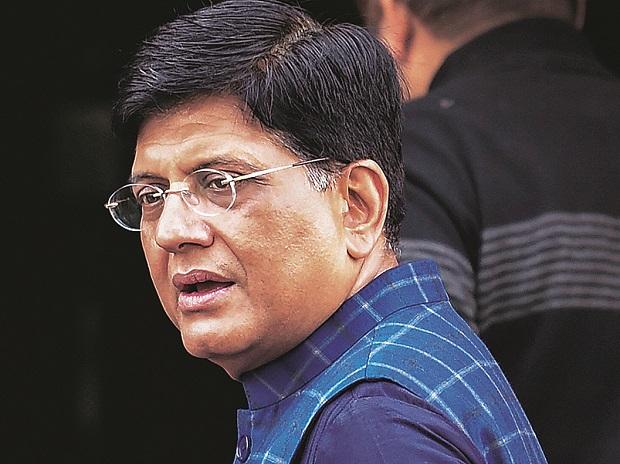

Business Standard : While US Commerce Secretary Wilbur Ross blamed India’s e-commerce policy for US online retail giant Amazon’s cut in investment, his Indian counterpart Piyush Goyal attributed it to the company’s inability to engage in “predatory pricing’’ any longer.

In a war of words at the India Economic Summit, Goyal said the spirit of Indian law was to protect small trade which employed over 120 million and that multinational e-commerce should not use muscle power of large capital at low value to drive small retailers out of business.

According to news reports, Amazon is spending one-third of what it spent the year before in capex. It would probably have spent a lot more in India if it didn’t feel that there was a diminution in growth due to some of those (e-commerce) policies. There is also that cost to India by the policy,” the US commerce secretary said.

Goyal argued that the spending cut was possibly due to other factors like over-investment in the previous years. “(Amazon) may have over-invested in previous years… I don’t know, I don’t run its business.” He added that maybe the firm now recognises that it can’t do “some of the things that it was possibly doing earlier”, referring to deep discounts by online companies.

India in February revised FDI norms for e-commerce, barring foreign-owned firms from selling through their affiliated entities and offering heavy discounts.

India is very clear on its domestic and political compulsions. Around 120-130 million are dependent on small retail, with 50-60 million small shops present throughout the country… We welcome all e-commerce companies to work (in India) as agnostic platforms,’’ Goyal said.

He added, “Don’t try to look at structures that fall within the ambit of the law, but in some sense break the spirit of the law. That is the position of the government as far as the BJP is concerned.”


India's mini-Lehman moment: Bankruptcies double at real estate developers 


The growing number of insolvencies highlight Indian property developers' inability to complete apartments and meet their debt obligations amid the funding crisis.


The number of Indian real estate companies tipped into insolvency has doubled in less than a year since the collapse of a key shadow bank, an event often compared to the Lehman crisis that squeezed American funding markets a decade ago.

As many as 421 developers entered bankruptcy court by the end of June, up from 209 in September 2018, around the time when the government seized control of Infrastructure Leasing & Financial Services Ltd.

The move triggered a credit crunch for smaller financiers and property firms, which depend on funds from shadow lenders.

The numbers will probably increase, according to Vivek K. Chandy, joint managing partner at law firm J. Sagar Associates.

Of the 421 cases, 164 have been closed, he said, which means they were resolved, withdrawn, or the companies faced liquidation.

The growing number of insolvencies highlight Indian property developers’ inability to complete apartments and meet their debt obligations amid the funding crisis. The crunch is feeding into -- and worsened by -- an economic slowdown that is hitting Indians’ demand for goods and services.

Banks have become more vigilant. Markets are not too good, money is tight, compliance has increased,” Chandy said. “Home owners have now become financial creditors by legislation, so they will be able to put more pressure on real estate companies and can start insolvency proceedings.”

Business Standard


Shadow bank woes may continue to haunt stock market after disrupting rally


The S&P BSE Sensex Index posted its third day of losses on Tuesday, ending a surge since the Sept 20 announcement of the tax cuts.


Business Standard : India’s shadow banking crisis has sucked in more financial firms this week, eroding a stock market rally that’s been driven by a surprise $20 billion tax cut package.

The S&P BSE Sensex Index posted its third day of losses on Tuesday, ending a surge since the Sept. 20 announcement of the tax cuts. Financial stocks, which account for 45 per cent of the benchmark index, contributed the most to the declines since late last week, according to data compiled by Bloomberg.

Debt concerns at lenders including Indiabulls Housing Finance Ltd. and a co-operative bank, and worries a cleanup in corporate debt could be prolonged, have spooked the financial markets. The sight of depositors lining up to pull their money from Punjab & Maharashtra Co-operative Bank Ltd., after the central bank put limits on lending, has also been unsettling.

The Reserve Bank of India on Friday tweeted the “banking system is safe and stable and there is no need to panic.” The nation’s stock markets will reopen Thursday after a one-day holiday.

Banking Troubles
Punjab & Maharashtra Co-operative Bank concealed large exposures from RBI since 2008, a former managing director said
Central bank put restrictions on Lakshmi Vilas Bank Ltd., which Indiabulls Housing plans to acquire

Yes Bank Ltd.’s shares plunged almost 34 per cent in two days on concerns a cleanup in corporate debt could drag on

Here is what the analysts are saying:
Stay Selective
Negative news flow around lenders has “overshadowed the recent tax cut tailwind, bringing focus back on sector issues: liquidity issues and contagion risks,” Jefferies Financial Group Inc. analysts including Bhaskar Basu wrote in a note on Tuesday.
Basu said he likes non-bank lenders with a strong liability base, low asset quality risks and good earnings visibility. He prefers stocks including Bajaj Finance Ltd. and Mahindra & Mahindra Financial Services Ltd.

Monetary policy review: Another rate cut may not help Indian economy


The larger problem here is that government finances are already in a hole; that would be a problem even if the tax cut were the best-designed in history.


Business Standard : It’s almost universally expected in India that the central bank’s monetary policy committee will lower interest rates this week. Many expect it to keep cutting until the policy rate hits 5 per cent by the end of the year; it was 6 per cent in June, and the committee cut it by an unexpected 0.35 percentage points in its last meeting to bring it down to 5.4 per cent. The arguments for a cut are manifold: The Indian economy is clearly spluttering, with growth coming in at a shocking 5 per cent in the last quarter for which data is available; consumer price inflation stands at 3.2 per cent, well below the Reserve Bank of India’s mid-point target of 4 per cent; and industry is loudly complaining that high real rates are depressing investment.

Even the hawkish monetary policy committee, which critics complain has consistently over-estimated inflation in the past, is unlikely to be able to ignore that combination of factors. RBI Governor Shaktikanta Das told the Bloomberg India Economic Forum last month that “there’s room for a rate cut, especially when growth has slowed down.” The bond market has already been given reason to cheer this week, after the government kept its target for borrowing in the second half of the financial year constant, at Rs. 2.7 trillion.
But the RBI would be wise to be cautious. The government in New Delhi won reelection in May by throwing money at the electorate, particularly rural voters. More recently, panicked by the sharp slowdown in growth, it has responded with fiscal measures that are likely to stress its finances, including a big cut in corporate income tax rates last month (though the eventual fiscal stress of that cut might be less than originally feared, given that exemptions are also being phased out).

The larger problem here is that government finances are already in a hole; that would be a problem even if the tax cut were the best-designed in history. The budget India’s finance minister presented to Parliament in July was swiftly undermined when a senior government adviser pointed out that the tax receipts seemed outdated -- and that, in fact, revenues in the last financial year were Rs. 1.7 trillion less than advertised.

In addition, the tech giant also showcased a foldable Surface Duo phone that runs on Android.

The company said the two screens would make users more productive.

Microsoft unveils foldable Android phone, earbuds, ARM-based Surface laptop 


Microsoft also unveiled Surface tablets at its October 2019 Event.


Business Standard : Microsoft's October 2019 Event saw the company unveiling a large range of new Surface devices.

Some other big announcements include Surface Laptop 3, Surface Pro 7, Surface Earbuds, Surface Neo, Surface Pro X and Surface Duo.

The 13-inch Surface Laptop 3 comes with the latest 10th-generation quad-core processors from Intel, while the 15-inch model comes with a custom AMD Ryzen 7 processor, or as Microsoft calls it, "Ryzen 7 Surface Edition".

The 13-inch Surface Laptop 3 will start at $999 and will go up to $1,199 for the 15-inch model.

Microsoft has updated its Surface Pro 6 tablet with the Surface Pro 7. Like the Surface Laptop 3, it finally gets a much-requested USB-C connection.

Inside, there is an option of tenth-generation Intel Core CPUs, and storage options that run from a 128GB SSD through to 1TB.

The Surface Pro 7 will launch on October 22, starting at $749.
The company has introduced their first noise cancelling wireless earbuds for $249 and these will be available later this year.

There are two mics embedded in each bud and it comes with 24 hours of battery life.
They also feature touch controls and integration with Microsoft Office apps.

The company unveiled the Surface Neo. It runs a new version of Windows called Windows 10X and is expected to come at the end of 2020.

It is two 9-inch tablets put together into a dual-screen machine so it looks like a notebook.
Surface Pro X is the first ARM-based Surface from Microsoft since the Surface 2.
It powered by a custom SQ1 processor. That chipset has "Snapdragon mobile DNA," according to Panos Panay, Microsoft's chief product officer, alongside an "integrated AI accelerator."


Wednesday, October 2, 2019

GoPro Hero8 Black, Max action cameras launched; price starts at Rs 36,500


Shipments of HERO8 Black begins October 15 and it will be available at select retail partners globally starting October 20.


GoPro on Tuesday launched its HERO8 Black and Max action cameras in India for Rs 36,500, and Rs 47,000, respectively.

Both the devices are available for pre-order at GoPro.com beginning October 1.
Shipments of HERO8 Black begin October 15 and it will be available at select retail partners globally starting October 20.

GoPro Max can be pre-ordered via GoPro.com with shipments beginning October 24. It will be available at select retailers globally on October 24 and in the US on October 25.
Its Mods, which comprise the 'Media Mod', the 'Display Mod' and the 'Light Mod' cost $79.99, $79.99 and $49.99, respectively. They will be available in India starting December.

"It's been 15 years since the first GoPro camera, and from the start, we've been about enabling people to share their passions whether they're fueled by adrenaline or artistry," Nick Woodman, Founder and CEO, GoPro, said in a statement.

"HERO8 Black, the Mods and Max redefine what's possible with a camera," Woodman added.

HERO8 Black features 'HyperSmooth' 2.0 video stabilisation and works in all resolutions and frame rates, features a new Boost mode and has in-app horizon leveling.
HERO8 Black sports four digital lenses to easily select a field of view, improved audio with enhanced wind suppression, customisable mode presets and a lighter, frameless design featuring folding mounting fingers.

The GoPro Max comes with waterproofing of up to 16 feet and can be used as a single lens max stabilised HERO camera, and a dual lens 360 camera.

Business Standard

Tuesday, October 1, 2019

Can a land bank be the solution to India's huge shadow bank crisis?


India's banks are rapidly losing faith in the shadow financiers that lend to property builders.


When a well-capitalized shadow bank’s credit rating goes from A+ to D in 10 days, it shows how fragile lending to India’s builders has become. It also highlights the policy error of not addressing the root of the problem: land.

In June, three months before the unexpected default by Altico Capital India Ltd., I proposed a land bank that would buy stalled property projects from struggling developers. The bank would pay with government-backed debt securities, which the builders would use to repay loans.

To see how this could prevent liquidity problems from cascading into solvency issues, consider the Altico default. The Clearwater Capital Partners-backed firm missed a measly $2.8 million interest payment after its tight but manageable repayment schedule of $135 million became a squeeze at $233 million in the financial year that started April 1. The 63 cents of equity behind every dollar Altico owed to its creditors was of little help. Spooked by its $900 million-plus loan book for residential and commercial real-estate projects, two lenders exercised put options or reset the interest rates so high that they had to be prepaid.

India’s banks are rapidly losing faith in the shadow financiers that lend to property builders. A year after the collapse of IL&FS Group, a specialist infrastructure financier, the crisis of confidence is getting worse. Indiabulls Housing Finance Ltd. shares fell as much 38% on Monday after the central bank imposed lending restrictions on Lakshmi Vilas Bank Ltd., a deposit-taking institution the financier has been trying to merge with to bolster its funding sources.

The nervousness with shadow banks isn’t about the quality of their retail loans, which are still fairly resilient. It’s their lumpy advances that are worrying investors. Dewan Housing Finance Corp., which defaulted in June, underwrites mortgages, but it also has $5 billion of exposure to developers. As banks try to restructure Dewan, a contentious issue is the haircut they’ll have to take if the lender is forced to sell its builder loan book at a deep discount.

Business Standard