Showing posts with label WEST BENGAL. Show all posts

Sunday, May 31, 2020

'Mission Begin Again': Mumbai remains shut while India begins to unlock


Maharashtra and Rajasthan turned out to be the outliers.


A day after the Centre suggested opening up of most activities outside of the nearly 6,000 containment zones across the country, Maharashtra and Rajasthan turned out to be the outliers as they ordered places of worship, hotels, restaurants, and malls to remain shut.

In another departure from the Centre’s guidelines, which permitted unrestricted inter-state movement, the Delhi-Noida border will not be opened for public amid rising number of coronavirus cases in the national capital, according to the Uttar Pradesh government. Most other states extended the lockdown in containment zones until June 30, but issued guidelines consistent with that of the Centre’s, allowing nearly all economic activities in areas outside these zones.

In its guidelines, ‘Mission Begin Again’, issued on Sunday, Maharashtra departed from the Centre’s guidelines. CM Uddhav Thackeray said the state needed to tread cautiously now that monsoon was round the corner. It said intra-district bus services can operate, but inter-district bus operations will remain restricted.

The state said places of worship, restaurants, hotels, malls, and salons would remain shut. The state, however, allowed shooting for films and serials. Maharashtra has allowed all private offices to operate, but with only 10 per cent strength, from June 8, and markets and shops can open from June 5 on odd-even basis. In shops, Maharashtra has asked trial rooms to be kept shut.


Monday, May 18, 2020

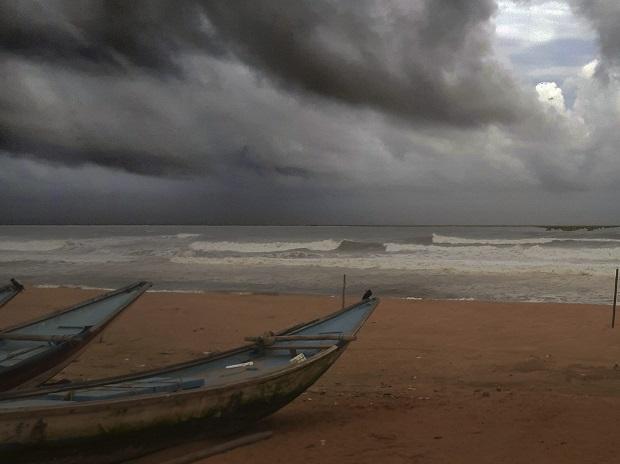
Cyclone Amphan to intensify into 'extremely severe storm': Things to know


Cyclone Amphan is likely to cross West Bengal-Bangladesh coasts between Sagar Islands in Bengal and Hatiya islands in Bangladesh on May 20.


The India Meteorological Department (IMD) has warned that Very Severe Cyclonic Storm ‘Amphan’ over central parts of South Bay of Bengal is going to intensify into Extremely Severe Cyclonic Storm in next 6 hours.

"The trajectory is mostly towards West Bengal, Sagar Islands and probably towards Bangladesh.... But we have to watch the trajectory very closely. NDRF has deployed the teams well in advance.

They are either deployed or moving towards the destination," S N Pradhan, the chief of NDRF said.

The cyclone is also likely to unleash heavy rain and high-velocity winds in large swathes of coastal Odisha and West Bengal. It is likely to cross West Bengal-Bangladesh coasts between Sagar Islands in Bengal and Hatiya islands in Bangladesh on May 20 as a very severe cyclonic storm, Regional MeT Director in Kolkata G K Das said.

"The coastal districts of Gangetic West Bengal, including North and South 24 Parganas, Kolkata, East and West Midnapore, Howrah and Hooghly are likely to experience light to moderate rain at many places with heavy downpour at isolated places on May 19," Das added.

Seven NDRF teams have been deployed in six districts of West Bengal - South 24 Parganas, North 24 Parganas, East Midnapore, West Midnapore, Howrah and Hooghly. According to Ministry of Home Affairs, the cyclone will make a landfall in West Bengal on Wednesday.

Odisha, which has been ravaged by a string of cyclones over the last few years, including the cyclone Fani last year, has made arrangements to shift 11,00,000 people from vulnerable areas, Special Relief Commissioner (SRC) P K Jena said.
Twelve coastal districts - Ganjam, Gajapti, Puri, Jagatsinghpur, Kendrapara, Bhadrak, Balasore, Mayurbhanj, Jajpur, Cuttack, Khurda and Nayagarh - are on high alert.


Thursday, November 21, 2019

Slowdown due to Centre's failed economic policies, says Amit Mitra 


India's GDP growth fell to 5 per cent in the first quarter of the current financial year and is estimated to have dipped further in the second quarter.


Blaming demonetisation and the “ill-implemented” goods and services tax regime for the current economic slowdown, West Bengal Finance Minister Amit Mitra (pictured) on Thursday hit out at the central government for delaying GST compensation to states, claiming it has hurt their finances.

It is not a cyclical correction but a structural slowdown. The demonetisation decision hit businesses across the country.

A few months later, another blow came in the form of the ill-conceived GST rollout,” Mitra said in a press conference.

India’s GDP growth fell to 5 per cent in the first quarter of the current financial year and is estimated to have dipped further in the second quarter.

Mitra highlighted an increase in the cash in the economy and suspicious transactions after demonetisation, and how the badly implemented GST led to a rise in incidents of frauds, causing leakages.

Suspicious transactions reports (STR) increased 14 times in 2017-18, as compared to the year prior to demonetisation, he said citing government data. He said of over 1.4 million STRs received, only 82,595 were processed.

GST frauds at least to the tune of Rs 1 trillion have taken place so far, if we include states’ data,” said Mitra. He said discontinuation of invoice matching through GSTR 2 had given rise to incidents of fraud.

Business Standard

Monday, April 1, 2019

Why does India report only half the plastic waste it generates every year?


The CPCB has approached the National Green Tribunal (NGT) to enforce the implementation of plastic waste management rules by non-compliant states.


Only 14 of India’s 35 regional pollution boards filed information on plastic waste generation in 2017-18, according to the latest report of the Central Pollution Control Board (CPCB). Thus, the CPCB estimate of plastic waste generated in India in 2017-18--660,787.85 tonnes, enough to fill 66,079 trucks at 10 tonnes a truck--does not reflect the situation in more than 60% of India’s states and union territories.

In 2016-17 too, CPCB received these figures from only 25 regional pollution boards. The total plastic waste generation figure for that year was estimated at 1.6 million tonnes, or 160,000 truckfulls.

The CPCB has approached the National Green Tribunal (NGT) to enforce the implementation of plastic waste management rules by non-compliant states. On March 12, 2019, the NGT ordered all of them to ensure that reports are furnished to the CPCB by April 30, 2019. Failure is to be punished with a penalty of Rs 1 crore per month, to be paid to the CPCB, the NGT said.

India consumes an estimated 16.5 million tonnes, about 1.6 million truckfulls, of plastic annually, as per this June 2018 report in Down to Earth that cites data provided by PlastIndia Foundation, a conglomeration of associations and institutions that deal in plastic. Of this, 43% is plastic manufactured for single-use packaging material that will mostly find its way into garbage bins, the report said. In all, 80% of total plastic produced in India is discarded.

It mostly ends up choking landfills, drains and rivers and flows into the sea where it is ingested by marine animals. It leaches into soil and water, contaminating the natural environment with poisonous dioxins.

At least 40% of the plastic waste generated every day--25,940 tonnes or about 2,594 truckloads, as per this 2015 CPCB study for the year 2011-12--goes uncollected. Thin plastic bags and films do not have enough value in the recycling market--they fetch no more than Rs 4 a kg--to be collected by ragpickers.

Accurate data on plastic waste generation, collection and disposal are integral to how a country formulates its policy on waste management. India needs these figures even more since it has stated its resolve to phase out single-use plastic at the 2019 United Nations Environment Assembly (UNEA) and also banned the import of plastic waste into the country.


Monday, July 9, 2018

Congress state units disagree with central leadership over alliances


The trend signals how the party could be going back to the era where its regional satraps used to be influential and could stand up to even such leaders as Jawaharlal Nehru and Sardar Patel.


Several of the Congress party state units are currently at odds with the central leadership over the question of striking alliances and seat adjustments.

The trend signals how the party could be going back to the era where its regional satraps used to be influential and could stand up to even such leaders as Jawaharlal Nehru and Sardar Vallabhbhai Patel. However, this had changed after Indira Gandhi came to lead the Congress and systematically replaced strong leaders in the state with darbaris and sycophants.

West Bengal
In West Bengal, the Congress state unit is split in two over whether it should align with the Trinamool Congress or not. A section of the party's leadership wants to have a seat adjustment with the Trinamool Congress.

However, senior state unit leaders like Adhir Ranjan Chowdhury oppose aligning with the Trinamool. Chowdhury also has the support of the rank and file, which has suffered the brunt of the alleged violence by Trinamool cadres on Congress workers in villages and towns.

Cadres of the Communist Party of India (Marxist) and Bharatiya Janata Party have also been the target of Trinamool's purported political violence. The Congress workers on the ground want their party to align with the CPI (M) to fight Trinamool unitedly. They argue the cadres of the two parties, the Congress and CPI (M), are already fighting Trinamool's alleged political violence unitedly on the ground.

A three-cornered fight in West Bengal would also better serve the national objectives of the central leadership of the Congress. It would prevent the BJP, which is on the surge, to capture the opposition space in the state. This will help a split in anti-incumbency votes and ensure BJP wins lesser number of seats than it would in a bipolar contest.

The state unit of the Congress met party chief Rahul Gandhi last week. Gandhi met each of them individually to understand the situation.
Story By BS

Read More