Showing posts with label OYO. Show all posts

Friday, April 24, 2020

Quarantine hotels: It's business unusual amid coronavirus outbreak


Leading hotels are taking all precautions but the unusual service the staff has been pressed into puts them at the forefront of Covid fight.


A bus drove through the gates of Park Inn by Radisson Amritsar with a convoy of cars. The guests stepped out of the bus and formed a single file. A strict distance between them revealed the unusual circumstances of their arrival. Not in the company of family and friends, the 29 individuals were instead led by a team of doctors and police personnel. The doorman was absent and so were the bellboys.

An unmanned elevator was reserved for the guests — a mix of Indian and international tourists who were believed to be at a medium-to-high risk of being infected. The elevator opened into a temporary quarantine facility at the top floor of the hotel where a staff member in personal protective equipment (PPE) greeted them. The guests picked up their respective keycards and went into their rooms for a 14-day period of isolation.

In the throes of a raging pandemic, distance is polite and the rules of five-star hospitality have been re-written. The new check-in routine was sans the usual markers of good hospitality: courteous smiles, welcome drinks, holding doors and elevators open, and ferrying the luggage to the rooms. The staff was not just abstaining from doing everything that hotel management courses and months of training had drilled into them, but they were also suddenly in a job that was akin to working on the frontline during a pandemic.

“We got a call from the SDM (sub-district magistrate) followed by a written notification on WhatsApp. And in the next one hour, the SDM along with a team of police medical staff were at the hotel for a recce,” said Jitender Sohal, general manager, Park Inn by Radisson Amritsar. The hotel had been training its staff according to the World Health Organization guidelines. The team briefed them further and the guest arrived the same night.

Thursday, April 16, 2020

How ShareChat is helping local brands with language-focused advertising


As regional language media consumption soars during the lockdown, social media app ShareChat goes full throttle with brand integrations.


Local language social media platform ShareChat is engaging with hyperlocal brands, as well as helping established brands reach a wider audience through local language focused advertising campaigns, as its monetisation strategy takes hold. And at a time when brands are struggling to keep customers engaged in a meaningful manner, they find that focusing on local concerns and speaking in local tongues could help bridge the gaps.

“We have been witnessing a healthy growth since we opened our platform for brand integrations,” said Sunil Kamath, chief business officer, ShareChat. “Our regional strength in Tier 2, 3 and 4 cities, coupled with our unique UGC (user generated content) proposition for brands, is opening new marketing avenues for marketers who want to connect with regional first audiences.”

Much like what video-sharing app TikTok has done, ShareChat and several others are mining the large, mobile-first market in small towns. The 2020 State of the Mobile report by App Annie, a global analytics and market intelligence firm has found that India is right on top, when it comes to app downloads. Between 2016 and 2019, there was a 190 per cent increase in downloads by Indians, which is the highest in the world. Compared to this, globally, downloads went up 45 per cent and China at second place, grew at half the pace at 80 per cent.

Break it down further and for the majority of downloaders, the internet is an entertainment zone with the time spent on entertainment apps in India growing 80 per cent between 2017 and 2019. Also mobile-first emerging markets such as Indonesia, Brazil and India continue to spend the most time in mobile each day. And France, India and Canada saw strong growth with the average user spending 25 per cent more time in mobile each day in 2019 than in 2017.

Monday, October 7, 2019

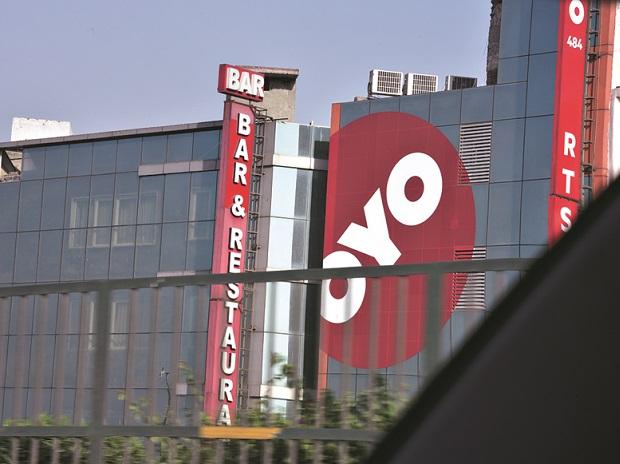
Softbank-backed Oyo raises $1.5 bn at $10 bn valuation for market expansion


Agarwal, who founded Oyo in 2013, has built it into India's second-most valuable startup with a valuation of about $10 billion.


Oyo Hotels and Homes is raising $1.5 billion from founder Ritesh Agarwal, SoftBank Group Corp and other investors as the India lodging startup expands into foreign markets such as the US and Europe.

Agarwal, 25, will spend $700 million to buy new shares in the company as part of a previously reported $2 billion plan to triple his ownership stake. Existing investors SoftBank’s Vision Fund, Lightspeed Venture Partners and Sequoia India will contribute the rest of the current round.

Agarwal, who founded Oyo in 2013, has built it into India’s second-most valuable startup with a valuation of about $10 billion. Its service covers 1.2 million rooms in over 80 countries, including 590,000 rooms in China. It entered the U.S. earlier this year and now has 7,500 rooms in 60 cities.

We truly believe that we will be able to build a truly global brand out of India, while ensuring that the business is run efficiently and with a clear path to profitability,” Agarwal said in a statement.

The young founder made headlines in July with plans to spend $2 billion to raise his stake in the company to 30% from about 10%. Japanese banks Mizuho Financial Group Inc. and Nomura Holdings Inc. are bankrolling Agarwal’s share acquisition, according to people familiar with the deal. He is buying some of those shares from Sequoia and Lightspeed, and will carry out the transaction through an entity called RA Hospitality Holdings, Oyo said.

Agarwal is tripling down on the company he created at a time WeWork’s internal tumult and a string of disappointing IPOs are raising questions about startup price tags. The $10 billion valuation makes Oyo India’s most valuable startup after One97 Communications, the parent of digital payments pioneer Paytm. E-commerce giant Flipkart Online Services Pvt was acquired by Walmart Inc. last year in a $16 billion deal. SoftBank’s investments lifted the valuations at Oyo, Paytm and WeWork.


Agarwal founded the startup in his teens after dropping out of college and roaming India on a shoestring budget. The wild, erratic standards at hotels and guest houses he encountered inspired him to start the online service, and the brand now aims to provide travelers a consistent experience.

Business Standard

Wednesday, April 3, 2019

Flipkart India's most preferred workplace; Amazon, Oyo come next: LinkedIn


Internet companies dominate the top 10 spots in LinkedIn's fourth edition of the '2019 Top Companies' list for India.


Walmart-owned Flipkart is the most preferred workplace in India, followed by Amazon and Oyo in the second and third places, respectively, according to a list compiled by professional social media network LinkedIn.

Internet companies dominate the top 10 spots in LinkedIn's fourth edition of the '2019 Top Companies' list for India.

IT giant Tata Consultancy Services (TCS) made its debut at the seventh place, new entrants and homegrown internet and consumer services companies Swiggy and Zomato were ranked sixth and eighth, respectively.

Uber, another new entrant, took the fifth spot, while, One97 Communications was at the fourth rank and Oil and Energy conglomerate Reliance Industries was at the 10th place.
Others on the list include consulting firm Boston Consulting Group (BCG) at 13th, Yes Bank (14), IBM (15), Daimler AG (16), Freshworks (17), Accenture (18), Ola (19), ICICI Bank (20), PwC India (21), KPMG India (22), Larsen & Toubro (23), Oracle (24), and Qualcomm (25).

"This year, half the companies are new entrants on the list, including IT giants such as TCS and IBM that showcase the changing job and hiring landscape," said LinkedIn India Managing Editor Adith Charlie.

Charlie further said that "the presence of more blue chip Indian companies such as Larsen & Toubro and Reliance Industries, among others emphasises the fact that these large firms are getting better at attracting millennials employees".

The report further noted that majority of companies on the list made maximum new hiring for engineering jobs followed by operations and business development.
The list analysed billions of data points generated by LinkedIn's over 610 million members around the world to come up with a blended score used to rank the winners in each geography.

LinkedIn ranked the companies based on four criteria -- interest in the company, engagement with employees, job demand and employee retention.

Business Standard