Showing posts with label OPERATING SYSTEMS. Show all posts

Wednesday, July 15, 2020

Google to invest Rs 33,737 crore for 7.73% stake in Jio Platforms


The two companies will collaborate for the development of entry-level affordable 4G and 5G smartphones as well as Android-based operating systems, Ambani announced during the virtual AGM.


Reliance Industries (RIL) Chairman Mukesh Ambani on Wednesday announced a strategic partnership with Google and development of in-house 5G solutions, in a bid to win over new customers and create a platform for future growth.

Google will invest Rs 33,737 crore for 7.73 per cent stake in Jio Platforms. The two companies will collaborate for the development of entry-level affordable 4G and 5G smartphones as well as Android-based operating systems, Ambani announced during the virtual annual general meeting (AGM).

“Our investment of $4.5 billion in Jio is the first — and biggest — that we will make through this ($10 billion) fund. I am excited that our collaboration will focus on increasing access for hundreds of millions of Indians who don’t own a smartphone, while improving the mobile experience for all at the same time,” said Google CEO Sundar Pichai in a video message.

With the latest investment, Jio has raised Rs 1.52 trillion, selling 32.97 per cent stake to 14 investors including Facebook, private equity (PE) firms and sovereign wealth funds in the process.

While the investments from PE firms and wealth funds were made at a valuation of Rs 4.91 trillion, Google’s stake purchase values Jio at Rs 4.36 trillion.

Jio disrupted the telecom market with its ultra-cheap data plans after its launch in 2016, and is now preparing for the next level of growth. Its strategy includes acquiring 300 million 2G network users by offering them affordable phones and launching new products for connectivity and entertainment. At the AGM, RIL announced Jio Glass, a mixed reality application for office meetings and education.


Sunday, June 28, 2020

Starbucks latest to pause social media ads over call for Facebook's boycott


Facebook's market value dropped Friday by more than 8 per cent, or about $50 billion, as more companies said they would pause ads.


Starbucks is the latest company to say it will pause social media ads after a campaign led by civil rights organizations called for an ad boycott of Facebook, saying it doesn't do enough to stop racist and violent content.

Starbucks said Sunday that its actions were not part of the #StopHateforProfit campaign, but that it is pausing its social ads while talking with civil rights organizations and its media partners about how to stop hate speech online.

The coffee chain's announcement follows statements from Unilever, the European consumer-goods giant behind Ben & Jerry's ice cream and Dove soap; Coca-Cola; cellphone company Verizon and outdoors companies like Patagonia, Eddie Bauer and REI; film company Magnolia Pictures; jeans maker Levi's and dozens of smaller companies. Some of the companies will pause ads just on Facebook, while others will refrain from advertising more broadly on social media.

In response to companies halting advertising, Facebook executive Carolyn Everson said earlier this week the social networking platform is committed to purging hateful content from its services.

Our conversations with marketers and civil rights organizations are about how, together, we can be a force for good, said Everson, vice president of Facebook's global business group.

Facebook's market value dropped Friday by more than 8 per cent, or about $50 billion, as more companies said they would pause ads.


Thursday, January 9, 2020

Facebook's Zuckerberg drops annual challenges to focus on longer-term goals


The move would see him focus more on his role as CEO and the problems that have afflicted Facebook.


Company News : Facebook Inc Chief Executive Officer Mark Zuckerberg said on Thursday he was dropping his annual challenges this year to take a longer-term focus on the decade ahead.

Zuckerberg said he plans to work on a new private social platform, decentralised technology, generational issues and new forms of digital governance among others.
The move would see him focus more on his role as CEO and the problems that have afflicted Facebook instead of personal goals such as learning Mandarin and reading two books a month.

"Rather than having year-to-year challenges, I've tried to think about what I hope the world and my life will look in 2030 so I can make sure I'm focusing on those things," he said.

Zuckerberg, whose company is under pressure for failing to adequately police content and protect user privacy on its platform, said he expects governments to come up with clearer rules for the internet over the next decade.

"Platforms like Facebook have to make tradeoffs on social values we all hold dear - like between free expression and safety, or between privacy and law enforcement, or between creating open systems and locking down data and access," he said.

"I don't think private companies should be making so many important decisions that touch on fundamental democratic values."

Over the next decade, Zuckerberg plans to fund and give a platform to younger entrepreneurs and scientists to cure, prevent and manage diseases.

He pointed out that while the internet helped people to connect with each other across the world, it also made people crave for intimacy.

"For the next decade, some of the most important social infrastructure will help us reconstruct all kinds of smaller communities to give us that sense of intimacy again," he said.

Wednesday, May 22, 2019

49 mn Instagram users had their data leaked by Mumbai-based agency, Chtrbox


The company termed the reports of private data being leaked as 'inaccurate' and acknowledged that 'a particular database for limited influencers was inadvertently exposed for approximately 72 hours'.

Mumbai-based Chtrbox, which was allegedly responsible for leaking data of millions of Instagram users, has said database for a limited number of influencers was inadvertently exposed but that did not include any sensitive personal data.

The company termed the reports of private data being leaked as "inaccurate" and acknowledged that "a particular database for limited influencers was inadvertently exposed for approximately 72 hours".

"This database did not include any sensitive personal data and only contained information available from the public domain, or self reported by influencers," it said in a statement late Tuesday night.

On Tuesday, Facebook-owned Instagram said it is investigating whether a third-party - Chtrbox - improperly stored its user data in violation of its policies after reports that information of millions of users being available online allegedly in an unsecured database emerged.

These reports said the database found online - with over 49 million records - contained information of millions of Instagram influencers, celebrities and brand accounts. The database was allegedly traced back to Chtrbox.

The reports had said apart from public data (like bio, profile picture and number of followers), the database also allegedly contained users' private contact information such as email address and phone number.

An Instagram spokesperson had said the company is "investigating whether a third party improperly stored Instagram data, in violation of our policies. It's also not clear whether the phone numbers and e-mails in Chtrbox's database came from Instagram".
Chtrbox, in its statement, asserted that no personal data has been sourced through unethical means by the company.

"Our database is for internal research use only, we have never sold individual data or our database, and we have never purchased hacked-data resulting from social media platform breaches. Our use of our database is limited to help our team connect with the right influencers to support influencers to monetize their online presence, and help brands create great content," it added.

Business Standard


Friday, February 22, 2019

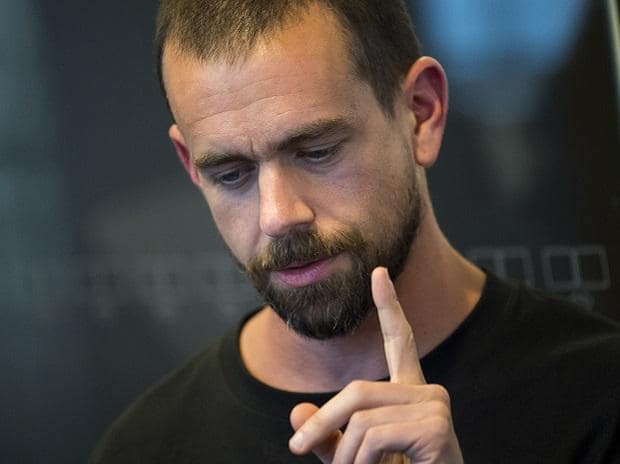
Twitter CEO Jack Dorsey won't appear before Parliamentary panel on Feb 25


The meeting had been called against the backdrop of growing concerns about safeguarding citizens' data privacy.


Twitter CEO Jack Dorsey will not appear before the Parliamentary panel on IT on February 25, and instead the company is sending its Head of Public Policy Colin Crowell.
The Parliamentary panel on Information Technology had summoned Twitter head Jack Dorsey to appear before it on February 25, and had refused to meet "junior officials" of the microblogging site during its meeting on February 11.


The meeting had been called against the backdrop of growing concerns about safeguarding citizens' data privacy and the possibility of social media platforms being used to interfere in the upcoming elections.

"We thank the Parliamentary Committee for its invitation to hear Twitter's views on 'Safeguarding citizen rights on social/online news media platforms'. These are issues for all Internet services globally.

"Colin Crowell, Global Vice President of Public Policy for Twitter, will meet with the Committee on Monday," a Twitter spokesperson said in an e-mailed statement on Friday.
Ahead of the Lok Sabha elections, the government has been warning social media platforms of strong action if any attempt was made to influence the country's electoral process through undesirable means.

Sources said on February 11, the committee had refused to meet junior officials from Twitter's India office who were present at the meeting venue.

The panel passed an unanimous resolution that the microblogging site's CEO should make himself available to show the company's seriousness in safeguarding rights of Indian citizens online, they added.

As per the resolution, the panel would hear only the Twitter CEO or senior member of its global team "who has decision making authority regarding Twitter's operations in India," one of the sources had said.

Even as it faces heat over allegations of political bias in the country, Twitter has maintained that it is committed to remain unbiased and that its product as well as policies are never based on political ideology.

The government has been taking a strong view of misuse of social media platforms and is also proposing to amend IT rules to curb fake news and increase accountability of such apps.


Why Facebook's effort to fight hate speech with external experts won't work


Facebook has long faced criticism for doing too little to block hate speech, incitements to violence, bullying and other types of content that violate its 'community standards'.

Facebook's new effort to bring outside experts into its content review process promises to be complicated and possibly contentious, if discussions this week at a meeting in Singapore are any indication.

Over the course of two days, 38 academics, non-profit officials and others from 15 Asian countries who were invited to a Facebook workshop wrestled with how a proposed "external oversight board" for content decisions might function.

The gathering, the first of a half-dozen planned for cities around the world, produced one clear recommendation: the new board must be empowered to weigh in not only on specific cases, but on the policies and processes behind them.


Facebook has long faced criticism for doing too little to block hate speech, incitements to violence, bullying and other types of content that violate its "community standards."
In Myanmar, for example, Facebook for years took little action while the platform was used to encourage violence against the Rohingya minority.

But the company also draws fire for not doing enough to defend free speech. Activists accuse the company of taking down posts and blocking accounts for political or business reasons, an allegation it denies.

Facebook CEO Mark Zuckerberg unveiled the idea of an independent oversight board last November and a draft charter was released in January.

"We want to find a way to strengthen due process and procedural fairness," Brent Harris, director of global affairs and governance at Facebook, said at the opening of the Singapore meeting. A Reuters reporter was invited to observe the proceedings on the condition that the names of participants and some details of the discussions not be disclosed.

Facebook's initial plan calls for a 40-person board that would function as a court of appeal on content decisions, with the power to issue binding rulings on specific cases.
But as attendees peppered Facebook officials with questions and worked through issues such as how the board would be chosen and how it would select cases, they repeatedly came back to questions of policy. Rulings on individual postings would mean little if they were not linked to the underlying content review procedures, many attendees said.

Hate speech policies were a big focus of discussion. Many attendees said they felt Facebook was often too lax and blind to local circumstances, but the company has held firm to the concept of a single set of global standards and a deliberate bias towards leaving content on the site.