Sunday, April 18, 2021

Oil falls amid surging coronavirus infections in India, other countries

 Oil prices fell on Monday amid mounting concerns that surging caseloads of coronavirus infections in India and other countries will lead to stronger measures and hit economic activity


TOKYO (Reuters) - Oil prices fell on Monday amid mounting concerns that surging caseloads of coronavirus infections in India and other countries will lead to stronger measures and hit economic activity, along with demand for commodities such as crude.

Brent crude was down 43 cents, or 0.6%, at $66.34 a barrel by 0139 GMT, after rising 6% last week. U.S. oil was down 42 cents, or 0.7%, at $62.71 a barrel, having gained 6.4% last week.

"With ... a resurgence of virus cases in India and Japan, topside ambitions continue to run into walls of profit-taking," said Stephen Innes, chief market strategist at Axi.

India reported 261,500 new coronavirus infections on Sunday, taking cases to nearly 14.8 million, second only to the United States, which has reported more than 31 million infections.

India's deaths from COVID-19 rose by a record 1,501 to reach a total of 177,150.

Hong Kong will suspend flights from India, Pakistan, and the Philippines from April 20 due to imported coronavirus infections, authorities said in a statement late on Sunday.

Japanese companies believe the world's third-largest economy will experience the fourth round of coronavirus infections, with many bracing for a further blow to business, a Reuters monthly poll showed.

Japan has had far fewer COVID-19 cases than many other major economies, but concerns about a new wave of infections are rising fast, according to their responses in the poll.

A slower rollout of vaccinations compared with other Group of Seven advanced countries and the lack of a sense of crisis among the public will trigger a new wave of infections, some companies wrote in the poll.

HSBC top staff to hot desk at London HQ as bank scraps executive floor

 CEO Noel Quinn and other senior managers have been kicked out of their offices on the 42nd-floor.


HSBC Holdings Plc has scrapped the executive floor of its Canary Wharf headquarters in London and turned the private offices of its top staff into client meeting rooms and collaborative spaces.

Chief Executive Officer Noel Quinn and other senior managers have been kicked out of their offices on the 42nd-floor and will hot desk on an open-plan floor two stories below, Quinn told the Financial Times in an interview. The offices were empty half of the time because the senior staff was traveling around the world, which was a “waste of real estate,” he said.

Quinn told the newspaper that he won’t be in the office five days a week, saying “it’s unnecessary” and “the new reality of life.” A representative for HSBC confirmed the FT report to Bloomberg News.

The London-based bank, which expects to eventually shrink its property footprint by 40%, doesn’t plan to renew many of its city-center leases due in the next three to five years, Quinn said. The lender is also shifting to a policy of about two employees per desk, excluding branches, he said.

Last year’s abrupt shift to remote working has sparked a debate across industries about future demand for office space, prompting a number of global banks and other large firms to rethink how employees operate. Standard Chartered Plc this month formalized hybrid working for staff across its global operations after 84% of employees asked to keep the flexible arrangements pioneered during the coronavirus pandemic.

Still, not all banks are embracing a permanent shift to working from home. Goldman Sachs Group Inc. Chief Executive Officer David Solomon said in February that remote work was “an aberration that we are going to correct as quickly as possible.”

Hold urgent GST meet to cut tax on key medicines, equipment: States

 Also want to discuss the extension of the compensation period beyond July 2022


As the country grapples with a stronger second Covid wave, states want the Centre to urgently convene a meeting of the Goods and Services Tax (GST) Council, which has not met for the last six months. This comes after the chorus for rate cuts on key medicines and equipment grows louder.

Besides, states also want to discuss the extension of the compensation period, under the GST regime, beyond July 2022 in the council meeting as uncertain times cast a shadow over state finances.

States are demanding exemption of key Covid drugs like Remdesivir, medical-grade oxygen used in oxygen cylinders, and related supplements, which currently attract 12 percent tax.

Other decisions piled up include rationalization of GST rate slabs, correction of inverted duty on certain items, and inclusion of petroleum products, among others.

The law mandates the council to meet at least once a quarter, but the long gap this time has given rise to apprehensions.

Chhattisgarh health minister, T S Singh Deo, who represents the state at the council, told Business Standard that the state is going to write to the Centre for GST exemption on Remdesivir, and related supplements. “We are demanding a GST exemption on Remdesivir and some other items. But, the GST Council needs to meet for that. It should certainly have had a virtual meeting,” said Deo.

Citigroup plans to apply for stock, futures trading in China: Report

 Khullar said India is a strategic talent pool for Citi and it will continue to grow the five 'Citi Solution Centers'


Citigroup Inc. plans to apply for a variety of wealth management licenses in China, the Global Times said in a tweet.

The firm wants approval to trade securities and futures, and underwrite the sales of stocks and bonds, according to the state-run newspaper.

A Hong Kong-based Citigroup spokesman said the lender continues to “explore opportunities to support its local and global clients in China further.”

The bank last week said it plans to exit retail banking in 13 markets across Asia, Europe, the Middle East, and Africa as part of a strategic overhaul, though it will continue to serve corporations and private banking clients in those areas.

Contours of the exit were not immediately known and the proposed exit from the consumer banking business will also need regulatory nods.

"There is no immediate change to our operations and no immediate impact to our colleagues as a result of this announcement. In the interim, we will continue to serve our clients with the same care, empathy, and dedication that we do today," Citi India's Chief Executive Ashu Khullar said.

“The sharpened strategy will strengthen our ability to bring the full global power of Citi to our institutional clients, reinforcing our leading positions across corporate, commercial and investment banking, treasury, and trade solutions, as well as markets and securities services,” he added.

Apart from the institutional banking business, it will continue to focus on offshoring or global business support rendered from centers in Mumbai, Pune, Bengaluru, Chennai, and Gurugram.

Khullar said India is a strategic talent pool for Citi and it will continue to grow the five 'Citi Solution Centers'.

Thursday, April 15, 2021

Softbank Group to invest $450 million in Swiggy at $5.5 billion value

 Second funding for food delivery startup in as many weeks


SoftBank Group Corp. is investing in Swiggy at a $5.5 billion valuation, the second funding for the Indian food delivery startup in as many weeks as capital floods the world’s fastest-growing internet arena.

The $450 million funding came from Masayoshi Son’s Vision Fund 2, a person familiar with the matter said. The financing awaits approval from Indian antitrust regulators, the person added, asking not to be identified talking about a private deal.

Bangalore-based Swiggy competes with multiple food delivery startups including fellow unicorn Zomato, backed by Ant Group Co. and Tiger Global, and the food delivery arm of Amazon.com Inc’s India unit, which recently unveiled its service to Prime members in dozens of zip codes in the city of Bengaluru.

Swiggy had closed an $800 million funding round from investors including Falcon Edge Capital LP and Goldman Sachs Group Inc. about a week ago. That financing punctuated a historic week for India’s technology industry when in the space of four days, investors minted at least six new unicorns or startups with a valuation of $1 billion or more. Representatives for SoftBank and Swiggy didn’t immediately respond to requests for comment.

Global investors such as Tiger Global and South Africa’s Naspers Ltd. see growing opportunities in the country’s startup scene. The nation of 1.3 billion people has seen the rapid adoption of smartphones in recent years, the explosive growth of inexpensive internet services, and a new generation of ambitious entrepreneurs.

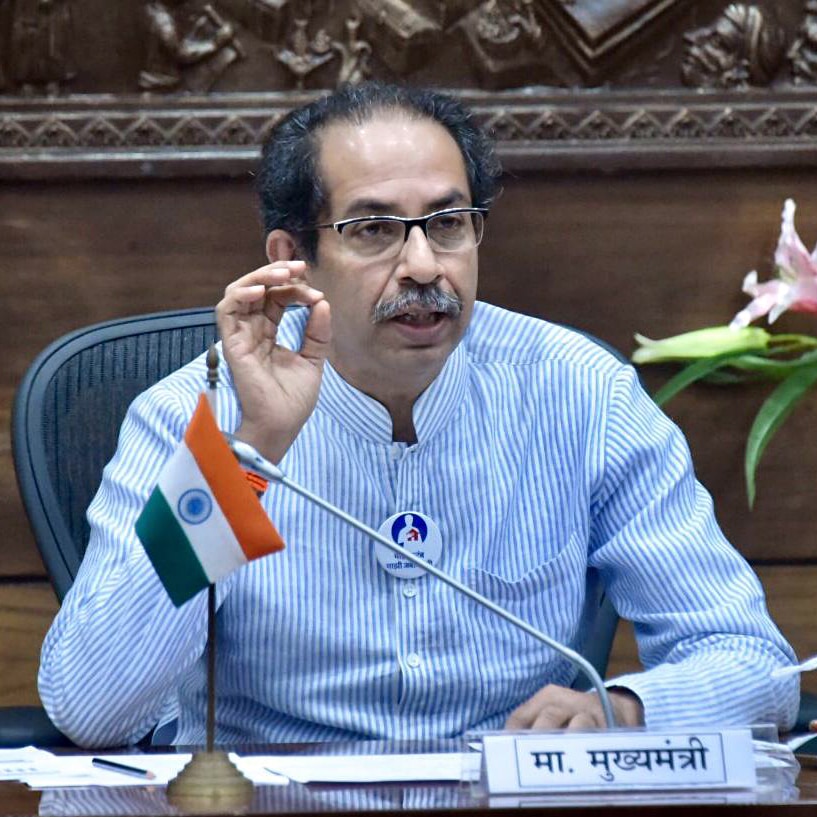
Postpone repayment of loan installments: Maharashtra CM Uddhav to Centre

 Thackeray sought permission under the National Disaster Management Act to airlift oxygen from steel plants in eastern and southern parts of the country


Maharashtra Chief Minister Uddhav Thackeray has written a letter to the Centre, demanding that banks be asked to postpone the repayment of loan instalments of small, medium, and other business enterprises due in the first quarter of the current fiscal, without charging any interest over it.

He said the number of an active caseload of Covid-19 in the state is expected to double in the next 15 days. Maharashtra is expecting its active caseload to reach 1.19 million by April 30, compared to the current active caseload of 564,000, Thackeray said on Wednesday in the letter addressed to Prime Minister Narendra Modi.

He also said the medical oxygen requirement in the state is projected to reach 2,000 metric tonnes per day by April-end from the present consumption of 1,200 mt per day.

Citing logistical hurdles in the transportation of liquid medical oxygen from neighbouring states, Thackeray sought permission under the National Disaster Management Act to airlift oxygen from steel plants in eastern and southern parts of the country.

Maharashtra has approached neighbouring states for medical oxygen supply amid the Covid-19 surge, but they have expressed their inability due to its high demand there, Health Minister Rajesh Tope said on Wednesday.

Thackeray on Tuesday said there is a shortage of medical oxygen and the Centre should help supply it for coronavirus patients in the state by using Air Force planes.

PE investment in realty jumps 16-fold in Jan-Mar at $3.2 bn: Report

 Private equity investment in real estate jumped over 16-fold in January-March 2021 to USD 3.24 billion as several deals spilled over from last year, according to Knight Frank.


Private equity investment in real estate jumped over 16-fold in January-March 2021 to USD 3.24 billion as several deals spilled over from last year, according to Knight Frank.

The property consultant, in its report 'Investments in Real Estate - Trends in PE Investments - Q1 2021', said Indian real estate attracted private equity (debt and equity) investments of USD 3,241 million across 19 deals in Q1 2021.

The investment stood at a mere USD 199 million in Q1 of the 2020 calendar year.

"The strong momentum in Q1 2021 was predominantly driven by two major factors: a spillover of certain deals from 2020 and the rise in investor confidence due to the drop in COVID-19 infections during early parts of Q1 2021," it said.

Explaining the investment trend in the real estate industry, Shishir Baijal, chairman and managing director of Knight Frank India, said office assets continue to be the preferred segment attracting over 70 percent of PE investments in Q1 2021.

"While Q1 2021 has been an encouraging quarter for PE investments, however, the upward trajectory can be impacted by the rising second wave of COVID-19 infections in India which started in the month of April 2021," he added.

The sustainability of revival in investor sentiments will therefore depend on how soon the second wave of infection subsides and the pace of vaccination, he said.