Sunday, March 21, 2021

How DCT can help the fertiliser sector deal with main challenges

 These challenges can be substantively tackled if the design of DCT is optimal


Fertilizer subsidy accounts for the second-highest subsidy in India at around 22% of the overall subsidy burden amounting to Rs 79.5 thousand crores. Given the high fiscal outlay, it is crucial to responsibly design and implement an efficient, effective, and environmentally sustainable architecture for the distribution system of fertilizer.

The government has introduced several path-breaking reforms laying a strong foundation for this endeavor. These include the introduction of the Fertiliser Management System to monitor operations across the value chain, neem coating of urea to prevent pilferage into non-farm uses, gas-pooling to increase production efficiency of domestic urea, Direct Benefit Transfer System enabling the capture of real-time movement from plant port to retail and also the sale of fertilizer through point-of-sale machines.

There has been an intensive focus on the revival of 5 fertilizer plants (Ramagundam, Gorakhpur, Barauni, Sindri, and most importantly Talcher) to augment the country’s overall urea production by 63.5 LMTPA aligned with the Atma Nirbhar paradigm. Finally, the government has allocated Rs 65 thousand crores to clear all the compensation dues of fertilizer companies.

These carefully orchestrated reforms provide the building blocks for the next iterative reform, direct cash transfer (DCT). As of now, farmers pay the subsidized price and the difference between the MRP and the cost goes as a subsidy to the manufacturers. This involves procedural hassles, monitoring difficulties, and informed access challenges for farmers.

From hi-tech telescope to Covid-19 study: ThoughtWorks does it all

 According to the firm, with TMT, one will be able to study the universe like never before


Sudhir Tiwari is a big science fiction movie buff and passionate about Indian philosophy.

Rather than the epic Star Wars, Tiwari finds a lot of inspiration from science fiction action film ‘The Matrix’ and is excited about the release of ‘The Matrix-4’ this year.

As managing director (MD) of tech company ThoughtWorks India, Tiwari leads business strategy and builds high-performance teams. He also oversees investments in data and artificial intelligence (AI).

One such initiative that Tiwari is leading is Engineering for Research (E4R), where the firm collaborates with research organizations in understanding and solving problems in the fields of astronomy, biology, epidemiology, and robotics.

“There are very clear business areas where we know the industry would move,” said Tiwari. “But there are always these questions around what technology stacks would they use as a lot of these tech stocks are going to change rapidly. Research firms are key areas as they are focused on cutting-edge technologies and think a few years ahead,” he added.

One of the projects is called the Thirty Meter Telescope (TMT), where engineers, astronomers, and project specialists are working together to build a next-generation observatory for the astronomical community.

According to the firm, with TMT, one will be able to study the universe like never before. These include finding answers to many grand challenges of science such as origin of galaxies, birth and death of stars and turbulent regions surrounding black holes. It would also help in discovering planets orbiting distant stars and the possibility of life in alien worlds.

Aramco's $75 billion dividend survives biggest oil, earnings disruptions

 The world's biggest oil company has taken on more debt in the past 12 months to keep up the dividend in the face of dwindling cash flow, though its gearing remains below that of firms such as Royal Du


Saudi Aramco’s $75 billion dividends survived one of the biggest disruptions to oil markets in decades as the coronavirus pandemic and a price war sent crude prices tumbling.

Aramco will make the payout -- the largest of any listed company and almost all which goes to Saudi Arabia’s government -- for 2020 despite a slump in earnings and revenue. The dividend is a key source of cash for the kingdom, whose economy was hit after the virus hammered energy markets and shut down local businesses.

The world’s biggest oil company has taken on more debt in the past 12 months to keep up the dividend in the face of dwindling cash flow, though its gearing remains below that of firms such as Royal Dutch Shell Plc.

Net income for 2020 was 184 billion riyals ($49 billion), Aramco announced on Sunday. That was slightly better than analysts’ expectations and down 44% from the previous year. Free cash flow fell almost 40% to $49 billion, substantially below the level of the dividend.

Gearing, a measure of net debt to equity, climbed from minus 5% in March to 22% in September, above the firm’s target of no more than 15%. It rose marginally in the fourth quarter, according to Chief Financial Officer Khalid al-Dabbagh, though the company will release full numbers for the period on Monday.

Adani Green Energy arm get letter of award for 300 MW wind project

 Adani Green Energy (AGEL) on Monday said that its arm has received a letter of award for 300 MW wind power project under a tender of Solar Energy Corporation of India


Adani Green Energy (AGEL) on Monday said that its arm has received a letter of award for 300 MW wind power project under a tender of Solar Energy Corporation of India (SECI).

"AREHFL, a subsidiary of the AGEL, had participated in the tender issued by SECI for setting up 1,200 MW ISTS-connected wind power project (Tranche-X) and received the letter of award (LOA) to set up 300 MW wind power project under this tender," a company statement said.

According to a statement the fixed tariff for this project capacity is Rs 2.77/kWh for a period of 25 years.

With this, AGEL's total renewable capacity now stands at 15,165 MW, of which 3,395 MW renewable plants are operational and 11,770 MW projects are under implementation.

Vneet S Jaain, MD and CEO, Adani Green Energy said, Wind energy forms an essential part of our business approach and is expected to continue a vital contribution to our growth plans. This award... is in line with our commitment to ramp up the creation of a sustainable ecosystem for transitioning towards a greener future.

AGEL, a part of India-based Adani Group, has one of the largest global renewable portfolios with 15 GW of operating, under-construction, and awarded projects catering to investment-grade counterparties.

The company develops, builds, owns, operates, and maintains utility-scale grid-connected solar and wind farm projects.

Thursday, March 18, 2021

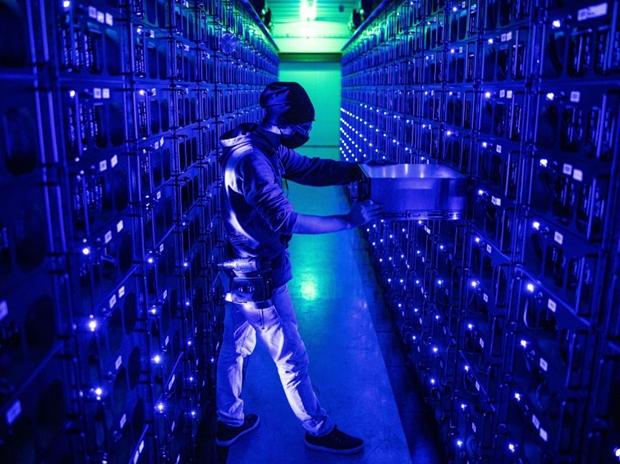
Why a ban on cryptocurrency could have dire consequences for India

 Just like its disastrous predecessor - demonetization - banning cryptocurrency to fight "black money" would be like setting fire to the forest in order to smoke out a few sheep


If India proceeds with a rumored ban on cryptocurrency, it wouldn’t be the country’s first attempt to impose currency controls. This time, however, a ban is even less likely to succeed — and the consequences for India’s economy could be direr. The country shouldn’t make the same mistake twice.

In the 1970s and 80s, at the height of what was known as the License Raj, Indians could only hold foreign currency for a specific purpose and with a permit from the central bank. If a businessman bought foreign exchange to spend over two days in Paris and one in Frankfurt and instead spent two days in Germany, the Reserve Bank of India would demand to know why he’d deviated from the currency permit. Violators were routinely threatened with fines and jail time of up to seven years.

Imports required additional permits. Infosys Ltd. founder Narayana Murthy spending about $25,000 (including bribes) to make 50 trips to Delhi over three years, just to get permission to import a $150,000 computer. Plus, since any foreign exchange that the company earned notionally belonged to the government, the RBI would release only half of Infosys’s earnings for the firm to spend on business expenses abroad.

Naturally a black market, with all its unsavory elements, emerged for foreign currency. The government doubled down, subjecting those dealing in illicit foreign exchange to preventative detention, usually reserved for terrorists. Businessmen selling Nike shoes and Sony stereos were arrested as smugglers.

The system impoverished Indians and made it impossible for Indian firms to compete globally. There’s a reason the country’s world-class IT sector took off only after a balance of payments crisis forced India to open up its economy in 1991.

While details of the possible crypto ban remain unclear, a draft bill from 2019 bears an eerie resemblance to the 1970s controls. It would criminalize the possession, mining, trading, or transferring of cryptocurrency assets. Offenders could face up to ten years in jail as well as fines.

Two top US senators ask Blinken to raise farmers issue with Indian leaders

 Two top Democratic senators have urged US Secretary of State Antony Blinken to raise with the Indian leaders the issue of treatment of peaceful farmer protesters and journalists


Two top Democratic senators have urged US Secretary of State Antony Blinken to raise with the Indian leaders the issue of treatment of peaceful farmer protesters and journalists even as they acknowledged that it is for the people and the Government of India to determine the path forward on its recently enacted farm laws.

In a letter to Blinken, Senate Foreign Relations Committee Chairman Bob Menendez and Senate Majority Leader Chuck Schumer on Thursday urged the Biden administration to further engage with Prime Minister Narendra Modi's government over its treatment of farmers in India who have been peacefully demonstrating against the passage of new farm laws.

Farmers, mostly from Punjab, Haryana and western Uttar Pradesh, have been camping at several Delhi border points, including Tikri, Singhu and Ghazipur, since November 28, demanding a complete repeal of the three farm laws and a legal guarantee on the minimum support price (MSP) for their crops.

The government has denied allegations that it was trying to put an end to the MSP and the mandi system.

India has also emphasised that the protests by farmers must be seen in the context of India's democratic ethos and polity and the Ministry of External Affairs last month said that some vested interest groups have tried to mobilise international support against the country.

In their joint letter to Blinken, Menendez and Schumer noted that India is a "long-term strategic partner with deep ties to the United States thanks to our many shared values and our large and valued Indian American community."

Space technology incubation centres opened at NIT Nagpur, Bhopal, Rourkela

 Three Space Technology Incubation Centres were inaugurated at National Institute of Technology at Nagpur, Bhopal and Rourkela by the Chairman of Indian Space Research Organisation K Sivan


Three Space Technology

Incubation Centres (S-TIC) were inaugurated at the National Institute of Technology (NIT) at Nagpur, Bhopal and Rourkela by the Chairman of Indian Space Research Organisation (ISRO) K Sivan.

ISRO signed bilateral Memorandum of Understanding with Visvesvaraya National Institute of Technology, Nagpur (for Western region), Maulana Azad National Institute of Technology, Bhopal (for Central region), and National Institute of Technology, Rourkela (for Eastern region).

In an online programme on this occasion on Thursday, Sivan, also Secretary in the Department of Space (DoS), encouraged the students to explore their entrepreneurship skills in the space domain.

The S-TIC concept is conceived with one selected major academic institute taking the lead role in a particular region and providing opportunities for final year graduate, postgraduate and research scholars as "future budding entrepreneurs," Sivan was quoted as saying in an ISRO statement.

Projects of practical relevance linked to the ongoing or future missions of ISRO will be made available to the students artistic, and their research outcome will be translated into a Proof-of-Concept or prototype through industries within their region, the Bengaluru-headquartered ISRO said.

ISRO Scientific Secretary R Umamaheswaran underlined the need for an inter-disciplinary approach and close teamwork among various disciplines of Science and Technology for accomplishing the objectives of S-TIC.

With the setting up of three new S-TICs, the goal of opening one such centre in each six regions of the country has been accomplished by ISRO.