Monday, August 24, 2020

Mental health issues on rise, over 1,300 seek Maharashtra govt's help


Amid the coronavirus-enforced lockdown, more than 1,300 people battling mental stress and depression have approached the Maharashtra government with requests for medical help.


Amid the coronavirus-enforced lockdown, more than 1,300 people battling mental stress and depression have approached the Maharashtra government with requests for medical help, a state health official said.
Private doctors also claimed that the number of people suffering from depression, obsessive compulsive disorder (OCD) and phobia of stepping out of home has significantly increased in the last few months.

"Out of the 36 districts in Maharashtra, 30 have reported 1,302 cases of people seeking help of psychiatrists," a senior official from the state health department told PTI.

Some of them suffered from violent behaviour, like attempt to self-immolate, self-harm and outburst as a result of prolonged depression, she said.

"The data is still being compiled as some of the districts are yet to report cases. The numbers could be much higher than the currently reported 1,302 cases," she said.

Noted psychiatrist Anand Nadkarni said before March this year (prior to the outbreak of COVID-19), he used to get six to seven cases of OCD daily, but now the number has gone up to 32 to 36 every day.

"Most of the people do not admit OCD as an illness and thus, its impact remains for a longer time on their life. Unfortunately, there is a dearth of psychiatrists in the overall health sector field," he said.

In some cases, there has also been a significant increase in alcohol consumption, Nadkarni said.

"Liquor consumption has reduced among students, as most of them have returned home, but it is higher among the middle-aged working class. Increased liquor consumption makes them weaker and more susceptible to the coronavirus infection," he said.

India is key for global access to a coronavirus vaccine - here's why


India has the potential to play a key role in overcoming vaccine nationalism because it is the major supplier of medicines to the global south.


The great COVID-19 vaccine race is on. Pharmaceutical companies around the world are going head to head, while governments scramble to get priority access to the most promising candidates.
But a richest-takes-all approach in the fight against the deadliest pandemic in living memory is bound to be counter productive, especially for the recovery of low and middle income countries. If governments cannot come together to agree a global strategy, then the global south may need to pin its hopes on the manufacturing might of India.

Tedros Adhanom Ghebreyesus, the director general of the World Health Organization, has warned that a nationalist approach “will not help” and will slow down the world’s recovery. Yet vaccine nationalism looms large over the search for vaccines, with the US, the UK and the European Commission all signing various advance purchase agreements with manufacturers to secure privileged access to doses of the most promising candidates. The US alone has paid over US$10 billion (£7.6 billion) for such access.

The ideal global distribution of a successful COVID-19 vaccine would look beyond which countries have the deepest pockets and instead prioritise health workers, followed by countries with major outbreaks and then those people who are particularly at risk.

India has the potential to play a key role in overcoming vaccine nationalism because it is the major supplier of medicines to the global south. Médecins Sans Frontières once dubbed the country the “pharmacy of the world”. India also has, by far, the largest capacity to produce COVID-19 vaccines. Its role in manufacturing a vaccine could come in two different ways – mass-producing one developed elsewhere (likely) or developing a new vaccine as well as manufacturing it (less likely, though not impossible).

GST reduced tax rates, doubled taxpayer base to 12.4 million: FinMin


The number of assessees covered by the GST at the time of its inception were about 6.5 million.


The finance ministry on Monday said the goods and services tax (GST) had reduced the rate at which people have to pay tax, helped increase compliance, and doubled taxpayer base to 12.4 million. In a series of tweets, on the first death anniversary of former finance minister Arun Jaitley, the ministry said before GST, the combination of va­lue-added tax, excise, sales tax, and their cascading effect resulted in high standard rate of tax up to 31 per cent.

“It is widely acknowledged that GST is both consumer- and taxpayer-friendly,” it said.

The number of assessees covered by the GST at the time of its inception were about 6.5 million. Now the assessee base exceeds 12.4 million.

GST, which subsumed about 17 local levies, was rolled out on July 1, 2017.

Jaitley held the finance portfolio in the first term of the Modi government since 2014.

“As we remember Arun Jaitley, let us acknowledge the key role he played in the implementation of GST, which will go down in history as one of the most fundamental landmark reforms in Indian taxation,” the ministry tweeted.


Govt, RBI need to share cost of maintaining UPI infrastructure: Report


The IIT-Bombay report further said UPI as a digital payments platform increases efficiency towards tax compliance, and provides overall convenience for public good.


The government and the Reserve Bank of India need to share the cost with banks associated with maintaining UPI infrastructure as it reduces the demand for cash and helps in curtailing expenditure on printing and managing currency notes, according to a report prepared by IIT-Bombay.

Observing that about Rs 5,000 crore is spent annually on printing cash alone and even more on managing it, the report said, "The expenditure towards maintaining Unified Payment Interface (UPI) may be much lower and could even curtail the expenditure on cash."

The report further said UPI as a digital payments platform increases efficiency towards tax compliance, and provides overall convenience for public good.

"With the government's vision of no direct or indirect charge on payments using UPI, an appropriate sharing of cost burden by the government and the RBI is called for (with UPI being the simplest alternative to cash in this era of mobile phones)," the report added.

Currently, banks are bearing the cost of UPI transactions.

BHIM-UPI is powered by the National Payments Corporation of India (NPCI) that engineered to make it a giant payment infrastructure of the country. NPCI has not put any business restrictions onto the banks for P2P (peer-to-peer) payments using BHIM-UPI other than years of moral suasion to keep the charges zero, it said.

In this context, it may be noted that in the approved minutes of a meeting of banks with NPCI dated February 14, 2020, the UPI Steering Committee of NPCI concurred to limit free P2P fund transfer transactions to 20 per month, it said.

Google fixes high severity bug in latest version of Chrome web browser


Google has fixed a high-severity flaw in the latest version of Chrome browser that could lead to code execution.


Google has fixed a high-severity flaw in the latest version of Chrome browser that could lead to code execution.
The Google Chrome web browser had a use-after-free vulnerability in its "WebGL" component that could allow a user to execute arbitrary code in the context of the browser process.

A hacker could manipulate the memory layout of the browser in a way that they could gain control of the use-after-free exploit, which could ultimately lead to arbitrary code execution.

According to Jon Munshaw from Cisco Talos, the security researchers worked with Google to ensure that these issues are resolved and that an update is available for affected customers.

"This vulnerability specifically exists in ANGLE, a compatibility layer between OpenGL and Direct3D that Chrome uses on Windows systems," Munshaw informed in a statement on Monday.

With proper memory layout manipulation, an attacker can gain full control of this use-after-free vulnerability which could ultimately lead to arbitrary code execution in the context of the browser.

Another bug was found in Google's Chromium-based browsers in early August that could allow hackers to bypass the Content Security Policy (CSP) on websites, in order to steal data and execute rogue code.

Hackers could also exploit an unpatched flaw in Google Drive to distribute malicious files disguised as legitimate files on systems worldwide.

The Hacker News reported that Google is aware of the latest security issue that is found in the "manage versions" functionality in Google Drive.

The functionality allows users to upload and manage different versions of a file.


Sunday, August 23, 2020

India needs more global sized banks to help achieve $5 trn economy: CEA


He rued the fact that India has only one bank in top 100 global bank list while a country much smaller in size has more such banks.


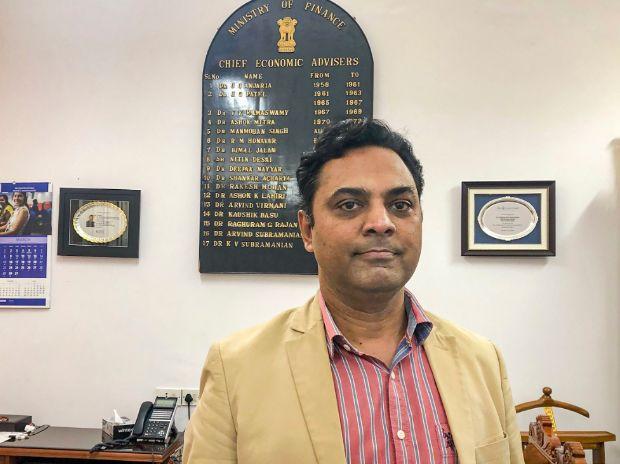
Chief Economic Adviser K V Subramanian on Sunday said that India needs more global sized banks to help the country achieve $5 trillion economy by 2024-25.

He rued the fact that India has only one bank in top 100 global bank list while a country much smaller in size has more such banks.

State Bank of India (SBI) at the 55th position is the only bank in the global top 100 list. China has 18 banks while the US has 12 in the list.

"India is the fifth largest economy in the world. So, if the Indian banking sector was proportional to the size of its economy, India should have been where South Korea is, which has six banks in the global top hundred. But in contrast, India has only one bank in the global top hundred," he said.

Even countries that are a fraction of India's size for example Finland, Denmark, Belgium, Austria, Norway have at least one bank in the global top hundred, he said while delivering a lecture at the fifth anniversary event of Bandhan Bank.

"If you take countries like Sweden and Singapore, Sweden is one-sixth the size of the economy, Singapore is one-eighth the size of the economy, they have three banks in the global top hundred," he said.

Subramanian said that "like cricketer M S Dhoni who had shown the country how to win in the foreign shores, the Indian banking system also needs to scale up to global standards".

"The Indian banking system needs to conquer the world. Rather being tigers at home, it should scale up its presence in the world rankings where China is leading in terms of the number of banks, followed by the US," he said.

That's what should now be the goal of the Indian banking sector, because India is not any more a small economy but the fifth largest economy in the world, he said.


Elon Musk may reveal human trials for brain computer tech this week


Elon Musk is all set to reveal a key update on his brain-machine interface company Neuralink this week and may announce human trials for the technology that has been successful on mice and even apes.


Tesla and SpaceX CEO Elon Musk is all set to reveal a key update on his brain-machine interface company Neuralink this week and may announce human trials for the technology that has been successful on mice and even apes.

While the whole agenda is still speculative, a live demonstration of neuron firing activity is confirmed.

"Will show neurons firing in real-time on August 28th. The matrix in the matrix," Musk tweeted last month.

Musk has also claimed that a new Neuralink chip will allow users to hear sounds that previously were impossible to human ears.

He confirmed the new feature last month over an exchange with a Twitter user who asked: "If we implement Neuralink - can we listen to music directly from our chips? Great feature."

Musk replied with a simple, "yes".

He also confirmed that the chip would be able to control hormone levels, which would have the potential to help with anxiety relief, among other things.

To help paralysed people control devices and empower people with brain disorders, Neuralink last year unveiled tiny brain "threads" in a chip which is long lasting, usable at home and has the potential to replace cumbersome devices currently used as brain-machine interfaces.

In February this year, Musk promised an "awesome" update by Neuralink.

"The profound impact of high bandwidth, high precision neural interfaces is underappreciated. Neuralink may have this in a human as soon as this year," Musk had tweeted.