Monday, January 3, 2022

Analysts cautious on auto stocks amid uneven recovery

 Passenger vehicle OEMs' attempt to catch up to the demand was impacted by production cuts, while demand for two-wheelers and PVs remain weak. Find out if you should chase the rally in auto stocks


In December 2021, the dispatches to auto dealers continued to remain a mixed bag. While wholesale volumes for passenger vehicle, two-wheelers, and tractor segments declined on a yearly basis, the commercial vehicle segment continued its clock a gradual recovery.
As per the latest monthly sales figures, Maruti Suzuki’s total volumes declined by 4% YoY last month, led by a 13% decline in domestic passenger vehicle volumes.
M&M’s domestic PV volumes increased by 10% YoY while Tata Motors’ domestic volumes rose 51%.
Among the non-listed players, Hyundai Motors reported a 32% yearly decline in domestic volumes; MG Motors reported a 36% fall whereas Kia Motors reported a 34% volume decline. Renault-Nissan and Honda, too, reported 8-17% YoY decline in volumes.
As regards two-wheelers, Hero Moto’s total volumes declined by 12% YoY; TVS Motors’ total sales fell by around 8%; and Bajaj Auto’s total two-wheeler sales dipped by 6%.

Royal Enfield’s total volumes, however, increased by 7%.
On the bourses, shares of auto and auto-ancillary companies entered fast-lane yesterday with individual stocks rallying up to 8% intra-day.
So, should you add these stocks in your portfolio? On dips, suggest analysts.
The sector, especially two-wheeler makers, is not entirely out of the woods yet. Apart from consistent price hikes and rising fuel costs, potential third wave due to the Omicron variant, could limit consumer spending, cautions Ashwin Patil, Senior Research Analyst, LKP Securities.

Sunday, January 2, 2022

What is the Election Laws (Amendment) Bill, 2021?

 Last month, the govt passed a bill to amend the law relating to elections. But a change-linked electoral rolls with the Aadhaar ecosystem was in the eye of the storm. This report tells more about it


When The Election Laws (Amendment) Bill, 2021, was tabled in Rajya Sabha on December 21, members of the opposition parties stormed into the Well of the House. TMC MP Derek O’ Brien was suspended for throwing a rule book at the reporters’ table.
It all happened when the opposition’s motion to send the legislation to a select committee was defeated. But just like the Lok Sabha, the bill sailed through the Upper House amid the protests. It awaits the President’s nod to become a law.
Through the bill, the government is amending both The Representation of the People Acts of 1950 and 1951. One of its main provisions creates a legal framework to link electoral roll data with Aadhaar. The government said it was meant to strike out bogus voters, foreigners who are wrongfully included as voters, and also those who are enrolled in more than two constituencies.
While tabling the bill, Union Law Minister Kiren Rijiju had said that “only those who use bogus voters list will oppose this Bill”.
The new rule empowers the electoral registration officers to ask a person applying for a new voter ID to furnish his Aadhaar number for the purpose of establishing identity. They can also seek Aadhaar numbers from registered voters to check for duplication.
While the government has insisted that furnishing the Aadhaar is voluntary, the wording of the bill raises doubts about such assertions.
It says that no one shall be denied registration and no entry shall be deleted from the electoral roll due to a person’s inability to furnish an Aadhaar number due to sufficient cause as may be prescribed. This suggests that the government will define what constitutes a sufficient cause for a person to not submit his Aadhaar.

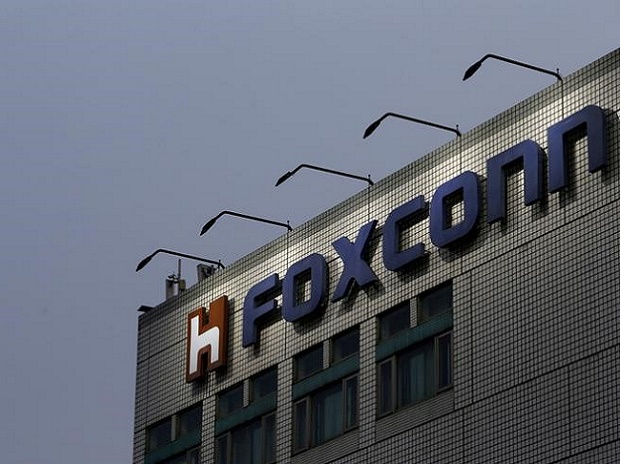
What do labour law violations at Foxconn say about Make in India?

 In 2021, India announced production-linked incentive schemes for thirteen sectors to push the Make in India initiative. But alleged disregard by factories may cast a pall on its manufacturing dreams


Last week, the Union Minister of State for Ministry of Electronics and Information Technology, Rajeev Chandrasekhar said the government would love to see the world’s largest contract chipmaker Taiwan Semiconductor Manufacturing Company invest in India, among other firms. His statement came amid the government’s efforts to attract semiconductor companies with a $10 billion incentive scheme launched last month.
As India tries to woo one Taiwanese giant, another has been embroiled in a labor issue at its factory near Chennai in Tamil Nadu.
Protests started at Foxconn’s factory after more than 250 women workers, who live at one of the company’s hostels, had to be treated for food poisoning. The factory employs 17,000 workers and makes iPhones for Apple. The Taiwanese company is the world’s biggest contract electronics manufacturer.
The factory has been shut down since December 18. Some of the women told a news outlet that workers slept on the floor in rooms that housed between 6 to 30 women.

The toilets reportedly had no running water and food sometimes had worms on them.
Food safety officials closed the hostel’s kitchen after finding rats and poor drainage.
Apple and Foxconn accepted that some dormitories and dining rooms at the factory did not meet the required standards.
In fact, Foxconn attracted global media attention after 14 workers committed suicide at its factories in China in 2010 over low pay and stressful work conditions.

Indian OTT industry to grow $13-15 bn in next 10 years: Report

 the OTT sector is also witnessing a rise in investments in Indian original content


The Indian OTT streaming industry is expected to grow to USD 13-15 billion over the next decade at a CAGR of 22-25 percent, according to a joint report on media and entertainment.

The OTT (over-the-top) industry is constantly growing and is one of the most competitive amongst emerging markets with over 40 players representing all types of content providers, said the report from industry body CII and Boston Consulting Group (BCG).

This has been led by "strong tailwinds" from basic enablers being in place for digital video streaming such as affordable high-speed mobile internet, doubling of internet users in the last six years, increased adoption of digital payments.

Moreover, it has been also helped by India-specific price points offered by global players here such as Netflix, Prime Video, Disney+ offering plans in India at 70-90 percent cheaper than the US.

Besides, the OTT sector is also witnessing a rise in investments in Indian original content. This has led to growth in hours of original content available to users. "Strong content also helping capture eyeballs outside India," the report said, adding Indian OTT can cater to international demand by targeting the Indian diaspora and markets that have language similarities.

There has been a remarkable surge over SVOD (subscription video on demand) content over the last few years and is expected to overtake AVOD (advertising-based video on demand), it added. "This strong growth in the subscription is due to various initiatives taken to expand the user base through bundling and pricing innovations, amply supported by significant investment in content," said the report titled "Blockbuster Script for the New Decade: Way Forward for Indian Media and Entertainment Industry".

The major players in the Indian OTT industry include - Netflix, Amazon Prime Video, SonyLIV, Alt Balaji, Zee5, Eros Now, and Disney Hotstar Plus. It has been additionally helped by a predominance of a younger population, with 50-55 percent population under the age of 30, it added.

How will the government carry forward its reform plan in 2022?

 The govt to take a U-turn on-farm laws. It also didn't table any key economic bill in the Parliament. Let us look at how the govt is likely to take forward its reforms and economic agenda this year


The long-awaited sale of Air India to Tata Group in October, the Modi government’s first privatization deal in seven years, had sparked hope that the present regime was going strong on its reform agenda.

Several other legislations, from the three farm laws to the four labor codes to the privatization of state-owned banks were lined up.

However, after the end of 2021, the government and its proponents can only write home about the Air India sale, for everything else has been stalled.

The farm laws were withdrawn as the Modi government gave in to the year-long farmers’ agitation. The lesson from the entire saga seems to be that any attempt at reform in agriculture, no matter how noble and well-intentioned, cannot be taken without the consent of farmers.

Now, fearing a similar backlash from trade unions, the Modi government seems to have delayed the implementation of the four labor codes until the state elections.

Despite the sale of Air India, the government will likely miss its disinvestment target of Rs 1.75 trillion for FY22, since the bid to privatize Bharat Petroleum Corporation Limited (BPCL) hasn’t advanced yet.

The privatization of state-owned banks was another no-show, with the government yet to even announce the names of the two Public Sector Banks that will be privatized. Media reports suggest that here too, the government was anticipating protests by bank unions.

GST mop-up signals economic recovery despite worry over Omicron

 Collections grow 13% in December quarter to Rs 1.3 trillion - the best since July 2017

The goods and service tax (GST) numbers for December cap an extraordinary quarter in terms of receipts from the nationwide tax for the Centre and states. At an average monthly gross collection of Rs 1.3 trillion, the October-December quarter of 2021-22 (FY22) was the best for the Centre and states since GST was introduced (July 1, 2017), showing just how strong economic recovery has been.

Barring May and June, which were impacted by lower economic activity due to the second wave of the Covid-19 pandemic, the first nine months of FY22 have seen encouraging GST receipts at above Rs 1 trillion.

However, the Omicron variant of the coronavirus continues to be a big unknown, in terms of the economic impact. Depending upon how fast the third wave spreads and how severe the restrictions upon businesses are, GST collections in February and March 2022 could be affected, observe analysts.

“What happens in the months to come depends upon the severity of the third wave. The restrictions we are seeing so far are in certain states and for certain activities. So far, no state has imposed mass restrictions the way we saw in the second wave,” said M S Mani, partner, Deloitte India.

Mani said there is no clarity on how severe the Omicron wave would be and what further restrictions it could entail. “Whether there will be restrictions in interstate movement of goods is what needs to be keenly watched,” he added.

Gross GST collections for May 2021 (which would reflect April activity) came in at Rs 97,821 crore, while those for June (a barometer for May's economic activity) were the year’s lowest at Rs 92,800 crore. Hit by a deadly second wave, these were the only two months in FY22 which registered collections of Rs 1 trillion.

“I don’t see a complete lockdown like we saw at the peak of the second wave. But economic activity will definitely get impacted. Yes, the collections could be lower than what we have seen in the past two-three months. However, it may not be as bad as what we saw in May-June,” said Rajat Bose, partner, Shardul Amarchand Mangaldas & Co.

At 7.2%, Singapore's 2021 GDP grows at fastest pace in over a decade

 The city-state's economy grew 7.2% in 2021, preliminary data showed on Monday, broadly in line with the government's official projection and rebounding from the record 5.4% contraction in 2020


Singapore's economy expanded at its fastest annual pace in over a decade in 2021 as the country emerged from its worst recession on record, caused by the deep hit to activity from the coronavirus pandemic.
The city-state's economy grew 7.2% in 2021, preliminary data showed on Monday, broadly in line with the government's official projection and rebounding from the record 5.4% contraction in 2020.
The financial and transport hub, often seen as a bellwether of global growth, has staged a rocky recovery as governments around the world shift their coronavirus strategies to living with the pandemic, away from "zero-COVID" policies.

Singapore's annual gross domestic product growth was the fastest since a 14.5% expansion in 2010 when the economy emerged from the global financial crisis.
"I'm expecting growth to be relatively buoyant. As the world economy starts to improve, I think that will also help to support the overall external demand conditions for Singapore," said MUFG analyst Jeff Ng. "The main threat continues to be inflation."

The government has previously said it expects GDP to grow 3% to 5% in 2022.
GDP rose 5.9% in October-December on a year-on-year basis, the Ministry of Trade and Industry said in a statement, faster than the 5.4% growth forecast in a Reuters poll on analysts.