Thursday, December 2, 2021

Adani group starts exports from Australia coalmine that drew protests

 Carmichael mine, located in Queensland state, has spanned environmental activists to Wall Street banks, insurers and investors.


Billionaire Gautam Adani’s coal mine in Australia, a project that’s become a global emblem for opposition to fossil fuels, is preparing to begin exports after more than a decade of a bitter dispute over its development.

Proposed in 2010 and stalled by legal challenges, financing setbacks, and a sustained campaign from climate activists, the operation is scheduled to ship first cargoes before the end of December and aims to supply an initial 10 million tons of thermal coal annually for at least 30 years.

Opposition to the Carmichael mine, located inland from Australia’s iconic Great Barrier Reef in Queensland state, has spanned environmental activists to Wall Street banks, insurers and investors, offering a microcosm of the escalating international campaign against the most polluting fossil fuel in the past decade.

“Carmichael seems to have catalyzed a broader conversation about the future of thermal coal,” said Samantha Hepburn, a law professor at Melbourne-based Deakin University who has focused on mining and energy issues. “That’s happening not just for activists, but in boardrooms and for investors across the world who want to reduce their exposure to toxic investments.”

Yet the start of overseas sales also reflects coal’s still-pivotal role in the world’s energy mix, a status that led China and India--the top consumers-- to dilute efforts to set a global deadline to phase out the fuel at the COP26 climate talks. Demand is rising in parts of Asia, and the remedy from Beijing and New Delhi to recent power shortages was to ramp up coal production.

Wednesday, December 1, 2021

Will classic defensive bets outperform the markets?

 Market participants are reading into the developments surrounding the Omicron variant of Covid-19. Let's find out investing which sectors will prove to be beneficial for investors in this volatility


Frequent bounce-backs and corrections are keeping investors confused about the market trajectory.
As Covid-19 cases continue to spike across the globe and vaccine efficacy is unknown against the new variant, adopting a prudent investment strategy is the way forward to safeguard one’s portfolio.
An analysis by ICICI Direct shows that all major market corrections since April 2020 got arrested within 9-11% range.
And buying in each of these corrections has been fruitful for investors as indices subsequently retested previous highs.
Given this, research analysts at ICICI Direct expect markets to maintain the same rhythm this time around too.
In the current scenario, after a 31 per cent rally in the past six months, the benchmarks have corrected 9 per cent from their respective lifetime highs.
Therefore, the ongoing correction should be capitalized on as an incremental buying opportunity to ride the structural uptrend
But, will put your money behind the classic defensive bets prove to be beneficial this time? Let’s find out.
Over the past few months, healthcare stocks have witnessed retracement while IT stocks have been consolidating in a narrow range.
As these stocks form a fresh bases at higher levels, analysts foresee decent returns from the space in days ahead.

Pfizer begins application for Canada's approval of Covid-19 pill

 The country has identified seven people with the new variant as of Nov. 30.


Pfizer Inc said on Wednesday it had started the real-time submission of its application seeking Health Canada's approval of its oral COVID-19 antiviral drug candidate.

The pill, PF-07321332, is designed to block a key enzyme needed for the coronavirus to multiply.

The move comes after the Canadian government announced on Tuesday that it was in advanced talks with Pfizer and Merck & Co Inc regarding a purchase agreement for their COVID-19 antiviral drugs, as the country attempts to control the spread of the Omicron coronavirus variant.

The country has identified seven people with the new variant as of Nov. 30.

The drugmaker last month submitted its application seeking U.S. authorization of the experimental pill, which was shown to cut the chance of hospitalization or death for adults at risk of severe disease by 89% in a clinical trial.

Oil rallies as Opec meets, but supply concern looms

 Brent crude futures for February were up $2.08, or 3%, at $71.31 a barrel at 1445 GMT.


Oil prices rallied on Wednesday after recent sharp drops as major producers started to discuss future output against the backdrop of a new coronavirus variant triggering fresh travel restrictions that could dampen oil demand.

Equity markets, which often move in tandem with oil prices, also rebounded as investors bought the previous session's dip in the hope the Omicron variant would not derail an economic recovery.

Brent crude futures for February were up $2.08, or 3%, at $71.31 a barrel at 1445 GMT.

U.S. West Texas Intermediate (WTI) crude futures rose $2.06, or 3.1%, to $68.24 a barrel. Both contracts retraced some of their gains after an OPEC+ document showed the group forecasting a bigger oil surplus in the new year than previously thought.

Both Brent and WTI front-month contracts in November posted their steepest monthly falls in percentage terms since March 2020, down 16% and 21% respectively.

The Organization of the Petroleum Exporting Countries met on Wednesday ahead of a meeting on Thursday of OPEC+, which groups OPEC with allies including Russia.

OPEC+ sees the oil surplus worsening to 2 million barrels per day (BPD) in January, 3.4 million BPD in February, and 3.8 million BPD in March next year, an internal report seen by Reuters showed.

Some analysts expect OPEC+ to pause plans to add 400,000 BPD of supply in January.

"There is much to suggest that OPEC+ will not initially step up its oil production any further in an effort to maintain current prices at around $70/bbl," PVM analyst Stephen Brennock said.

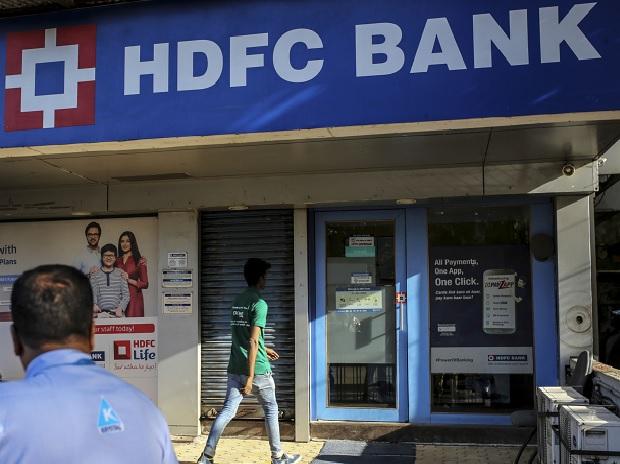
HDFC Bank quickest to list among 100 global firms, shows data

 E-commerce giant Amazon also is among the fastest as it went public in just three years.


HDFC Bank is the fastest among 100 global companies to have gone public. The gap between its incorporation and listing was less than a year, shows a study done by Tide, a UK-based financial platform. The second quickest was Chinese beverage firm Kweichow Moutai, which took two years to launch an IPO.

E-commerce giant Amazon also is among the fastest as it went public in just three years.

Meanwhile, the slowest was luxury goods firm Hermès, founded in 1837 and listed 162 years later. The other Indian firms in the top 100 global list are Reliance Industries (RIL) and Tata Consultancy Services (TCS).

RIL was incorporated in 1973 and was listed four years later. The Tata group flagship, meanwhile, took 36 years. It was incorporated in 1968 and launched its IPO in 2004.

As per the study, e-commerce companies are the fastest to launch IPOs at an average 8.75 years, followed by IT services industry.

Govt notifies Farm Laws Repeal Act: Check details here

 The government on Wednesday notified legislation to repeal the three laws


The Centre on Wednesday notified legislation to repeal the three agriculture laws against which thousands of farmers have been protesting for over a year now.

The Farm Laws Repeal Act, 2021 received the assent of the President of India on November 30, said a gazette notification issued by the Ministry of Law and Justice.

This law was passed by Parliament on November 29 without debate amid protests by Opposition MPs.

The Farm Laws Repeal Act seeks to repeal three new farm laws which were passed by Parliament in September last year with an objective to bring reforms in the agriculture sector, especially the marketing of farm produce.

These three farm laws were -- Farmers' Produce Trade and Commerce (Promotion and Facilitation) Act, 2020, Farmers' (Empowerment and Protection) Agreement of Price Assurance and Farm Services Act, 2020 and the Essential Commodities (Amendment) Act, 2020.

Everything you need to know about plant-based meat

 Several companies are coming up with plant-based substitutes to meat, which they say are ethical and as relishing as the non-vegetarian dishes are. So, let's understand what plant-based meat is


At least 50 billion chickens are killed for food across the world, every year. The number of larger livestock that is taken to slaughterhouses is equally astonishing. And it is almost impossible to count the creatures which are pulled out of seas and rivers. It all has an environmental cost. According to an estimate by the UN, meat, and dairy account for 14.5% of all man-made greenhouse gas emissions. This is greater than the emissions of the entire transport sector.

Middle-income countries, led by China and India, are the biggest consumers of meat. But its demand in Europe and in some North American countries has now stabilized.

And it has declined in some parts also.
Plant-based meat is still at an early stage of adoption in India, but an increasing number of people are willing to try such smart proteins as they adopt more climate-conscious habits or pursue a lifestyle more in line with what they consider to be ethical. Now, before we delve into the business side of things, let us understand what plant-based meats are made of?

Local markets in India are now flooded with eateries selling soya chaap masala. Have you tried one? They are spicy and taste close to kababs. So the term plant-based meat refers to foods that mimic meat products, especially meat-like texture, but are made from plants. Some of these products are suitable for vegans, while others may contain non-vegan ingredients like egg and milk.