Sunday, July 4, 2021

1 mn barrels of Guyanese Liza crude loaded for Indian Oil Corporation

 The first one million barrels of Guyanese Liza crude for Indian Oil Corporation Ltd has been loaded from FPSO Liza Destiny informed the High Commission of India in Guyana


In a concrete step in India-Guyana economic relations, the first one million barrels of Guyanese Liza crude for Indian Oil Corporation Ltd. (IOCL) has been loaded from FPSO Liza Destiny, informed the High Commission of India in Guyana on Sunday.

"Concrete step in Indo-Guyana economic relations, 1st 1 million barrels Guyanese Liza crude for @IndianOilcl loaded from FPSO Liza Destiny destination. India enhanced cooperation plus important step in the diversification of crude sourcing and future roadmap," the High Commission said in a tweet on Sunday.

Earlier, Indian Oil Corporation Ltd. also tweeted saying it is a giant step by India and Indian Oil towards diversification of crude sourcing.

"Guyanese crude being loaded from FPSO Liza Destiny onto crude tanker Milito's for transportation to our Paradip Refinery. Indeed a giant step by India and Indian Oil towards diversification of crude sourcing," IOCL said in the tweet.

Thursday, July 1, 2021

Urban Indians prefer job guarantee over cash handouts, says LSE study

 Even most of those who had received cash handouts in the wake of the pandemic preferred having job protection.


A majority of urban Indians left unemployed by the coronavirus pandemic want the government to guarantee them jobs as it does for people in rural areas, says a study by the London School of Economics.
An overwhelming 82% of respondents surveyed for the report ‘City of dreams no more, a year on worklessness and active labor market policies in urban India’ favored job guarantees followed by 16% for cash transfers.

Even most of those who had received cash handouts from the government in the wake of the pandemic preferred having job protection over financial assistance, wrote Swati Dhingra and Fjolla Kondirolli, the authors of the report.

The federal government currently guarantees at least 100 days of employment in a financial year to every household in rural areas.

Budget allocation for the program was stepped up last year amid the pandemic, and authorities reported as much as a 50% increase in enrollment for the program.

The study recontacted respondents in India covered in an earlier survey following the first wave of the pandemic. Unlike last year when Prime Minister Narendra Modi imposed a sweeping nationwide lockdown to stop the virus’s spread, movement curbs this time around were localized with limited economic fallout.

'Levels often deceptive': 5 reasons why India needs to up record forex pile

 The reserve touched a record $608 billion last month due to RBI soaking up dollars.


The rise in India’s foreign exchange reserves to above $600 billion may not be enough to beat the challenges looming for Asia’s third-largest economy, according to some central bankers and economists.

The pile touched a record $608 billion last month, thanks mainly to the Reserve Bank of India soaking up dollars flowing in as foreign direct investments, as well as into the nation’s booming stock market. The hoard may help reassure investors and credit-rating companies about the government’s ability to meet its debt obligations despite a deteriorating fiscal outlook.

But the headline number hides some deficiencies, say, analysts, including researchers at the central bank led by Deputy Governor Michael Patra. “Levels are often deceptive,” Patra and his colleagues at the RBI wrote in the latest central bank bulletin.

Here are five charts that show why India is vulnerable to external shocks despite the record reserves:

While the pile -- the fifth-largest in the world after China, Japan, Switzerland, and Russia -- is enough to cover 15 months of imports, it’s well behind Switzerland’s reserves -- which can pay for 39 months of imports -- Japan’s 22 months and Russia’s 20 months, according to RBI researchers.

As the economy recovers from the pandemic’s second wave, demand for imports is likely to increase in coming months.

India agrees to landmark global tax framework on taxing multinationals

 India has agreed to a pathbreaking international framework with 129 other countries for taxing multinationals that could impact its ability to tax them


India has agreed to a pathbreaking international framework with 129 other countries for taxing multinationals that could impact its ability to tax them and have the potential to douse trade wars over taxing tech giants.

India and the other countries issued a joint statement on Thursday affirming support for the proposed framework which has at its core a global minimum corporate tax of 15 per cent and makes way for countries to tax multinational enterprises (MNEs), especially tech giants like Google, Facebook, and Amazon, on their earnings there.

"It would re-allocate some taxing rights over MNEs from their home countries to the markets where they have business activities and earn profits, regardless of whether firms have a physical presence there," said the Organisation for Economic Cooperation and Development (OECD), which coordinated the development of the plan.

It "will ensure a fairer distribution of profits and taxing rights among countries with respect to the largest MNEs, including digital companies", the OECD said.

India and the administration of President Joe Biden are embroiled in a dispute over New Delhi imposing a two per cent tax on earnings in the country by foreign technology and e-commerce companies like Amazon, Facebook and Google.

Biden's administration retaliated with a threat to raise import duties on a range of imports, from prawns and Basmati rice to furniture and jewelry, but kept it in abeyance hoping the new global tax framework could resolve it.

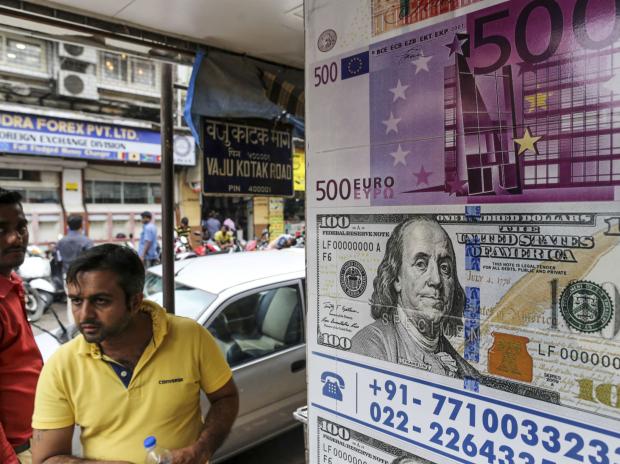
Dollar's near-term outlook bright, but to fade in a year: Reuters poll

 A majority of analysts in Reuters polls, however, were split on the duration of the greenback's bullish trend and forecast its allure to fade in a year.


By Rahul Karunakar

BENGALURU (Reuters) - Near-term bets in favor of the dollar should be increased, a majority of analysts in Reuters polls said, who however were split on the duration of the greenback's bullish trend and forecast its allure to fade in a year.

Tracking the Federal Reserve's surprisingly hawkish outlook at the June meeting, the dollar ended its two-month losing streak and gained about 3% against a basket of currencies last month, marking its best monthly performance in 4-1/2 years.

What has also supported the dollar and other safe-haven assets - including Treasuries and the yen - is the spread of the highly contagious Delta variant of COVID-19, which is threatening the global reopening.

Still, the June 28-July 1 poll of over 70 foreign exchange analysts showed the U.S. currency would broadly weaken against most major currencies in 12-months' time, a view held for well over a year.

But in response to an additional question, about 75% of analysts, or 38 of 51, suggested long dollar bets and short other major currencies or emerging market ones in the next three months as a positioning strategy.

"We are in a dollar positive regime for the next few months, which will generate some dollar strength in the near term. But over a longer time horizon, we expect the dollar to remain in a fairly broad-based range," said David Adams, head of G10 FX strategy North America at Morgan Stanley.

Digital payment transactions recover in June as Covid-19 lockdowns ease

 In March, UPI had recorded a fresh high of 2.73 billion transactions amounting to Rs 5.04 trillion.


Unified Payments Interface (UPI), the flagship payments platform of the National Payments Corporation of India (NPCI), touched a record high both in terms of volume and value of transactions in June after a slump in April and May.

The platform recorded 2.8 billion transactions worth Rs 5.47 trillion in June, up 10.6 per cent in volume terms and 11.56 per cent in value terms over May. This is in sync with the opening up of the economy as Covid cases gradually came down from their peak in mid-May and lockdowns were eased in various places. The transaction volumes had dipped in April and May due to the second wave of the pandemic. In May, UPI processed 2.53 billion transactions, down 4.16 per cent and 7.32 per cent from April and March, respectively. In value terms, UPI saw transactions worth Rs 4.9 trillion, down 0.66 per cent and 3 per cent from April and March, respectively.

In March, UPI had recorded a fresh high of 2.73 billion transactions amounting to Rs 5.04 trillion. But, since then, both volume and value of transactions dipped because of the rising Covid infections.

Immediate Payment Service (IMPS), on the other hand, saw an 8.55 per cent rise in the volume of transactions in June over May to 303.76 million amounting to Rs 2.84 trillion. It had recorded a 13.34 per cent drop in transactions in May (over April) as the volume of transactions had fallen to 279.8 million.

Chris Wood launches India-dedicated equity portfolio with 16 stocks

 The portfolio includes marquee stocks such as ICICI Bank, HDFC, Bajaj Finance, and Reliance Industries


After hiking stake earlier this year to Indian equities to 14 percentage points (ppt) in his Asia ex-Japan long-only portfolio, Christopher Wood, global head of equity strategy at Jefferies has launched India long-only equity portfolio with 16 stocks, which include marquee stocks such as ICICI Bank, HDFC, Bajaj Finance, Reliance Industries (RIL), ONGC, Maruti Suzuki India, Tata Steel, and Jubilant FoodWorks.

India always had a significant representation in GREED & fear’s long-only Asia ex-Japan portfolio, launched nearly 19 years ago at the end of the third quarter of 2002 (Q3-2002). The move comes despite the Indian equities nearing all-time high levels and rich valuations.

“This is certainly not a perfect time to start an Indian portfolio since the Sensex is near an all-time high though, for that matter, so are many other stock markets. Still GREED & fear remains convinced that India is at the start of a new housing cycle after a seven-year downturn, after the mother of all consolidations in the developer industry, which is why there will be a 17 per cent weight in the property sector,” Wood wrote in his weekly note to investors, GREED & fear.

This portfolio, Wood said, will be domestic demand focused, though it will have a decent energy weighting to hedge, in part at least, the obvious risk of a higher oil price on Indian financials and other interest rate-sensitive sectors.