Wednesday, May 5, 2021

India's stock market shockingly resilient amid Covid-19 devastation

 Fear of the virus is pervasive. Even the rich and the powerful are finding it hard to arrange a hospital bed or track down an oxygen cylinder


Why isn’t India’s stock market falling more?

The question is a fair one, considering the risky asset class in a country struggling with its most horrific calamity since its violent partition and independence nearly 75 years ago. New daily Covid-19 infections have remained above 300,000 for two weeks now, the worst caseload the world has seen. The death rate is 3,700-plus — probably much higher if you discount the underreported official statistics.

Fear of the virus is pervasive. Even the rich and the powerful are finding it hard to arrange a hospital bed or track down an oxygen cylinder.

But in all this, the benchmark Nifty 50 Index is down ever so slightly, clocking a less than 5% decline since mid-February.

At 32 times earnings, almost double the valuations in China, the Indian market is super-expensive. The logic for those prices runs like this: Unlike last year, there’s no national lockdown. And there may not be one if the peak of the surge is just a week or two away, as some epidemiological models indicate.

Besides, investors know from the first wave in 2020 that firms will protect earnings by idling operations and firing workers if required. Those who keep their jobs may cut back on discretionary spending. Their excess savings will gravitate to stocks even as pain accumulates in smaller firms that don’t trade on public markets.

Another reason for optimism is the expected response of authorities. That’s based, once again, on last year’s experience. If more infectious variants of the disease make a national lockdown inevitable, the finance ministry and the central bank might come together to offer moratoriums, state-guaranteed loans and other liquidity-enhancing measures to make up for disappearing cash flows. Sure enough, the Reserve Bank of India Wednesday announced repayment relief, as well as 500 billion rupees ($6.8 billion) in three-year funding at its policy rate of 4% for banks to extend to vaccine makers, hospitals and oxygen suppliers.

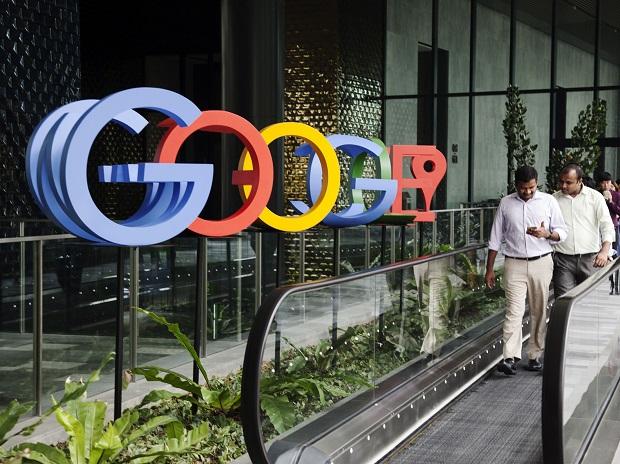
Covid-19: Google says 20% of workers will be remote, many more hybrid

 Google says it expects about 20% of ifs workforce to still work remotely after its offices reopen this fall, while some 60% will work a hybrid schedule


Google says it expects about 20% of ifs workforce to still work remotely after its offices reopen this fall, while some 60% will work a hybrid schedule that includes about three days in the office and two days wherever they work best.

The remaining 20% can change their location to a different Google office.

The policy announced Wednesday relaxes the company's stricter earlier stance.

The future of work is flexibility, CEO Sundar Pichai wrote in an email to employees that was also posted on Google's website.

The changes above are a starting point to help us do our very best work and have fun doing it.

Most of Google's 135,000 employees can continue to work from home through September of this year.

For up to 20 days per year, Google employees will also be able to work from any location other than their main office. That's up from a previous allotment of 10 days.

The company based in Mountain View, California, will also continue offering extra reset days off to help cope with the pandemic.

Google was among the first major technology companies last year to tell its employees to work from home at the onset of the pandemic. Other tech giants, such as Facebook and Twitter, have announced that people can work from home permanently after the pandemic if their jobs allow for it.

China halting flights to India could hurt pharma supplies, say companies

 China supplies 60% to 70% of the raw materials used by India's drugmakers, according to an expert.


Drugmakers in India are warning that a halt on some cargo flights from China could imperil an important link in the global pharmaceutical supply chain.

The U.S. relies heavily on India to stock its medicine cabinets, and any slowdown in output could leave pharmacies short of drugs used regularly by millions of Americans.

On April 26, China’s state-run Sichuan Airlines suspended cargo flights to India for 15 days amid an alarming second Covid-19 outbreak there. China supplies 60% to 70% of the raw materials used by India’s drugmakers, as well as ingredients for finished medicines sent to markets worldwide, according to Mahesh Doshi, national president for the Indian Drug Manufacturers’ Association.

If the flights remain on hold, the drug industry fears “cascading effects on its entire supply chain,” Doshi wrote in an April 29 letter to India’s external affairs minister. That could lead to domestic shortages of essential medicines and have a severe impact on exports, she said.

Sichuan Airlines didn’t respond to a request for comment made outside of normal business hours during a holiday in China.

Drugmakers are normally secretive about where medicines are produced. However, the U.S. Pharmacopeia, which helps the industry maintain quality controls, has started a project to pinpoint as much manufacturing as possible. Its Medicine Supply Map has identified where 77% of finished generic drugs are made, said spokeswoman Anne Bell.

There are 62 generic drugs that are produced only in India, Bell said, including several antibacterial treatments and antivirals. India also is home to 31% of active ingredient manufacturing facilities named in applications approved by the U.S., according to the U.S. Food and Drug Administration.

Book excerpt: The untold story of how Jeff Bezos beat the tabloids

 When a gossip paper went after the Amazon CEO, he retaliated with the brutal, brilliant efficiency he used to build his business empire. An excerpt from the new book Amazon Unbound by Brad Stone


“Raise your hand if you think you’ve had a harder week than I’ve had.”

It was February 14, 2019, in the early afternoon, and for perhaps the first time in the 25-year history of Amazon.com Inc, Jeff Bezos was prepared to explain himself to his employees.

Bezos was a master compartmentalizer; his ability to keep the intricate threads of his personal and professional lives separate was unrivaled. This talent had allowed him to build Amazon while also running a space company, Blue Origin LLC, and reviving the Washington Post — all while keeping his family life private. But those threads had gotten tangled. Bezos, a father of four, was the subject of tabloid stories in the National Enquirer about his relationship with a married former television host.

Rather than doing what most billionaires do under such scrutiny — keep quiet and wait for the storm to pass — Bezos had gone public. He’d written a salacious blog post that included descriptions of photos the Enquirer claimed it had acquired — among them: a “below the belt selfie.” He’d suggested that the paper was doing this as political retribution for the Post’s reporting on the Enquirer’s connections to the Trump administration.

Now, facing Amazon’s leadership group, the S-team, Bezos addressed the elephant in the room. “The story is completely wrong and out of order,” he said. “MacKenzie and I have had good, healthy, adult conversations about it. She is fine. The kids are fine. The media is having a field day.” Then he tried to refocus the conversation on the matter at hand: personnel projections for the current year. “All of this is very distracting, so thank you for being focused on the business,” he said.

Bill and Melinda Gates divorce: How $145 bn can be split between couple

 The couple are also among the lar­gest landowners in the US and have homes inc­luding their 66,000-sqft mansion in Medina, Washin­gton


As a married couple, Bill and Melinda Gates spent decades amassing one of history’s largest fortunes. Now that they’re divorcing, they have to untangle that $145 billion.

Details of the split have already started to emerge.

Cascade Investment, a holding company Bill created with his Microsoft winnings, transferred securities worth more than $1.8 billion to Melinda French Gates, according to US regulatory filings dated May 3. The shift comprised about $1.5 billion of Canadian National Railway Co. shares and more than $300 million of AutoNation stock. Cascade holds securities valued at more than $50 billion, including stakes in Republic Services, Deere & Co. and Ecolab.

How their wealth is ultimately divvied up is set to shake up the uppermost ranks of the world’s richest people and could have billion-dollar implications on what philanthropic causes get attention.

The biggest asset is Cascade Investment, run by money manager Michael Larson. Through Cascade, Gates has interests in real estate, energy and hospitality as well as public companies. Canadian National is the third-biggest public equity holding. Cascade tra­nsferred 14.1 million shares to Melinda, and has 87.3 million shares, which are ow­ned by Bill, the regulatory filing shows.

Tuesday, May 4, 2021

Working from home 'doesn't work for those who want to hustle': JPMorgan CEO

 The largest American bank recently told it, workers, that it expects all U.S.-based employees back in offices on a rotational basis by early July, subject to current public health rules


By Elizabeth Dilts Marshall

NEW YORK (Reuters) - Working from home does not work for everyone, especially those who want "to hustle," JPMorgan Chase & Co's chief executive said on Tuesday at a conference in New York.

The largest American bank recently told it, workers, that it expects all U.S.-based employees back in offices on a rotational basis by early July, subject to current public health rules limiting office capacity to 50%.

Bank CEO Jamie Dimon said he wants people back at work because exclusively working from home "doesn't work for young people."

"It doesn't work for those who want to hustle. It doesn't work for spontaneous idea generation. It doesn't work for culture," Dimon said at a conference hosted by the Wall Street Journal.

Dimon said he is open to some employees working from home a few days a week, a policy other banks like Deutsche Bank, HSBC, and UBS are reportedly exploring.

But starting on May 17, Dimon said he wants employees to bank in the office a few days a week to reacclimate themselves to the workplace after working from home for over a year during the COVID-19 pandemic.

Dimon's "get used to it" approach, which could include requiring employees to get vaccinated, has faced a backlash. Dimon said he received a "nasty email" from an employee's wife who disagreed with the push to return to work.

RBI governor to make unscheduled speech at 10am as Covid devastates India

 The central bank had last year announced a series of measures to support the economy suffering the impact of a nationwide lockdown


Reserve Bank of India Governor Shaktikanta Das will make an unscheduled speech at 10 am today, Wednesday, as a new coronavirus wave threatens a nascent economic recovery.

The address will be broadcast at 10 am local time, the RBI said on Twitter. It didn’t elaborate.

A team at the Indian Institute of Science in Bangalore used a mathematical model to predict about 404,000 deaths will occur by June 11 if current trends continue.

A model from the Institute for Health Metrics and Evaluation at the University of Washington forecast 1,018,879 deaths by the end of July, Bloomberg reported.
India on Tuesday recorded 33,491 new coronavirus cases to take its count to 3,447,133. With 3,449 new fatalities, its Covid-19 death toll reached 222,408.

Congress leader Rahul Gandhi has said the central government should impose a "full lockdown" to slow down the coronavirus wave but protect the poor with a guaranteed minimum income scheme.