Monday, April 19, 2021

Texas police to seek Tesla vehicle crash data as Musk denies autopilot use

 Police say evidence suggests there was nobody in the driver's seat of the Model S when it crashed and killed 2 persons.


Texas police will serve search warrants on Tesla Inc on Tuesday to secure data from a vehicle that crashed on the weekend, killing two people, a senior officer told Reuters on Monday.

Mark Herman, Harris County Constable Precinct 4, said evidence including witness statements clearly suggested there was nobody in the driver's seat of the Model S when it crashed into a tree on Saturday night.

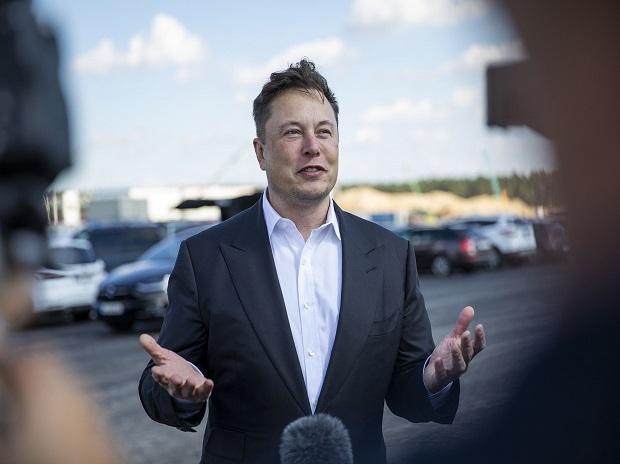
Herman said a tweet by Tesla chief Elon Musk on Monday afternoon saying that data logs retrieved so far indicated the car's autopilot was not engaged was the first officials had heard from the company.

"If he is tweeting that out, if he has already pulled the data, he hasn't told us that," Herman told Reuters. "We will eagerly wait for that data."

"We have witness statements from people that said they left to test drive the vehicle without a driver and to show the friend how it can drive itself," Herman added.

The crash is being investigated by the National Highway Traffic Safety Administration (NHTSA), which regulates vehicle safety, and the National Transportation Safety Board (NTSB).

In his tweet, Musk rejected the idea vehicle's driving software was to blame: "Data logs recovered so far show Autopilot was not enabled & this car did not purchase FSD", in a reference to Full Self-Driving, Tesla's semi-automated driver assistance system that requires driver supervision.

Musk added that "standard Autopilot would require lane lines to turn on, which this street did not have."

The 2019 Tesla Model S was traveling at high speed near Houston when it failed to negotiate a curve and went off the road, crashing into a tree and bursting into flames, Herman said.

Monday blues: Second Covid-19 wave stings indices as markets drop 1.8%

 Benchmark indices drop 3% before settling 1.8% lower, amid Covid-19 surge, new restrictions


The worsening coronavirus crisis triggered yet another sell-off in the domestic stock market on Monday, with the benchmark indices dropping more than 3 percent before recouping some of the losses.

A sharp jump in Covid-19 cases and fresh curbs to contain the spread of the virus has stoked concerns about the revival of the economy and corporate earnings, prompting some investors to pull back.

After dropping as much as 1,469 points, or 3 percent, the Sensex settled 883 points, or 1.8 percent, lower at 47,949, while the Nifty 50 index fell 258 points, or 1.8 percent, to finish at 14,359. Both the indices had dropped more than 3 percent on the previous Monday.

Investor wealth on Monday tumbled over Rs 3.53 trillion, and the market capitalization of all BSE-listed companies stood at Rs 201 trillion at the close of trade.

The latest sell-off came as the daily Covid-19 tally in the country crossed a record 273,810. The spike in new cases was accompanied by a severe shortage of medicines and other essentials, putting a spotlight on the country’s weak healthcare infrastructure. Health experts have raised concerns that a possible new variant could spread more rapidly.

The rise in Covid-19 cases has forced many states to impose lockdowns of varying intensity. Delhi on Monday announced a week-long curfew.

Last week, Maharashtra, one of the biggest contributors to the country's gross domestic product (GDP), imposed strict curbs on movement.

Medical oxygen requirement increased 7 times; met 60% demand: Inox Air

 According to industry figures, the pre-Covid demand for liquid medical oxygen before the pandemic was 700 tonne per day across the country


The demand for medical oxygen has jumped manifold amid the second wave of Covid, according to industry players who said it much sought-after since the start of the pandemic last year.

According to industry figures, the pre-Covid demand for liquid medical oxygen (LMO) before the pandemic was 700 tonne per day (TPD) across the country. During the first wave of Covid-19 last year, the demand for LMO increased four times to 2,800 TPD. Further, with the second wave, the demand has gone up more than seven times the pre-Covid levels -- 5,000 TPD.

“While we hope that the spike in cases is arrested, the success of oxygen therapy in Covid treatment means that there will be sustained demand for liquid medical oxygen in the months to come,” said Siddharth Jain, director, INOX Air Products. His company is meeting more than 60 percent of the total medical oxygen demand in the country.

The supply of medical oxygen is currently being allocated centrally and monitored by the empowered group, EG II, headed by the secretary in the department for the promotion of industry and internal trade, mandated by the Union government. This explains the pressure from states on the Union government since quotas are allotted by the central committee. The Delhi government had on Sunday alleged the Centre was diverting from its quota to other states.

The EG II has members nominated from all the states, along with all major oxygen manufactures, All India Industrial Gases Manufacturers’ Association (AIIGMA), Petroleum and Explosives Safety Organisation (PESO), the Ministry of Road Transport, and the Indian Railways. While medical oxygen is not a controlled commodity, the prices are controlled by the National Pharma Pricing Authority. “In normal times, India had an excess supply of medical oxygen, so there was no restriction on interstate movement earlier. We believe that once the pandemic subsides, there will be no restriction on the movement of LMO,” said Jain.

Facebook unveils upcoming audio products to take on Clubhouse: Details here

 Zuckerberg said the world's largest social media network planned in the coming months to launch features including short-form audio clips called Soundbites


By Elizabeth Culliford, Sheila Dang, and Munsif Vengattil

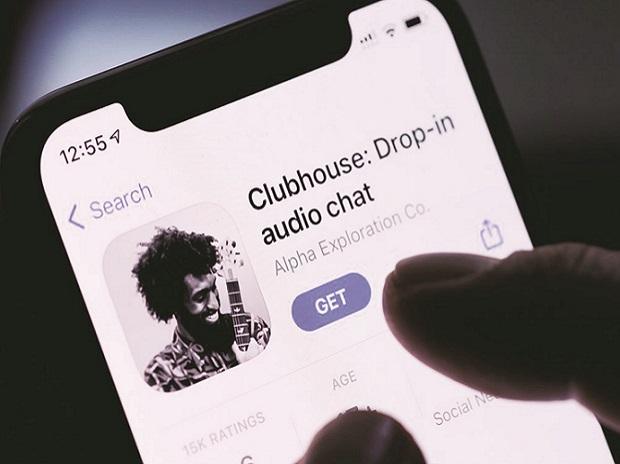
(Reuters) - Facebook Inc CEO Mark Zuckerberg said on Monday the company planned to launch several audio products, including Clubhouse-style live audio rooms and a way for users to find and play podcasts.

Facebook's incursion into the audio market comes as the sudden explosion of interest in Clubhouse, an audio app where billionaires and celebrities including Tesla CEO Elon Musk have popped in to chat, could be waning. Downloads of the Clubhouse app, which is only available on Apple's iOS devices, suffered an estimated 70% decline in downloads in March from February when it hit a high.

Zuckerberg said the world's largest social media network planned in the coming months to launch features including short-form audio clips called "Soundbites" and ways to create sound effects or improve audio quality. Facebook said in a blog post-https://bit.ly/3e8FGsc it would begin to test live audio rooms, which would launch by the summer.

Zuckerberg said Facebook was looking to "treat audio as a first-class medium in the way that we would photos or video" in an interview on Discord with Casey Newton, editor of newsletter Platformer.

The rapid growth of the year-old app Clubhouse has demonstrated the potential of audio chat services.

A brief look at REPCO, the latest universal bank licence candidate

 Repco Bank would approach the private sector for investments. However, it is yet to start such an exercise.


REPCO Bank, which recently applied for a license to start a universal bank in the country, expects to post a net profit of up to Rs 60 crore in FY21. A multi-state cooperative society, it is currently under the administrative control of the Union Home ministry.

The Government of India — along with the governments of Tamil Nadu, Kerala, Karnataka, and Andhra Pradesh — is the promoter. They together hold a 55.3 percent stake in the lender and the remaining 44.7 percent is with individuals.

With 1.2 million customers, the lender applied for a universal banking license to broad base its operations, services and come under the regulatory purview of the Reserve Bank of India.

Repco Bank would approach the private sector for investments. However, it is yet to start such an exercise.

It expects a 10 percent rise in business in 2021-22, especially by growing its gold loan portfolio.

Sunday, April 18, 2021

Why use muscle? Let a bot be the debt collector and never lose a customer

 Like in most emerging markets, these last-mile hurdles pose a frustratingly complex challenge to India's creditors. They also increase the overall risk premium for rural advances


A 2021 remake of getting Shorty might not have much use for John Travolta’s Miami mobster character. The debt collector role could go to a bot.

You can test this hypothesis in a most unlikely place to roll out a new technology: the Indian countryside. The setting is perhaps not as odd as it seems, with about 5% to 10% of the country’s farmers not repaying their tractor loans on time. The explanations for tardiness range from failed crops to medical emergencies and strategic defaults in anticipation of state-mandated debt waivers, a regular feature of the political economy. But delinquency often stems from more mundane reasons: Borrowers forget their due dates or fail to withdraw cash to pay the nonbank financiers who provide the bulk of loans for farm equipment purchases.

Like in most emerging markets, these last-mile hurdles pose a frustratingly complex challenge to India’s creditors. They also increase the overall risk premium for rural advances.

Of late, three things have changed. First, the world’s cheapest data prices have made smartphones ubiquitous. Second, a strong push for financial inclusion has seen more than 400 million no-frills savings accounts opened in the last seven years. Finally, banks are now on a nationwide mobile payment network that is fast, convenient, and supports apps like Google Pay and Walmart Inc.’s PhonePe. Google has even recommended the architecture to the U. S. Federal Reserve.

Yet for all the help from technology, collections are still hard in villages due to barriers of language, education, and entrenched cash use. Farmers simply don’t know how to use the new digital tools. Or they may miss a deadline because of a temporary cash-flow mismatch. When creditors respond by handing over borrowers to third-party recovery agents, scandals emerge. It’s a universal problem. In Indonesia, the 2011 death of a cash-strapped small businessman in Jakarta after alleged harassment by collectors led to a two-year ban on Citigroup Inc. from acquiring new credit card customers in the country. Even when things don’t go to such extremes, unpleasantness and soured relationships usually follow.

Two passengers killed as Tesla car with 'no one' driving crashes in Texas

 One victim was found in the front passenger seat of a 2019 Model S and the other was in the rear.


A Tesla Inc. electric car that “no one” appeared to be driving crashed late Saturday in Texas, erupting into flames and killing the two passengers, according to local authorities.

One victim was found in the front passenger seat of a 2019 Model S and the other was in the rear, Harris County Precinct 4 Constable Mark Herman said in a telephone interview. The car ran into a tree in the Carlton Woods subdivision near The Woodlands after traveling at high speed and failing to navigate a turn.

The position of the victims, statements and other physical evidence suggests that “no one was driving the vehicle at the time of impact,” Herman said. “It’s still under investigation.”

Herman said his office is coordinating with federal authorities, without specifying which ones, and didn’t know whether the Autopilot feature was engaged. It took more than 30,000 gallons of water to extinguish the fire, which burned for four hours, he added.

Tesla didn’t immediately respond to a request for comment Sunday.

Federal officials have criticized Tesla for fire risks related to the battery packs in its cars and for not doing enough to keep drivers from using its driver-assist function inappropriately. In a hearing last year, the National Transportation Safety Board’s chairman said that “it’s time to stop enabling drivers in any partially automated vehicle to pretend that they have driverless cars.”

Tesla Chief Executive Officer Elon Musk has defended the safety record of his company’s vehicles. This week, he shared a report on Twitter, saying that a Tesla with Autopilot engaged is now approaching a “10 times lower” chance of an accident than an average vehicle.