Thursday, May 3, 2018

IPL 2018: Shubman, Karthik power KKR to 6-wicket victory against CSK

In the 33rd match of Vivo Indian Premier League (IPL 2018), Kolkata Knight Riders beat Chennai Supers Kings by 6 wickets, thanks to Shubman Gill's half-century.


In the 33rd match of the VIVO Indian Premier League (IPL) 2018, Kolkata tasted victory at home as youngster Shubhman Gill shined with the bat and scored his maiden half century. With the win, KKR move to third position in the VIVO IPL points table. Gill contributed with a significant knock that sealed the victory for the host side. The bowlers did not get much help from the pitch but still, wickets fell at regular intervals for both sides. Kolkata Knight Riders (KKR) won the toss and asked Chennai Super Kings (CSK) to bat first at the Eden Gardens.
Shane Watson and Faf Du Plessis opened for CSK and the batsmen did not face much resistance from the bowlers. Soon, there came a turn as Faf Du Plessis was trapped under experienced leg-spinner Piyush Chawla's googly. It was a smooth sailing for Chennai during the major portion of their batting. Chennai crossed the 100-run mark in the 12th over and Kuldeep yadav got the better of Raina in the same over. Sunil Narine struck a blow to Chennai by removing in-form Ambati Rayudu at a cheaper score this time. Dhoni swung into action and kept sending the ball into the crowd, during the process he got a lifeline too as he was dropped in the 18th over. Chennai put up a target of 178 runs.

Chasing a target of 178 runs, Kolkata Knight Riders openers Sunil Narine and Chris Lynn came to bat and Lungi Ngidi got an early breakthrough as Lynn walked back towards pavilion in the first over. Robin Uthappa replaced Lynn, Narine got two consecutive lifelines, courtesy below-par efforts from Ravindra Jadeja who dropped him twice in the second over. After Narine, Shubhman Gill and Rinku Singh kept the fight alive for a brief. Gill continued scoring runs for the team and made his fifty, Karthik gave him company and contributed 45 runs.

National Film Awards 2018: Prez to honour only 11, winners to skip function 

Artistes said they were disheartened and 'felt dejected rather than honoured'.


Out of the feeling of dejection, more than 60 winners of the National Film Awards on Thursday in an open letter said they will skip the award function at Vigyan Bhawan as President Ram Nath Kovind will present only 11 awards.
Rashtrapati Bhawan in a statement expressed "surprise" at the "11th hour questions" and said the president attends every award ceremony for a maximum of one hour, which has been a protocol since he took office, adding this was conveyed to the Information and Broadcasting Ministry weeks ago.
"President attends all award functions and convocations for a maximum of one hour. This has been the protocol since he took office. It was conveyed to Information and Broadcasting Ministry several weeks ago and the ministry knew this all along. Rashtrapati Bhavan is surprised by the 11th hour questions that have been raised," said Ashok Malik, press secretary to the president.
The award ceremony is organised in two phases this year, the Press Information Bureau said. The first set of awards The first set of awards will be conferred by Union Information and Broadcasting Minister Smriti Irani and the Minister of State Rajyavardhan Singh Rathore from 4 pm. The second set will be presented by the president from 5.30 pm.
In an open letter marked to the Office of the President and Ministry of Information and Broadcasting, the artistes said they were informed about the change in the schedule on Wednesday by Chaitanya Prasad, additional director general of the Directorate of Film Festivals.
He told them that "a large segment of the Awards will not be presented" by the president whereas the invite given to them states that they will receive the award from the president.
They said they were disheartened and "felt dejected rather than honoured" on being informed at the last minute that the president will present only 11 awards.
"It feels like a breach of trust when an institution/ceremony that abides by extreme protocol fails to inform us of such a vital aspect of the ceremony with a prior notice. It seems unfortunate that 65 years of tradition are being overturned in a jiffy," read the letter, signed by more than 60 filmmakers and artistes from across the country.
The signatories include noted singer K J Yesudas, named this year's best playback singer, Bengali filmmaker Kaushik Ganguly, whose film "Nagarkirtan" has been named the best Bengali film and best supporting actor winner Fahadh Faasil.
"We request that the dignity and eminence of this award is maintained and that there is no display of hierarchy at the event. We are disappointed to know that the Hon'ble President will be presenting the Award to just 11 Awardees and not the remaining of about 120 of us."
The artistes said they had discussed the matter with Irani last evening and were promised a reply.
"We would like to bring to your notice that we discussed this matter with the Hon'ble I&B Minister last evening and were promised a reply but haven't heard back from anybody...
"In the circumstances of not receiving a response to our grievance we are left with no option but to be absent for the ceremony. We do not intend to boycott the award but are not attending the ceremony to convey our discontent and are awaiting a more just solution," they said in the letter.
Giving an account of what happened, a filmmaker said on condition of anonymity that they were informed about the change during the rehearsal on Wednesday.
"At the rehearsal yesterday, we were told that the President will give only 11 of the awards as he has only one hour to spare for the ceremony. It is a clear departure from the tradition," a National Award winner told PTI.

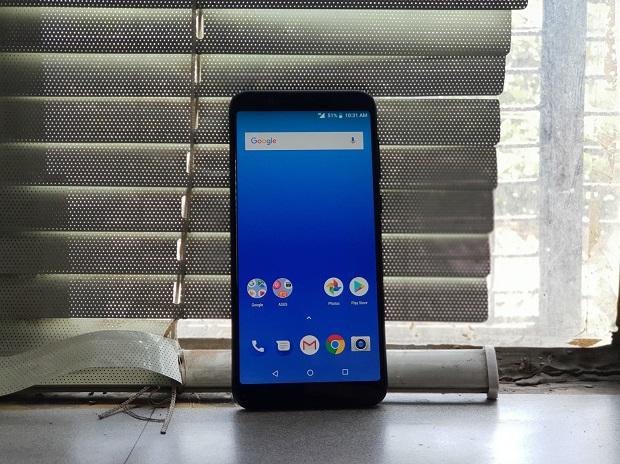
Asus Zenfone Max Pro M1 goes on sale today: Better than Redmi Note 5 Pro? 

An efficient operating system, coupled with a mammoth battery and top-notch performance makes yej Asus Zenfone Max Pro M1 a challenger to the Xiaomi Redmi Note 5 Pro in the budget smartphone segment.


Taiwanese computer peripheral manufacturer Asus, known for its wide portfolio of smartphone across price bands, is eyeing a larger share of the budget segment in India’s price-conscious smartphone market with its latest offering, the Asus Zenfone Max Pro M1.
Aiming to end Chinese smartphone maker Xiaomi’s monopoly in the budget segment, the Asus Zenfone Max Pro M1 made its global debut on April 23. This budget smartphone comes in two variants – 3 GB of RAM and 32GB storage, and 4GB of RAM and 64GB storage – and the company has also confirmed that a premium 6 GB RAM variant would be added to the portfolio later. The 3GB/32GB and 4GB/64GB variants would go on sale exclusively on Flipkart, starting May 3.Touted as a smartphone designed for Indian consumers, the Zenfone Max Pro M1 has stock Android Oreo operating system, a modern 18:9 aspect ratio screen, dual rear cameras, and a mammoth 5,000 mAh battery.


The smartphone offers a competitive propositions in budget segment, but can it compete with the Redmi Note 5 Pro? Business Standard reviewed the Zenfone Max Pro M1 to test its overall performance, and here are the observations:

Design

The Zenfone Max Pro M1 looks similar to other modern budget smartphones like the Redmi Note 5 and Note 5 Pro and sports a tall stance due to its 18:9 aspect ratio screen. The front is covered with curved glass that blends seamlessly with the metallic chassis. The back, on the other hand, is made of metal with a patch of plastic work on top and bottom. The back has a fingerprint scanner on the upper middle-centre and a dual-camera set-up on the top-left corner. Interestingly, the phone’s rear camera unit does not bulge out, unlike the Redmi Note 5 Pro, and has a subtle protruding rim to protect the glass. That apart, the back looks bland and has little more to offer.
In terms of usability, the phone feels light and has good ergonomics, with a tall stance making it easy to hold and comfortable to carry in a pocket or pouch. However, because of its ultra-wide display, the phone is difficult to operate using one hand.

Display

The smartphone has a 6-inch 18:9 aspect ratio screen of fullHD+ (2160 x 1080) resolution. Though an IPS unit, the screen lacks vividness and has a reflexive nature hampering sunlight legibility. On the positive side, the rounded corners of the screen look better than pointed edges. There is no shift in colours when looked from angles and the slim side bezels leave enough space to hold the device without accidentally touching the screen area.

Camera

The Zenfone Max Pro M1 has a 13-megapixel primary lens paired with a 5MP wide-angle lens on the back and an 8MP shooter on the front. Both the front and back cameras are supported by soft LED flashes.
In terms of output, the rear camera unit manages to take satisfactory images in daylight conditions. However, the photos taken in low light look grainy with visible noise levels.
Unfortunately, there is no manual mode to tweak the settings and the built-in night mode requires steady hands to take good shots. The camera has portrait and beauty modes. The portrait mode, just like Redmi Note 5 Pro, manages to take photos with enhanced blur and no artificial artefacts or hallows around the object. The beauty mode is not as strict as found in Asus’s other budget devices. Speaking of video, the resolution maxes out at 720p only and the quality is sub-par.
The Zenfone Max Pro relies on the Snapdragon Camera app, which is not as polished as the camera app found in ZenUI, Asus’ proprietary customised theme based on Google Android. However, the app has been custom-tuned to make it easier to understand and use.

Performance and battery

The Zenfone Max Pro M1 is powered by Qualcomm Snapdragon 636 processor, which is an octa-core SoC built on a 14 nanometre (NM) process. The phone boots Android Oreo 8.1 operating system out of the box, with only a few Asus apps pre-installed.
The phone performs consistently with no signs of lags or stutter. The UI looks neat and the phone handles power-intensive apps without breaking sweat. The phone keeps the thermals in control as well while using power-intensive tasks for extended hours. It does get warm but not so much as to make phone unstable.
Importantly, the phone’s 5000mAh battery keep the show running for more than a day and a half. Even with exhaustive use, which involves online video streaming and continuous multiplayer online gaming, the phone manages to go for one full day before asking for charge.
The only downside is the battery charging time from zero to 100 per cent – that ranges between two-and-a-half to three hours.

Verdict

The Asus Zenfone Max Pro M1 is priced at Rs 10,999, Rs 12,999 and Rs 14,999 for 3GB/32GB, 4GB/64GB and 6GB/64GB RAM and storage variants. At these price points, the phone offers a performance that is on a par with the Xiaomi Redmi Note 5 Pro.
The phone is meant for people who like vanilla Android experience more than theme-based UX. The phone’s efficient operating system, coupled with a mammoth battery and top-notch performance, makes it a strong option in the budget smartphone segment. However, the phone’s camera is a downside putting it behind the Redmi Note 5 Pro, which has better photography and videography capabilities.


Wednesday, May 2, 2018

IPL 2018: Delhi Daredevils beat Rajasthan Royals by 4 runs (D/L method)

In 32nd match of Vivo Indian Premier League (IPL 2018), Delhi Daredevils (DD) beat Rajasthan Royals (RR) by 4 runs via D/L method in rain-curtailed match. DD move to 6th position on IPL points table.


In the 32nd match of the VIVO Indian Premier League (IPL) 2018 ,Delhi Daredevils defeated Rajasthan Royal by 4 runs in the match filled with suspense. Delhi's unpredictable played a spoilsport as rain delayed the match. Earlier,Prithvi Shawgave a great start to Delhi and Shreyas Iyer soon joined him in the attack. Rajasthan's nightmare ended as Shaw was dismissed just before his fifty. After that,Shreyas Iyer and Rishabh Pant kept the scoreboard running. The duo made their fifties and departed soon after that. Rain intervened just as 5 balls were remaining in Delhi's innings and the umpires called for covers. Delhi put up a massive total of 197 runs in 18 overs. The score was revised after the rain stopped and Mumbai had to chase 151 runs in 12 overs.
Rajasthan Royals had a herculean task and opener Jos Butler was on a rampage as he brought up his fifty in just 18 balls. The pressure was back on Delhi. Amit Mishra got the better of him and gave Delhi the much-needed breakthrough. D Arcy Short hit three consecutive sixes but soon perished. Rajasthan managed a good chase and needed 15 runs in the last over. The result was undecided till last over but Delhi managed to steal a great victory in the end. Delhi Daredevils move to 6th position in Vivo IPL points table. RR are now in 7th position.
Rajasthan Royals innings update: Over by overRajasthan Royals playing XI for today's match:Ajinkya Rahane(c), D Arcy Short, Sanju Samson, Rahul Tripathi, Ben Stokes, Jos Buttler(w), Krishnappa Gowtham, Jofra Archer, Shreyas Gopal, Jaydev Unadkat, Dhawal Kulkarni. Change: D'Arcy Short comes in for Ish Sodhi. Shreyas Gopal comes in as well.
Over 1:Jos Butler to open with DÁrcy Shorts for RR. Shahbaz Nadeem to start off for DD. One run straight away. Another Single. Butler hits over Nadeem's head for four. Swept for six. Single to end the over. RR: 14-0
Over 2:Trent Boult is in the attack, One run. Four to Shorts though covers. Single taken. Bouncer, well left. WIDE bouncer. Cut for one. Decent line. Edge and gone, Shorts reviews. It is the shirt, decision overturned. NOT OUT. RR: 22-0
Over 3:Avesh Khan is into the attack and Jos Butler greets him with a SIX. Another six. Swing and a miss. SIX more, Butler is on fire. Through the gap for four. Single to end. RR: 45-3
Over 4:Liam Plunkett is the new bowler, Butler hits it for a six. One run. Slow bouncer, one run to Shorts. Butler on strike. Gone for four behind the wicket. Single. Dot. RR: 58-0
Over 6:Avesh Khan is back, Yorker, one run. Full toss to Butler, put away for four. Inside edge, just one. Shorts takes one. Short ball to Butler again, gone for six. Swing and a miss. RR: 79-0
Over 7:Mishra is back, one run to Shorts. Single to Butler. Single to Shorts. Butler steps out, stumped. Butler gone for 67.Sanju Samson is the new man in. Drivers for one. Dot. RR: 83-1
Over 8: Plunkett is back, just one. Single to Shorts. Swing and a miss. Just one. Swing and a miss. SIX. RR: 92-1
Over 9: Trent Boult is back, Sanju Samson hits high in the air and out. Stoke is the new man in, single to him. WIDE. Inside edge, lucky for Shorts. Single taken. Full toss, caught, he is out. Stokes is gone. RR: 100-3.
Over 10:Maxwell is the new bowler. Rahul Tripathi is the new man in. Wacked for a six. And here is another one. Three in three. Mis-hit, Darcy is caught at third man who was inside the circle. Darcy goes for 44. Krishnappa Gowtham is the new man in. Two runs. Single to Gowtham. RR: 121-4
Over 11:Plunkett continues, Swing and a miss. Leg side smashed for four. Run out missed, going for review, No inside edge, also missing leg stump. Not out. Down the ground, just one. Over the top of keeper's head, four runs. Gowtham hits it for a six. RR: 136-4. Need 15 from 6.
Over 12:Boult is the bowler, starts off with a wide. Just a single. Lofted in the air, two runs. Brilliant low yorker, just one. Swing and a miss, they still run and Tripathi is gone. very very very high in the air, Gowtham gets a four, Skipper Iyer dropped it. Last ball, six needed. Gowtham fails to get it over the rope.Delhi Daredevils win by 4 runs.

Amazon makes formal bid to buy 60% stake in Flipkart: Reports

US online retail giant Amazon has made a formal offer to buy a 60 per cent stake in India's leading e-commerce marketplace Flipkart, according to a report by CNBC TV18 which cited sources.


Amazon's offer to acquire a majority stake in Flipkart comes at a time when rival Walmart is close to completing a $12 billion deal to pick up an equivalent amount of stake in the Indian firm. Talks between Walmart and Flipkart have been on for months now and the deal was expected to close soon.
Talks of Amazon making a counterbid to pick up stake in Flipkart have been doing the rounds for a while now, but insiders had said that the US giant had not come to the table yet and talks between Walmart were progressing positively.Softbank was said to be the only investor in Flipkart which had some amount of apprehension with the deal.
Tiger Global which controls around 20 per cent of Flipkart, Naspers which controls around 14 per cent and other smaller investors are all expected to gain full exits from the company post the deal. Softbank, the largest investor in the Indian company with around 25 per cent stake is expected to sell a big portion of its holding in the deal.
Walmart has agreed to invest around $12 billion to pick up around 60 per cent stake in Flipkart, in a mix of primary and secondary deals. While the valuation of the primary component can be as high as $20 billion, the second component will be at a much lower valuation.

Previous reports have stated that Flipkart's founders and investors have been uncomfortable with selling their stake to Amazon given that the deal could face regulatory hurdles. Flipkart and Amazon combined would control a little over 80 per cent of India’s overall e-commerce market, which could raise red flags for the anti-competition regulators of the country.

Facebook to introduce Clear History privacy tool in coming months

Facebook is developing the feature in response to an outcry about data collection and privacy on its sites.


Facebook Inc.is going to let users see which websites and apps send the social network data on their activity — and then give them the option to delete it, with a new “clear history” tool.
The Menlo Park, California-based company is developing the feature in response to an outcry about data collection and privacy on its sites, following revelations that an outside developer improperly handled personal information on tens of millions of users. The crisis has spawned questions from lawmakers and privacy advocates about who owns the data that users share on Facebook, and the company has taken other steps to address the concerns, including pausing some developer tools and auditing apps on its platform.
The past several weeks have made clear that people want more information about how Facebook works and the controls they have over their information," Chief Privacy Officer Erin Egan wrote in a blog post on Tuesday, just as the company kicked off its F8 annual developer conference. “If you clear your history or use the new setting, we’ll remove identifying information so a history of the websites and apps you’ve used won’t be associated with your account.”
It will take months to build the new Clear History feature, Egan wrote, adding that the company will work with privacy advocates, academics, policy makers and regulators for input on how to remove personal information.
Chief Executive Officer Mark Zuckerberg said he learned, while testifying in front of Congress last month, that he didn’t have clear enough answers to questions about data and Facebook should offer users this kind of option to control their information.
Zuckerberg risks a night at Big Ben

Facebook Inc.Chief Executive Officer Mark Zuckerberg has been asked again to appear before British lawmakers, or risk a formal summons. If he refuses that, Parliament could demand Zuckerberg spend the night in the clock tower.The penalties for holding Parliament in contempt vary. Technically — though very unlikely — the House of Commons could call Zuckerberg to appear before them and berate him for his behavior. Zuckerberg may be issued with a fine, although this penalty hasn’t been used since 1666. As a last resort, lawmakers could threaten to send him to the clock tower of the Palace of Westminster — more commonly known as Big Ben — a resort not used since 1880.

Tuesday, May 1, 2018

Out of 20 of the world's most polluted cities, 14 are in India: WHO

Since 2016, over 1,000 additional cities have been added to WHO's database.


Delhi and Varanasi are among the 14 Indian cities that figured in a list of 20 most polluted cities in the world in terms of PM2.5 levels in 2016, data released by the WHO showed on Wednesday.

The WHO data also said that nine out of 10 people in the world breathe air containing high levels of pollutants.
Other Indian cities that registered very high levels of PM2.5 pollutants were Kanpur, Faridabad, Gaya, Patna, Agra, Muzaffarpur, Srinagar, Gurgaon, Jaipur, Patiala and Jodhpur followed by Ali Subah Al-Salem in Kuwait and a few cities in China and Mongolia.
In terms of PM10 levels, 13 cities in India figured among the 20 most-polluted cities of the world in 2016.
The World Health Organisation has called upon member-countries in its Southeast Asia Region to aggressively address the double burden of household and ambient (outdoor) air pollution, saying the region, which comprises India, accounts for 34 pc or 2.4 million of the seven million premature deaths caused by household and ambient air pollution together globally every year.
Of the 3.8 million deaths caused by household air pollution globally, the region accounts for 1.5 million or 40 per cent deaths, and of the 4.2 million global deaths due to ambient air pollution, 1.3 million or 30 per cent are reported from the region, it said.
The PM2.5 includes pollutants like sulfate, nitrate and black carbon, which pose the greatest risk to human health.
WHO's global urban air pollution database measured the levels of fine particulate matter (PM10 and PM2.5) from more than 4,300 cities in 108 countries, according to which ambient air pollution alone caused some 4.2 million deaths in 2016, while household air pollution from cooking with polluting fuels and technologies caused an estimated 3.8 million deaths in the same period.
Since 2016, over 1,000 additional cities have been added to WHO's database, which shows more countries are measuring and taking action to reduce air pollution than ever before.
"WHO estimates that around 7 million people die every year from exposure to fine particles in polluted air that penetrate deep into the lungs and cardiovascular system, causing diseases including stroke, heart disease, lung cancer, chronic obstructive pulmonary diseases and respiratory infections, including pneumonia," the report said.
According to the report, more than 90 per cent of air pollution-related deaths occur in low- and middle-income countries (including India), mainly in Asia and Africa, followed by low- and middle-income countries of the Eastern Mediterranean region, Europe and the Americas.
"Around 3 billion people more than 40 per cent of the world's population still do not have access to clean cooking fuels and technologies in their homes, the main source of household air pollution," it said.
It said the WHO recognises air pollution is a critical risk factor for noncommunicable diseases (NCDs), causing an estimated 24 per cent of all adult deaths from heart disease, 25 per cent from stroke, 43 per cent from chronic obstructive pulmonary disease and 29 per cent from lung cancer.
The report, however, stated countries are making efforts and taking measures and in this context, referred to India's Pradhan Mantri Ujjwala Yojana, which it said, in just two years, has provided 37 million women living below the poverty line with free LPG connections to support them to switch to clean household energy use.
India targets to reach 80 million households by 2020.
All countries in the region are making efforts to expand availability of clean fuels and technologies, however, over 60 per cent population do not have clean fuel. The combined effects of household air pollution and ambient air pollution become increasingly hard to address if not tackled early, Poonam Khetrapal Singh, regional director, WHO Southeast Asia, said.
"Air pollution needs to be brought under control with urgent and effective action. Non-communicable diseases are the leading cause of deaths globally and in the region, and air pollution contributes significantly to NCDs such as cardiovascular disease, respiratory disease and lung cancer.
"Cleaning up the air we breathe will help prevent NCDs, particularly among women and vulnerable groups such as children, those already ill and the elderly," Singh said.
"Many of the world's megacities exceed WHO's guideline levels for air quality by more than 5 times, representing a major risk to people's health," Maria Neira, director of the Department of Public Health, Social and Environmental Determinants of Health at WHO, said, adding, there is an acceleration of political interest to deal with this global public health challenge.